17 citations
,
November 1967 in “American Journal of Anatomy” Hairless mice have longer hair follicles and abnormal structures during the catagen phase.
 1 citations
,
January 2014 in “The Journal of Dermatology”
1 citations
,
January 2014 in “The Journal of Dermatology” A patient with Ivemark syndrome developed mixed type vitiligo after a hepatitis C infection, showing different treatment responses and immune cell involvement in the skin.
August 2024 in “Skin Research and Technology” TAF can be identified by excessive skin thickening and clogged hair follicles, helping distinguish it from similar skin conditions.
13 citations
,
September 2012 in “Cell & tissue research/Cell and tissue research” pCLCA2 protein may help maintain skin structure and function.
 53 citations
,
September 2011
53 citations
,
September 2011 Other common signs, not just the well-known immune cells around hair bulbs, are important for diagnosing hair loss from alopecia areata.
December 2022 in “Laboratory Animal Research” Trichoblastomas in aged house musk shrews show unique features and may involve serum amyloid A in inflammation.
 18 citations
,
January 2020 in “Ecology and evolution”
18 citations
,
January 2020 in “Ecology and evolution” Genes related to pigmentation, body rhythms, and behavior change during hares' seasonal coat color transition, with a common genetic mechanism in two hare species.
11 citations
,
February 1982 in “Mutation Research/Fundamental and Molecular Mechanisms of Mutagenesis” A new method can detect mutations in mice by observing changes in hair follicle cells.
 1 citations
,
April 2023 in “Clinical, cosmetic and investigational dermatology”
1 citations
,
April 2023 in “Clinical, cosmetic and investigational dermatology” Antigens from skin cells may cause hair loss in perinevoid alopecia.
January 2026 in “Animals” TBX3 gene affects pigmentation and marking formation in Dun Mongolian horses.
 5 citations
,
January 2018 in “Springer eBooks”
5 citations
,
January 2018 in “Springer eBooks” Acne in dark skin is influenced by environmental factors and can lead to hyperpigmentation, with various treatment options available.
6 citations
,
September 2010 in “Pigment Cell & Melanoma Research” We know less about human hair pigmentation than mouse coat color, but pH and cysteine levels are key factors.
2 citations
,
July 2018 in “Chinese Journal of Dermatology” Sebaceous nevus changes with age, and dermoscopy and RCM are effective for diagnosis.
 January 2025 in “Indian Dermatology Online Journal”
 Treatment reduced cystic lesions but didn't change existing Nevus Comedonicus.
 April 2016 in “The journal of investigative dermatology/Journal of investigative dermatology”
 BMP signaling controls hair growth and skin color.
July 2025 in “Dermatologic Surgery” 65 citations
,
July 1984 in “Journal of Investigative Dermatology” January 1998 in “The Nishinihon Journal of Dermatology” A 7-year-old girl was diagnosed with Netherton's Syndrome, shown by skin and hair symptoms.
2 citations
,
June 2019 in “The Journal of Dermatology” Two cases showed skin abnormalities without bone or neural defects.
2 citations
,
May 2020 in “Journal of the American Academy of Dermatology” Hair shaft changes may be linked to CCCA, but their role is unclear.
 15 citations
,
January 2019 in “Experimental Dermatology”
15 citations
,
January 2019 in “Experimental Dermatology” Lanyu pigs show that partial-thickness wounds can partially regenerate important skin structures, which may help improve human skin healing.
 June 2023 in “JAAD Case Reports”
 A man had a rare skin cancer that looked like a bald spot.
 January 2022 in “bioRxiv (Cold Spring Harbor Laboratory)”
 Skin lesions in Carney complex are likely caused by a specific group of skin cells that promote pigment production due to a genetic mutation.
 September 2023 in “Curēus”
 A 21-year-old male has a benign skin condition called Becker's nevus, which he chose not to treat.
 April 2023 in “The journal of investigative dermatology/Journal of investigative dermatology”
 Researchers found three types of melanocytes in developing mouse skin, each with different genes and locations.
February 2026 in “Veterinary Dermatology” Coat-type differences in Pomeranians affect Alopecia X diagnosis and treatment.
69 citations
,
May 2002 in “Journal of Investigative Dermatology” Congenital atrichia with papular lesions is often misdiagnosed, and new diagnostic criteria can improve accuracy.
277 citations
,
October 1982 in “The Journal of Cell Biology” Basal-cell epitheliomas and the pilosebaceous tract share a unique keratin, distinguishing them from other skin areas.
 April 2012 in “Informa Healthcare eBooks”
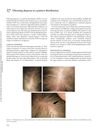
 Fibrosing alopecia in a pattern distribution is a unique hair loss condition with inflammation and scarring, resembling but distinct from common balding.
30 citations
,
October 1994 in “Journal of Cutaneous Pathology” Multiple perifollicular fibromas may actually be unrecognized cases of Birt-Hogg-Dubé syndrome.