 November 2022 in “Gigascience”
 A specific genetic deletion in goats affects cashmere yield and thickness.
 September 2022 in “Dermatology and therapy”
 Contact immunotherapy might help treat various skin conditions, but more research is needed to confirm its safety and effectiveness.
 June 2022 in “bioRxiv (Cold Spring Harbor Laboratory)”
 ILC1-like cells can cause alopecia areata by attacking hair follicles.

Wild African goats have genetic adaptations for surviving harsh desert conditions.
 January 2021 in “Research Square (Research Square)”
 Chinese fine-wool sheep have genetic variations linked to traits like milk and health, with some genes under strong selection.
 January 2021 in “Middle East journal of applied sciences”
 Over 30% of livestock in New Valley Governorate, Egypt, had skin diseases, affecting their productivity and income.
 September 2020 in “Kocatepe Veterinary Journal”
 Equine adipose stem cells can become different cell types and are promising for healing injuries.
 July 2020 in “Research Square (Research Square)”
 Selective breeding can enhance immunity in dairy cattle.

PlacMA hydrogels from human placenta are versatile and useful for cell culture and tissue engineering.

Wildebeest stress and hormone levels are influenced by food availability, human presence, and reproductive cycles.

The study found genetic variations in sheep linked to traits like milk production, growth, and health.
 June 2019 in “Journal of Aesthetic Nursing”
 The author now supports the JCCP's efforts to improve non-surgical aesthetic practices after initial skepticism.
A high-fat diet caused severe health problems in female macaques but was reversible with a normal diet, while male macaques reacted differently.
 December 2018 in “Zenodo (CERN European Organization for Nuclear Research)”
 Biofield Energy Treatment may boost hair growth.
 April 2018 in “Deleted Journal”
 Skin grafts are a common, minimally invasive way to close wounds in dogs, but better methods are still being sought.
 January 2018 in “Stem cells in clinical applications”
 Exosomes show promise for tissue repair and regeneration with advantages over traditional cell therapies.
 December 2017 in “Springer eBooks”
 Transplant patients often get skin problems, with treatments varying by condition.

The document provides 70 multiple choice questions to improve haematology skills.

The document tests knowledge and decision-making in hematology through multiple-choice questions.
Forensic hair analysis for drugs is now more reliable and accurate.
 August 2015 in “MOJ proteomics & bioinformatics”
 ePUKs could be valuable for regenerative medicine due to their wound healing abilities.
 November 2014 in “John Wiley & Sons, Ltd eBooks”
 Eating high-glycemic and dairy foods can increase hormones that may cause acne and other health issues.
 May 2014 in “JAMA Dermatology”
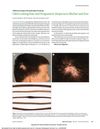
 Mother and son diagnosed with a rare genetic hair loss condition with no effective treatment.
 January 2014 in “Journal of Clinical and Investigative Dermatology”
 Young rats are better for testing hair loss treatments after chemotherapy.
 December 2013 in “Research Portal (King's College London)”
 Hair loss in Lichen Planopilaris is caused by immune system issues damaging hair follicles and stem cells.
 July 2013 in “British Journal of Dermatology”
 The document reviews key historical figures and discoveries in dermatology.
 June 2011 in “Journal of clinical and experimental investigations”
 Oral zinc sulphate is an effective and safe treatment for thallium poisoning.
 March 2011 in “Journal of clinical and experimental investigations”
 Thallium poisoning can cause hair loss, skin rashes, and nerve damage, and can be fatal if not correctly diagnosed and treated.
 February 2010 in “ePrints Soton (University of Southampton)”
 Male sexual differentiation is regulated independently, while female differentiation occurs in an androgenic environment, affecting conditions like congenital adrenal hyperplasia.
Acidic sandy clay damages archaeological hair the most, while dry conditions preserve but make it brittle; silicone oil can help keep the hair flexible.