 130 citations
,
August 2015 in “Experimental Dermatology”
130 citations
,
August 2015 in “Experimental Dermatology” Human hair follicle organ culture is a useful model for hair research with potential for studying hair biology and testing treatments.
 19 citations
,
July 2015 in “Journal of Ginseng Research”
19 citations
,
July 2015 in “Journal of Ginseng Research” Korean Red Ginseng may protect against hair loss caused by chemotherapy.
 27 citations
,
November 2005 in “Archives of Dermatological Research”
27 citations
,
November 2005 in “Archives of Dermatological Research” Choosing hair follicles at the same growth stage leads to more consistent hair growth experiments.
 56 citations
,
July 2005 in “Experimental Dermatology”
56 citations
,
July 2005 in “Experimental Dermatology” Injected human hair follicle cells can create new, small hair follicles in skin cultures.
27 citations
,
January 1993 in “Archives of Dermatological Research” Hair follicles can grow and increase DNA synthesis in a serum-free environment, and minoxidil sulphate boosts this process.
January 2008 in “Bradford Scholars (University of Bradford)” Alopecia areata may be caused by antibodies targeting specific hair follicle proteins, hindering hair growth.
 5 citations
,
September 2012 in “Journal of Investigative Dermatology”
5 citations
,
September 2012 in “Journal of Investigative Dermatology” Scientists can mimic hair disorders by altering genes in lab-grown human hair follicles, but these follicles lack some features of natural ones.
 June 2025 in “Frontiers in Physiology”
 Prostaglandin F2α may help treat hair loss by promoting hair growth.
132 citations
,
September 2009 in “Experimental Dermatology” A reliable system was developed to distinguish hair growth stages, aiding in identifying hair growth promoters or inhibitors.
13 citations
,
October 2010 in “Methods in molecular biology” Hair follicle culture helps study cell interactions and effects of substances on tissue growth.
30 citations
,
August 1993 in “PubMed” IL-1 alpha stops hair follicle growth and hair production.
 March 2024 in “Journal of functional foods”
 Collagen peptides from marine and bovine sources may help prevent hair loss by affecting hair follicle stem cells differently.
27 citations
,
September 1994 in “The journal of investigative dermatology/Journal of investigative dermatology” Small amounts of Vitamin D3 can boost hair growth, but too much can stop it.
 42 citations
,
March 2018 in “PLOS Biology”
42 citations
,
March 2018 in “PLOS Biology” Autophagy is important for human hair growth and health.
 19 citations
,
October 2017 in “The FASEB Journal”
19 citations
,
October 2017 in “The FASEB Journal” Male hormones cause different growth in identical human hair follicles due to their unique epigenetic characteristics.
38 citations
,
March 1997 in “Journal of interferon & cytokine research” IL-1β inhibits human hair follicle growth.
 October 2025 in “International Journal of Cosmetic Science”
 USPlus® DERM may help hair growth and reduce hair loss.
 30 citations
,
April 2018 in “Experimental Dermatology”
30 citations
,
April 2018 in “Experimental Dermatology” The article concludes that developing in vitro models for human hair structures is important for research and reducing animal testing, but there are challenges like obtaining suitable samples and the models' limitations.
14 citations
,
July 2017 in “Fitoterapia” Oleanolic acid promotes hair growth by increasing cell proliferation through the Wnt/β-catenin pathway.
 January 2022 in “Biomedical Reports”
 Inaudible sound at 30 kHz can boost hair growth and decrease hair loss by promoting cell growth and reducing cell death in hair follicles.
 January 2026 in “Chonnam Medical Journal”
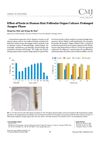
 Escin helps keep hair follicles in the growth phase longer.

Applying thyroid hormones to the scalp can help hair grow.
July 2024 in “International Journal of Molecular Sciences” The inhibitor DPP can promote hair growth.
 21 citations
,
November 2017 in “Scientific Reports”
21 citations
,
November 2017 in “Scientific Reports” Different human hair follicle stem cells grow at different rates and respond differently to a baldness-related compound.
 17 citations
,
January 1997 in “Cell and Tissue Research”
17 citations
,
January 1997 in “Cell and Tissue Research” Scientists developed a method to grow human fetal skin and digits in a lab for 3-4 weeks, which could help study skin features and understand genetic interactions in tissue formation.
October 2022 in “Experimental Dermatology” New technologies show promise for better hair regeneration and treatments.
 23 citations
,
May 1998 in “Journal of Dermatological Science”
23 citations
,
May 1998 in “Journal of Dermatological Science” Insulin or IGF-I is needed for hair growth in newborn mice, while minoxidil helps adult mouse hair grow, suggesting a way to study human hair loss.
VB-1, a natural compound, may promote hair growth by enhancing important cell signaling and increasing key gene expression.
 15 citations
,
August 2017 in “International Journal of Molecular Medicine”
15 citations
,
August 2017 in “International Journal of Molecular Medicine” Panax ginseng extract may help prevent hair loss caused by DKK-1.
Low doses of certain Chinese herbs can promote hair growth, while high doses may inhibit it.