
PmtHEE is a better model for studying pigmented skin because it includes melanocytes and shows improved cell differentiation.
 February 2010 in “ePrints Soton (University of Southampton)”
 Male sexual differentiation is regulated independently, while female differentiation occurs in an androgenic environment, affecting conditions like congenital adrenal hyperplasia.
 March 2026 in “Clinical and Experimental Medicine”
 Extracellular vesicles are important for disease treatment and monitoring.
 82 citations
,
September 2018 in “Nature Communications”
82 citations
,
September 2018 in “Nature Communications” A certain smell receptor in hair follicles can affect hair growth when activated by a synthetic sandalwood scent.
 31 citations
,
January 2003 in “Dermatology”
31 citations
,
January 2003 in “Dermatology” Steroidogenic isoenzymes may help improve treatments for common hair loss.
 2 citations
,
March 2019 in “Lasers in surgery and medicine”
2 citations
,
March 2019 in “Lasers in surgery and medicine” Higher light doses cause more damage to hair follicles, predicting better hair removal results.
 January 2026 in “Frontiers in Bioscience-Landmark”
 Araliadiol protects skin cells from damage by boosting antioxidant defenses.
 July 2024 in “Journal of Rare Diseases”
 Woodhouse-Sakati syndrome shows varied symptoms and genetic differences within families.
 May 2022 in “Голова и шея.”
 Laser exposure at 445±40 nm safely increased tissue temperature without exceeding safety limits.
 August 2016 in “Journal of Investigative Dermatology”
 The endocannabinoid system affects oil production and inflammation in skin cells.
 37 citations
,
March 2012 in “International Journal of Radiation Biology”
37 citations
,
March 2012 in “International Journal of Radiation Biology” Mobile phone radiation can cause DNA damage in human hair root cells.
 4 citations
,
November 2024 in “Cell Biology and Toxicology”
4 citations
,
November 2024 in “Cell Biology and Toxicology” Blocking certain receptors in the lungs might help treat a specific type of asthma.
 June 2022 in “bioRxiv (Cold Spring Harbor Laboratory)”
 ILC1-like cells can cause alopecia areata by attacking hair follicles.
 August 2016 in “Journal of Investigative Dermatology”
 The research found that certain microRNAs are important for human hair growth and health.
 73 citations
,
October 2003 in “Journal of Pharmacology and Experimental Therapeutics”
73 citations
,
October 2003 in “Journal of Pharmacology and Experimental Therapeutics” Hair color loss can indicate the effectiveness of a drug targeting the KIT protein in mice and humans.
 38 citations
,
January 2016 in “Cell Death and Disease”
38 citations
,
January 2016 in “Cell Death and Disease” The TCL1 transgenic mouse model is useful for understanding human B-cell leukemia and testing new treatments.
 30 citations
,
March 2001 in “Environmental Health Perspectives”
30 citations
,
March 2001 in “Environmental Health Perspectives” Small changes in hormones can significantly impact health, showing the importance of sensitive testing for chemicals that disrupt hormones.
 13 citations
,
January 2021 in “Histochemistry and Cell Biology”
13 citations
,
January 2021 in “Histochemistry and Cell Biology” Cholesterol transport in hair follicles decreases from growth to regression phase.
 2 citations
,
March 2001 in “Environmental Health Perspectives”
2 citations
,
March 2001 in “Environmental Health Perspectives” Small hormonal imbalances can cause significant health problems, so more sensitive testing for hormone-disrupting chemicals is needed.
 34 citations
,
April 2009 in “Skin Pharmacology and Physiology”
34 citations
,
April 2009 in “Skin Pharmacology and Physiology” Minoxidil affects cell growth in two ways: low doses increase growth, while high doses slow it down and can be toxic.
 13 citations
,
January 2020 in “Experimental Dermatology”
13 citations
,
January 2020 in “Experimental Dermatology” PRP growth factor concentrations vary, no significant hair growth difference found.
 25 citations
,
June 2019 in “Endocrine Related Cancer”
25 citations
,
June 2019 in “Endocrine Related Cancer” Mutations in certain receptors can cause diseases and offer new treatment options.
 48 citations
,
February 2013 in “Molecular and Cellular Endocrinology”
48 citations
,
February 2013 in “Molecular and Cellular Endocrinology” The protein StAR is found in 17 different organs and can affect hair loss and brain functions, but its full role is not yet fully understood.
 March 2026 in “Folia Histochemica et Cytobiologica”
 LTBP1 is a key regulator in diseases and a potential target for new treatments.
 March 2024 in “Bioimpacts”
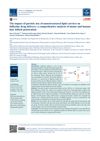
 400 nm particles penetrate hair follicles best, but mouse models aren't fully reliable for human studies.
 August 2019 in “Journal of archaeological science: Reports/Journal of archaeological science: reports”
 Ancient hair can preserve hormones, revealing health and fertility insights.
 April 2024 in “Human genomics”
 Identified genes linked to male-pattern baldness may help develop new treatments.
 April 2025 in “Journal of Skin and Stem Cell”
 PDRN from trout sperm helps skin and hair regeneration but is costly and complex to produce.
 August 2016 in “Journal of Investigative Dermatology”
 DHT reduces a cell's ability to promote hair growth, while 3D culture without DHT improves it.
 263 citations
,
February 2013 in “Wiley interdisciplinary reviews. Nanomedicine and nanobiotechnology”
263 citations
,
February 2013 in “Wiley interdisciplinary reviews. Nanomedicine and nanobiotechnology” Polymeric nanoparticles show promise for treating skin diseases.