1 citations
,
August 2015 in “PubMed” Human hair's strength comes from a honeycomb-like structure and macrofibrils.
 April 2018 in “The journal of investigative dermatology/Journal of investigative dermatology”
 Electrical epilation damages hair follicles and surrounding skin, likely preventing hair regrowth.
 January 2015 in “Springer eBooks”
 Hair health is influenced by genetics, aging, and environmental factors, with proper care needed to maintain it.
28 citations
,
June 1995 in “The Journal of Dermatology” The flaky skin mouse mutation is a natural model for studying human psoriasis.
81 citations
,
March 2006 in “Journal of Investigative Dermatology” Mutations in the DSG4 gene cause specific hair and scalp issues.
 November 2022 in “Journal of Investigative Dermatology”
 The extract of Silybum marianum, Manganese PCA, and Lespedeza capitata can boost hair growth and extend the growth phase when combined in a serum.
Estrogen and its receptors play a key role in hair growth, with differences between males and females.
 November 2024 in “Research Square (Research Square)”
 Lipids may help treat hair loss by promoting hair growth through the HIF-1 pathway.
 33 citations
,
September 2012 in “Australasian Journal of Dermatology”
33 citations
,
September 2012 in “Australasian Journal of Dermatology” Chemotherapy can cause hair changes similar to alopecia areata, which might lead to misdiagnosis.
 92 citations
,
June 2005 in “Journal of Investigative Dermatology”
92 citations
,
June 2005 in “Journal of Investigative Dermatology” All-trans retinoic acid causes hair loss by increasing TGF-β2 in hair follicle cells.
 87 citations
,
April 2018 in “Biochemical and Biophysical Research Communications”
87 citations
,
April 2018 in “Biochemical and Biophysical Research Communications” Exosomes from dermal papilla cells can help grow hair and might treat hair loss.
 2 citations
,
February 2014 in “Journal of the European Academy of Dermatology and Venereology”
2 citations
,
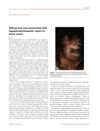
February 2014 in “Journal of the European Academy of Dermatology and Venereology” High levels of prolactin in the blood can be linked to widespread hair loss.
 8 citations
,
January 2013 in “The scientific world journal/TheScientificWorldjournal”
8 citations
,
January 2013 in “The scientific world journal/TheScientificWorldjournal” Human hair follicles may provide a noninvasive way to diagnose diseases and have potential in regenerative medicine.
 13 citations
,
May 2022 in “Cell discovery”
13 citations
,
May 2022 in “Cell discovery” The study found new details about human hair growth and suggests that preventing a specific biological pathway could potentially treat hair graying.
 3 citations
,
February 2019 in “Journal of Cosmetic Dermatology”
3 citations
,
February 2019 in “Journal of Cosmetic Dermatology” The effects of estrogen on human scalp hair growth are unclear and need more research.
 6 citations
,
January 2016 in “Annals of Dermatology”
6 citations
,
January 2016 in “Annals of Dermatology” Human hair contains more glycosaminoglycans in children than adults, and these compounds decrease with age, possibly affecting hair thickness.
 4 citations
,
September 2012 in “Journal of dermatological science”
4 citations
,
September 2012 in “Journal of dermatological science” The hair follicle's connective tissue is a key source of a certain collagen in human scalp skin.
 17 citations
,
February 2013 in “PLOS ONE”
17 citations
,
February 2013 in “PLOS ONE” 6-Gingerol, found in ginger, may slow down hair growth and could be used for hair removal.
 17 citations
,
May 2010 in “Journal of Dermatological Science”
17 citations
,
May 2010 in “Journal of Dermatological Science” Erythropoietin helps hair grow and could be a potential treatment for hair loss.
 1 citations
,
September 2024 in “Scientific Reports”
1 citations
,
September 2024 in “Scientific Reports” Non-invasive swabbing is as effective as cutting hair for collecting scalp hair bacteria.
 1 citations
,
September 2021 in “International journal of research - granthaalayah”
1 citations
,
September 2021 in “International journal of research - granthaalayah” Human hair has bipolar electrical charges because of a gap in the hair follicle's electromagnetic field.
 8 citations
,
November 2020 in “Frontiers in Cell and Developmental Biology”
8 citations
,
November 2020 in “Frontiers in Cell and Developmental Biology” Certain genes are more active in baby scalp cells and can help grow hair when added to adult mouse skin cells.
 25 citations
,
August 2015 in “Journal of cosmetic dermatology”
25 citations
,
August 2015 in “Journal of cosmetic dermatology” African American women report more hair issues and use different hair care practices than Caucasian women, and have different hair and scalp characteristics.
 1 citations
,
April 2021 in “The journal of investigative dermatology/Journal of investigative dermatology”
1 citations
,
April 2021 in “The journal of investigative dermatology/Journal of investigative dermatology” mTORC1 activity is important for hair growth and color, and targeting it could help treat hair loss and greying.
 35 citations
,
March 2007 in “Skin Research and Technology”
35 citations
,
March 2007 in “Skin Research and Technology” The conclusion is that exogen is a unique hair cycle phase and the new sampling method specifically targets this stage, which may help in future hair loss research.
 51 citations
,
November 2010 in “Dermatologic Surgery”
51 citations
,
November 2010 in “Dermatologic Surgery” The research provides specific measurements for hair follicles that can improve hair transplant and regeneration techniques.
 December 2025 in “International Journal For Multidisciplinary Research”
 Microscopic hair analysis is important in forensics but has limitations; new technologies are improving its accuracy.
 64 citations
,
March 2005 in “Journal of Investigative Dermatology”
64 citations
,
March 2005 in “Journal of Investigative Dermatology” Brain-Derived Neurotrophic Factor (BDNF) slows down hair growth and promotes hair follicle regression.
 47 citations
,
July 1967 in “Science”
47 citations
,
July 1967 in “Science” Not eating enough protein can cause hair roots to shrink and lose color, and hair to become thinner.
 19 citations
,
November 2012 in “British Journal of Dermatology”
19 citations
,
November 2012 in “British Journal of Dermatology” Dopamine stops hair growth and pigment production in human scalp hair follicles.