159 citations
,
August 2010 in “British journal of dermatology/British journal of dermatology, Supplement” Hydroxychloroquine effectively reduces symptoms of frontal fibrosing alopecia, especially in the first 6 months.
 155 citations
,
September 2008 in “British journal of dermatology/British journal of dermatology, Supplement”
155 citations
,
September 2008 in “British journal of dermatology/British journal of dermatology, Supplement” FFA is more common in postmenopausal women, can affect younger women, and may stabilize over time.
 144 citations
,
September 2006 in “Clinics in Dermatology”
144 citations
,
September 2006 in “Clinics in Dermatology” Lupus affects the body and skin, causing joint pain and skin issues that can be treated with steroids and antimalarial drugs.
 117 citations
,
March 2013 in “Journal of the European Academy of Dermatology and Venereology”
117 citations
,
March 2013 in “Journal of the European Academy of Dermatology and Venereology” No effective treatment for frontal fibrosing alopecia was found, but oral 5-alpha-reductase inhibitors had the best response; for lichen planopilaris, topical corticosteroids were commonly used but had a high relapse rate.
 95 citations
,
November 2016 in “Journal of The American Academy of Dermatology”
95 citations
,
November 2016 in “Journal of The American Academy of Dermatology” Treatments for permanent hair loss from scarring aim to stop further loss, not regrow hair, and vary by condition, with partial success common.
 90 citations
,
July 2008 in “Dermatologic therapy”
90 citations
,
July 2008 in “Dermatologic therapy” Lichen planopilaris is a chronic, scarring hair loss condition with no definitive cure, requiring accurate diagnosis and treatment to manage symptoms.
 87 citations
,
July 2012 in “Expert Review of Clinical Immunology”
87 citations
,
July 2012 in “Expert Review of Clinical Immunology” Pregnancy can increase lupus activity, but careful planning and treatment can improve outcomes.
 76 citations
,
July 2011 in “Clinical, Cosmetic and Investigational Dermatology”
76 citations
,
July 2011 in “Clinical, Cosmetic and Investigational Dermatology” The document concludes that proper diagnosis and FDA-approved treatments for different types of hair loss exist, but treatments for severe cases often fail and future improvements may focus on hair follicle stem cells.
54 citations
,
February 2012 in “Pediatrics in Review” Pediatric systemic lupus erythematosus is a severe autoimmune disease in children requiring early diagnosis and comprehensive management.
52 citations
,
September 2021 in “Kidney International” COVID-19 vaccination may trigger lupus in some people.
 49 citations
,
March 2017 in “Journal of the American Academy of Dermatology”
49 citations
,
March 2017 in “Journal of the American Academy of Dermatology” Tofacitinib caused significant hair regrowth in adolescents with alopecia universalis who didn't respond to other treatments.
 47 citations
,
June 2014 in “Journal of Dermatological Treatment”
47 citations
,
June 2014 in “Journal of Dermatological Treatment” Most treatments for lichen planopilaris were found to be generally unsatisfactory.
 46 citations
,
January 2015 in “Pediatric Rheumatology”
46 citations
,
January 2015 in “Pediatric Rheumatology” Skin symptoms are important for diagnosing and managing juvenile-onset systemic lupus erythematosus and usually get better with treatment.
45 citations
,
May 2002 in “International Journal of Dermatology” Prednisone may cause multiple skin nodules in lupus patients.
 44 citations
,
January 2021 in “Dermatologic Therapy”
44 citations
,
January 2021 in “Dermatologic Therapy” COVID-19 may cause hair loss due to infection stress or treatments.
43 citations
,
March 2009 in “Archives of dermatology” No treatment showed clear superiority for lichen planopilaris.
 41 citations
,
July 2017 in “Journal of The American Academy of Dermatology”
41 citations
,
July 2017 in “Journal of The American Academy of Dermatology” Men with Frontal fibrosing alopecia typically lose hair on the front scalp and sometimes on sideburns and upper lip, with treatments showing varied success.
 41 citations
,
August 1988 in “Journal of The American Academy of Dermatology”
41 citations
,
August 1988 in “Journal of The American Academy of Dermatology” A woman with subacute cutaneous lupus erythematosus had widespread skin symptoms triggered by medication and sunlight, which improved with specific treatments.
37 citations
,
December 2001 in “Journal of the American Academy of Dermatology” Thalidomide significantly improved hair regrowth in a woman with lichen planopilaris.
34 citations
,
December 2011 in “The Journal of Dermatology” A unique type of lupus panniculitis causes reversible hair loss on the scalp in East Asians.
 28 citations
,
July 2002 in “Australasian Journal of Dermatology”
28 citations
,
July 2002 in “Australasian Journal of Dermatology” Lupus can look like hair loss from alopecia areata but needs different treatment.
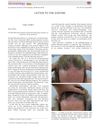 26 citations
,
June 2018 in “Australasian Journal of Dermatology”
26 citations
,
June 2018 in “Australasian Journal of Dermatology” Stopping sunscreen use on the forehead led to hair regrowth in a woman with frontal fibrosing alopecia.
 23 citations
,
November 2018 in “Journal of the European Academy of Dermatology and Venereology”
23 citations
,
November 2018 in “Journal of the European Academy of Dermatology and Venereology” The study concluded that severity of Frontal fibrosing alopecia is not linked to how long someone has it, can start before menopause, and eyebrow loss may be an early sign.
20 citations
,
June 2021 in “British Journal of Dermatology” Use antimalarials like hydroxychloroquine for cutaneous lupus, avoid herbal supplements, and focus on lifestyle changes like sun protection.
20 citations
,
April 2017 in “Journal of the American Academy of Dermatology” Antimalarial drugs, especially chloroquine, can effectively treat granuloma annulare.
 20 citations
,
October 2016 in “Veterinary dermatology”
20 citations
,
October 2016 in “Veterinary dermatology” Dogs with generalized discoid lupus erythematosus have similar symptoms to humans and need continuous treatment.
 20 citations
,
January 2016 in “Intractable & Rare Diseases Research”
20 citations
,
January 2016 in “Intractable & Rare Diseases Research” Combination therapy, especially with finasteride, is effective for treating frontal fibrosing alopecia.
 19 citations
,
August 2018 in “International Journal of Dermatology”
19 citations
,
August 2018 in “International Journal of Dermatology” Lupus panniculitis of the scalp causes linear hair loss and needs ongoing treatment to prevent recurrence and lupus.
 18 citations
,
October 2012 in “Dermatologic Clinics”
18 citations
,
October 2012 in “Dermatologic Clinics” Early diagnosis and aggressive treatment are key for managing rare scalp disorders that cause permanent hair loss.
 17 citations
,
June 2016 in “Australasian Journal of Dermatology”
17 citations
,
June 2016 in “Australasian Journal of Dermatology” Treatment with dutasteride, minoxidil, and artificial hair transplantation improved appearance but caused folliculitis.