1 citations
,
April 2004 in “Cancer” Imatinib mesylate can cause skin lightening, especially in Chinese patients, due to its effect on pigment production.
303 citations
,
August 1971 in “The American Journal of Medicine” Melanocytes are destroyed by factors needed for melanin production, causing vitiligo and gray hair.
5 citations
,
March 1981 in “PubMed” A girl grew extra hair in areas where she had insect bites.
 December 2025 in “Cureus”
 Alopecia areata and psoriasis vulgaris can inhibit each other in the same areas.
 January 2026 in “International Journal of Dermatology Venereology and Leprosy Sciences”
 Metformin may improve acanthosis nigricans by reducing insulin resistance.
 January 2024 in “Brazilian journal of veterinary pathology”
 The dog likely has a condition similar to Canine alopecia X.
 12 citations
,
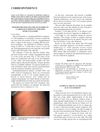
January 2005 in “Pediatric Dermatology”
12 citations
,
January 2005 in “Pediatric Dermatology” Fox Fordyce disease might be more common in prepubertal girls than thought and can be managed with treatment.
 15 citations
,
April 2007 in “Journal of child neurology”
15 citations
,
April 2007 in “Journal of child neurology” An 11-month-old boy with Menkes disease had severe brain shrinkage and abnormal blood vessels, and didn't respond well to treatment.
47 citations
,
October 2015 in “Dermatologic surgery” The 308-nm excimer laser is effective for skin conditions but needs more research on long-term effects.
11 citations
,
March 2004 in “Journal of Comparative Pathology” Norfolk Terriers have a genetic skin defect causing scaling and blisters due to a keratin issue.
7 citations
,
January 2013 in “Indian dermatology online journal” A rare skin condition with dark, thick, warty patches and some hair loss was found in a newborn boy.
 March 2021 in “CRC Press eBooks”
 The document concludes that different patterns of hair thickness and scalp changes can help diagnose types of non-scarring hair loss.
7 citations
,
March 2020 in “Journal of the American Academy of Dermatology” EGFR inhibitors often cause dry, brittle hair and eyebrow/eyelash changes.
1 citations
,
April 2015 in “Neurology” Skin pigmentation increases in CRPS-affected areas and improves with symptom relief.
 June 2023 in “British journal of dermatology/British journal of dermatology, Supplement”
 A 13-year-old boy had both lichen planus and vitiligo, suggesting a possible link between the two conditions.
July 2021 in “Physiology and Pharmacology” Umbilical cord masks can help reduce melasma in postpartum women.
 5 citations
,
January 2018 in “Annals of Dermatology”
5 citations
,
January 2018 in “Annals of Dermatology” A 308 nm excimer laser successfully treated a boy with a rare skin condition after about a year of weekly sessions.
 14 citations
,
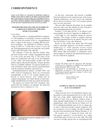
January 2005 in “Pediatric Dermatology”
14 citations
,
January 2005 in “Pediatric Dermatology” UVA1-light therapy successfully treated a child's skin condition, mycosis fungoides.
 October 2019 in “International journal of research in dermatology”
 Misusing topical corticosteroids can cause skin darkening and other side effects.
 19 citations
,
July 2007 in “Dermatologic clinics”
19 citations
,
July 2007 in “Dermatologic clinics” Tailor treatments for vitiligo to patient needs for best results.
1 citations
,
December 2024 in “Case Reports in Dermatology” Cyclophosphamide likely causes skin darkening by affecting hair follicles.
 May 2015 in “Actas Dermo-Sifiliográficas”
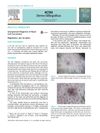
 A young man was unexpectedly diagnosed with basal cell carcinoma after a scalp examination and confocal microscopy.
 12 citations
,
July 2015 in “Veterinary Dermatology”
12 citations
,
July 2015 in “Veterinary Dermatology” Microneedling helped two Pomeranian dogs with a hair growth disorder grow back 90% of their fur in 12 weeks, and the results lasted for a year.
 May 2002 in “British Journal of Dermatology”
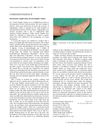
 A pregnant woman's skin condition improved after giving birth, possibly due to high estrogen levels during pregnancy.
 120 citations
,
July 2005 in “Dermatologic surgery”
120 citations
,
July 2005 in “Dermatologic surgery” Niacinamide improves aging skin and is safe for use in cosmetics.
 25 citations
,
January 2005 in “Pediatric Dermatology”
25 citations
,
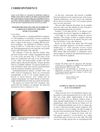
January 2005 in “Pediatric Dermatology” Methotrexate effectively treated a 2-year-old's generalized pustular psoriasis without side effects.
 16 citations
,
January 2005 in “Pediatric Dermatology”
16 citations
,
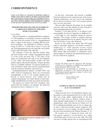
January 2005 in “Pediatric Dermatology” A 10-year-old girl with Fox Fordyce disease improved with treatment, suggesting the disease can occur before puberty and might be underdiagnosed in young girls.
 9 citations
,
July 2010 in “British Journal of Dermatology”
9 citations
,
July 2010 in “British Journal of Dermatology” The document suggests a rare skin condition might be caused by a genetic phenomenon.
 9 citations
,
January 2005 in “Pediatric Dermatology”
9 citations
,
January 2005 in “Pediatric Dermatology” Fox Fordyce disease can occur in prepubertal girls and may be underdiagnosed.
 2 citations
,
September 2022
2 citations
,
September 2022 The PER3 rs772027021 SNP may cause mild skin pigmentation changes in a new subtype of dyschromatosis universalis hereditaria.