 11 citations
,
August 2016 in “Journal of dermatological treatment”
11 citations
,
August 2016 in “Journal of dermatological treatment” Tip cryotherapy effectively treats idiopathic guttate hypomelanosis with minimal side effects.
7 citations
,
October 2008 in “Arthritis Care & Research” Aggressive immunosuppressive treatment improved a woman's severe heart condition linked to autoimmune disease.
December 2020 in “Forum Dermatologicum” Intralesional triamcinolone acetonide can effectively limit the progression of GLPLS.
 8 citations
,
September 2016 in “The American Journal of Dermatopathology”
8 citations
,
September 2016 in “The American Journal of Dermatopathology” Enlarged sweat gland ducts may indicate scarring hair loss.
7 citations
,
May 1988 in “International Journal of Dermatology” The patient's hair has unique structural differences with alternating bright and dark bands.
2 citations
,
December 2001 in “Dermatologic Therapy” Steroids may not work well for alopecia areata because of high unoccupied receptors and low thioredoxin levels.
 25 citations
,
April 2007 in “Journal of The American Academy of Dermatology”
25 citations
,
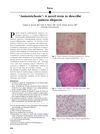
April 2007 in “Journal of The American Academy of Dermatology” The document suggests "anisotrichosis" as a new term for hair thickness variation in common baldness.
 11 citations
,
January 2014 in “Indian journal of dermatology, venereology, and leprology”
11 citations
,
January 2014 in “Indian journal of dermatology, venereology, and leprology” Trichosporon inkin and Trichosporon mucoides can cause white piedra on scalp hair.
 63 citations
,
October 1989 in “Journal of The American Academy of Dermatology”
63 citations
,
October 1989 in “Journal of The American Academy of Dermatology” Red, swollen skin patches are a common allergic reaction to heparin injections, and testing with different heparin types can help find a suitable treatment.
2 citations
,
April 2022 in “Medicine” A Chinese boy's scalp infection from a guinea pig was cured with medication.
1 citations
,
January 2019 in “Via Medica Journals” Graham-Little syndrome causes hair loss and skin bumps, with difficult treatment options.
Non-immune dermal cells dominate, epidermal cells increase after day 9, and certain immune cells persist beyond inflammation in wound-induced hair follicle regeneration.
1 citations
,
January 2018 in “bioRxiv (Cold Spring Harbor Laboratory)” Increased PHGDH expression causes early melanin buildup in hair follicles.
 205 citations
,
March 2012 in “Science Translational Medicine”
205 citations
,
March 2012 in “Science Translational Medicine” PGD2 stops hair growth and is higher in bald men with AGA.
 4 citations
,
April 2010 in “Expert review of dermatology”
4 citations
,
April 2010 in “Expert review of dermatology” Restoring immune privilege in hair follicles could help treat certain types of hair loss.
10 citations
,
June 1999 in “Veterinary Dermatology” Two cows had a rare hair disorder causing hair loss but were otherwise healthy.
3 citations
,
June 2019 in “Veterinary record case reports” A dog developed a skin condition called pemphigus foliaceus after taking NexGard, but got better with treatment.
 23 citations
,
March 1994 in “Fertility and sterility”
23 citations
,
March 1994 in “Fertility and sterility” Most patients improved with oral contraceptives, but some needed additional treatment.
 3 citations
,
December 1994 in “JEADV. Journal of the European Academy of Dermatology and Venereology/Journal of the European Academy of Dermatology and Venereology”
3 citations
,
December 1994 in “JEADV. Journal of the European Academy of Dermatology and Venereology/Journal of the European Academy of Dermatology and Venereology” Oral itraconazole effectively reaches and treats deep skin layers in guinea pigs.
March 2019 in “eCommons (Cornell University)” The pony's skin condition improved significantly with prednisolone treatment.
 2 citations
,
January 1986 in “Dermatology”
2 citations
,
January 1986 in “Dermatology” A woman with Kallman's syndrome also developed alopecia universalis, a condition not previously linked to Kallman's.
January 2026 in “Biochemical Pharmacology”  1 citations
,
November 1983 in “The Lancet”
1 citations
,
November 1983 in “The Lancet” Acute leukemias with the Philadelphia chromosome may be biphenotypic, and identifying this is important for proper treatment.
 14 citations
,
January 2005 in “Pediatric Dermatology”
14 citations
,
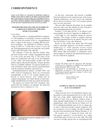
January 2005 in “Pediatric Dermatology” UVA1-light therapy successfully treated a child's skin condition, mycosis fungoides.
5 citations
,
October 2012 in “Veterinary Pathology” A Doberman Pinscher had a rare form of autoimmune disease causing hair loss and other severe symptoms.

An elderly woman developed severe skin discoloration after homeopathic knee injections, but the exact cause is unclear.
August 2025 in “International Journal of Clinical Dermatology” A new skin cancer can develop where shingles once occurred.
January 1962 in “Archives of Dermatology” A 5-year-old girl has lipoid proteinosis, causing voice issues, hair thinning, skin lesions, and tongue movement problems.
26 citations
,
July 1992 in “International Journal of Dermatology” Oral cyclosporine A and prednisolone effectively improved alopecia universalis without side effects.
 December 2021 in “Research Square (Research Square)”
 M-CSF-stimulated myeloid cells can cause alopecia areata in mice.