29 citations
,
August 1999 in “Journal of Investigative Dermatology” New mutations in hair keratin genes cause the rare hair disorder monilethrix.
1 citations
,
August 2016 in “Dermatology - Open Journal” Mitochondria change shape to meet energy needs during cell movement.
 February 2021 in “Journal of the Korean Ophthalmological Society”
 A 7-year-old girl had unusually long eyelashes with no known cause or related health issues.
Bovines can have rare inherited skin diseases with specific symptoms like hair loss, fragile skin, and abnormal porphyrin buildup.
 November 2014 in “Elsevier eBooks”
 Gene mutations can cause problems in male genital development.
 January 2025 in “BMJ Case Reports”
 Precocious puberty can signal familial adenomatous polyposis.
 11 citations
,
June 2012 in “Acta histochemica”
11 citations
,
June 2012 in “Acta histochemica” Mice with a Gsdma3 gene mutation have thicker skin and longer hair follicle openings due to increased β-catenin levels.
 May 2015 in “Journal of The American Academy of Dermatology”
 A woman with Parry-Romberg syndrome developed new curly hair on one side of her scalp, a condition not previously linked to the syndrome.
 March 2024 in “Residência Pediátrica”
 An infant developed excessive hair growth after a bone marrow transplant and cyclosporine treatment.
15 citations
,
July 2015 in “Developmental Dynamics” Orai1 protein is crucial for tooth development and affects enamel thickness and mineralization.
 1 citations
,
October 2023 in “BMC oral health”
1 citations
,
October 2023 in “BMC oral health” Two patients treated with TAC for mouth fibrosis improved but developed Cushing's Syndrome symptoms.
6 citations
,
January 2008 in “Indian Journal of Dermatology” Monilethrix, a genetic hair disorder causing fragile hair, affects three generations in a family.
July 2025 in “Human Genomics” New LSS gene variants help understand congenital hypotrichosis 14 better.
48 citations
,
July 1988 in “PubMed” Rhino mice show significant meibomian gland changes, making them a potential model for studying gland disorders.
1 citations
,
June 2016 in “Medicina” Monilethrix is a genetic disorder causing brittle hair, diagnosed using tricoscopy.
 1 citations
,
April 2020 in “Asian Journal of Medicine and Biomedicine”
1 citations
,
April 2020 in “Asian Journal of Medicine and Biomedicine” A child's toe was saved from a rare condition where hair tightly wrapped around it by performing surgery.
 101 citations
,
July 2021 in “Nature Communications”
101 citations
,
July 2021 in “Nature Communications” 4D polycarbonate scaffolds show promise for soft tissue repair due to their biocompatibility, shape memory, and minimal immune response.
2 citations
,
February 2021 in “PubMed” Koilonychia in alopecia areata can improve with oral corticosteroids.
5 citations
,
November 2011 in “Journal of Cutaneous Medicine and Surgery” Hairless dogs can be used to study human hypertrophic scars.
35 citations
,
May 2006 in “Journal of Investigative Dermatology” Monilethrix involves multiple genes affecting hair structure, including DSG4 mutations.
1 citations
,
December 2019 in “Medical Journal of Dr D Y Patil Vidyapeeth” A rare adrenal gland tumor can cause unusual symptoms due to hormone changes.

Hair loss treatment using stem cells from baby teeth was effective for 75% of men tested, with mild side effects. A scoring system may predict how well this treatment works.
October 2024 in “Journal of Cutaneous Pathology” Compound follicles in folliculitis decalvans mainly have active hair follicles.
62 citations
,
October 1999 in “Journal of Investigative Dermatology” New mutations in hair keratin genes can change hair structure and cause monilethrix, with nail issues more common in certain gene mutations.
53 citations
,
August 2015 in “The Italian Journal of Pediatrics/Italian journal of pediatrics” Excessive body hair can signal complex health issues.
 16 citations
,
March 2013 in “The Journal of Dermatology”
16 citations
,
March 2013 in “The Journal of Dermatology” Low TRPS1 expression in skin and hair cells is linked to hair problems in Trichorhinophalangeal syndrome.
 December 2023 in “Clinical Cosmetic and Investigational Dermatology”
 An 8-year-old Saudi boy was diagnosed with a rare genetic disorder causing hair loss, skin issues, and light sensitivity.
 1 citations
,
July 2018 in “Journal of dermatology & cosmetology”
1 citations
,
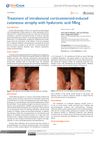
July 2018 in “Journal of dermatology & cosmetology” Hyaluronic acid successfully treated skin atrophy caused by corticosteroid injections.
5 citations
,
November 2012 in “Journal of the American Academy of Dermatology” A 3-year-old girl has short anagen syndrome, causing her hair to stay short.
 73 citations
,
June 2010 in “PLoS Genetics”
73 citations
,
June 2010 in “PLoS Genetics” A gene mutation in mice causes hair loss, weak bones, and protein buildup, showing how protein processing issues can lead to diseases.