Search
for
Sort by
Research
930-960 / 1000+ resultsresearch 09-P003 Leucine rich repeat transmembrane proteins Nlrr1 and Flrt3 and early embryonic myogenesis
research 606 Connecting signaling dynamics with cell fates in live mice
Stem cells control their future role by changing ERK signal timing, affecting tissue regeneration and cancer.

research The remarkable legacy of the K6/ODC mouse: mechanisms of polyamine-promoted tumorigenesis revealed
Polyamines are crucial for skin tumor development, and inhibiting them can prevent tumors.
research The Effects of Induced Polycystic Ovary Syndrome in NAG-1 Transgenic Mice
NAG-1 may help prevent some metabolic issues related to PCOS.

research Cachexia and graft-vs.-host-disease-type skin changes in keratin promoter-driven TNF alpha transgenic mice.
TNF alpha in skin cells causes weight loss, hair and fat issues, and skin inflammation in mice.
research The effects of Finasteride on the expression of Dazl, Tsga10, Sycp3, Prm2 genes during spermatogenesis in testes of NMRI mice
Finasteride, at doses of 5mg or higher, may negatively affect male fertility by reducing the expression of certain genes involved in sperm production.
research 1619 Spatial transcriptomic analysis of imiquimod-treated mouse skin reveals deregulation of lipid raft-associated markers which could be reversed by re-introduction of caveolin scaffolding domain peptide
The research found that a protein called caveolin-1 is reduced in psoriasis, but reintroducing it can help alleviate some psoriasis symptoms.
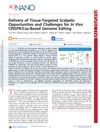
research Delivery of Tissue-Targeted Scalpels: Opportunities and Challenges for In Vivo CRISPR/Cas-Based Genome Editing
Using CRISPR for gene editing in the body is promising but needs better delivery methods to be more efficient and specific.
research Overexpression of spermidine/spermine N1-acetyltransferase under the control of mouse metallothionein I promoter in transgenic mice: evidence for a striking post-transcriptional regulation of transgene expression by a polyamine analogue
Overexpressing SSAT in mice makes them highly sensitive to polyamine analogues, causing liver damage and high mortality.
research Multiple endocrine defects in adult-onset Sprouty1/2/4 triple knockout mice
Removing Sprouty genes in mice causes various hormone-related issues but does not increase cancer risk by one year of age.
research 645 MIG6 is MEK-regulated and affects EGF-induced migration in mutant NRAS melanoma
Decreasing MIG6 can increase the movement and invasiveness of MEK-inhibited mutant NRAS melanoma, particularly when stimulated by EGF.
research Selective Expression of Chemokine Monokine Induced by Interferon-γ in Alopecia Areata
Targeting MIG and MCP-1 may help treat inflammation in alopecia areata.
research The biphasic regulatory effect of diphencyprone on mouse hair growth and its relation to protein kinase C isoforms
Diphencyprone initially increases mouse hair growth, then slows it, possibly due to changes in specific protein levels.
research Immunofluorescent localization of collagen types I, III and IV, fibronectin, laminin, and basement membrane proteoglycan in developing mouse skin
research Senescence-accelerated Mouse (SAM): With Special Reference to Development and Pathobiological Phenotypes
The SAM model helps understand aging and related diseases.
research Data from Tumor Necrosis Factor-α and Interleukin-1 Antagonists Alleviate Inflammatory Skin Changes Associated with Epidermal Growth Factor Receptor Antibody Therapy in Mice
TNFα and interleukin-1 blockers reduce skin inflammation from EGFR antibody therapy.
research An in vivo comparative study of sonic, desert and Indian hedgehog reveals that hedgehog pathway activity regulates epidermal stem cell homeostasis
Proper hedgehog signaling is crucial for maintaining healthy skin stem cells.
research 218 Chemokine receptor CCR5 is the novel target for the treatment of alopecia areata
Blocking the CCR5 receptor may be a new way to treat hair loss from alopecia areata.
research Data from Tumor Necrosis Factor-α and Interleukin-1 Antagonists Alleviate Inflammatory Skin Changes Associated with Epidermal Growth Factor Receptor Antibody Therapy in Mice
TNFα and interleukin-1 blockers reduce skin inflammation from EGFR antibody therapy.
research Restoration of hair growth in mice with an alopecia areata-like disease using topical anthralin
Topical anthralin helped regrow hair in mice with a condition similar to human alopecia.

research Hair follicle-derived mesenchymal stem cells decrease alopecia areata mouse hair loss and reduce inflammation around the hair follicle
Hair follicle stem cells reduced hair loss and inflammation in mice with a condition similar to human alopecia.
research Construction and Verification of Recombinant Follicle-specific Expression Vector
The vector successfully directed specific gene expression in hair follicles.
research CD169+ Skin Macrophages Function as a Specialized Subpopulation in Promoting Psoriasis-like Skin Disease in Mice
Targeting CD169+ skin macrophages may help treat psoriasis.
research A family of type I keratin genes and the homeobox-2 gene complex are closely linked to the rex locus on mouse chromosome 11
Type I keratin genes are closely linked to the rex locus on mouse chromosome 11, affecting hair development.
research The effect of dietary modulation of sulfur amino acids on cystathionine β synthase–deficient mice
Changing the diet of mice lacking the enzyme CBS can affect symptoms related to the genetic condition.
research Selective inhibition of JAK3 signaling is sufficient to reverse alopecia areata
Blocking JAK3 signaling can reverse hair loss from alopecia areata.
research A simple immunofluorescence technique for simultaneous visualization of mast cells and nerve fibers reveals selectivity and hair cycle - dependent changes in mast cell - nerve fiber contacts in murine skin
Mast cell and nerve fiber interactions in mouse skin change with the hair cycle.

research Epidermal abnormalities and increased malignancy of skin tumors in human epidermal keratin 8‐expressing transgenic mice
Mice with human skin protein K8 had more skin problems and cancer.
research Inducible deletion of Dicer or Drosha reveals multiple functions for miRNAs in postnatal epidermis and hair follicles
miRNAs are crucial for hair growth and skin health.