 January 2024 in “Wiadomości Lekarskie”
 AI can help diagnose Follicular Lymphoma by accurately identifying specific cell types.
47 citations
,
June 2013 in “Biology of blood and marrow transplantation” Mice with human fetal thymic tissue and stem cells developed symptoms similar to chronic graft-versus-host disease.
3 citations
,
December 2003 in “Archives of Pathology & Laboratory Medicine” The nodule was a benign cutaneous lymphadenoma, not cancer, and was successfully removed.
11 citations
,
November 1991 in “Journal of Neuropathology & Experimental Neurology” Brindled mice show abnormal catecholamine neuron development due to copper deficiency.
16 citations
,
January 2019 in “Aging” Lack of functional CYLD in mice leads to early aging and cancer.
6 citations
,
October 2001 in “British Journal of Ophthalmology” Intralesional cidofovir may be a viable treatment for conjunctival lesions in Melkersson-Rosenthal syndrome without systemic toxicity.
71 citations
,
February 1992 in “Journal of Cutaneous Pathology” Antibodies help identify glycoproteins in normal skin and tumor cells.
 80 citations
,
June 2000 in “Modern Pathology”
80 citations
,
June 2000 in “Modern Pathology” Long-standing benign tumors can become cancerous, especially in people with weakened immune systems.
January 2026 in “Medicina” CD34 is absent in most basal cell carcinoma cells but present in surrounding skin.
 1 citations
,
January 2014 in “The Journal of Dermatology”
1 citations
,
January 2014 in “The Journal of Dermatology” A patient with Ivemark syndrome developed mixed type vitiligo after a hepatitis C infection, showing different treatment responses and immune cell involvement in the skin.
 April 2023 in “Journal of Investigative Dermatology”
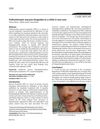
 An elderly woman's upper lip lump, thought to be a mucocele, was actually a rare type of lymphoma usually found on legs, treated successfully with chemotherapy and radiation.
1 citations
,
October 2024 in “European Journal of Histochemistry” Telocytes in silky fowl embryos develop distinct features and connections by the 20th day of incubation.
 1 citations
,
October 2023 in “Journal of the Pakistan Medical Association”
1 citations
,
October 2023 in “Journal of the Pakistan Medical Association” Folliculotropic mycosis fungoides can occur in children and is diagnosed with specific tests, but often stays in early stages with treatment.
July 2025 in “Journal of Investigative Dermatology” Three molecular subtypes of advanced skin T-cell lymphoma were identified, with potential biomarkers for predicting treatment response and disease progression.
7 citations
,
April 2000 in “Archives of Pathology & Laboratory Medicine”  17 citations
,
November 2017 in “PLoS ONE”
17 citations
,
November 2017 in “PLoS ONE” Transplanted bone marrow cells actively move, form clusters, and grow after transplantation.
 April 2023 in “The journal of investigative dermatology/Journal of investigative dermatology”
 T cells with memory features grow in number and gather around hair follicles when there are not enough immune cells.
109 citations
,
April 1997 in “Archives of Dermatological Research” Mast cell and nerve fiber interactions in mouse skin change with the hair cycle.
3 citations
,
March 2013 in “American Journal of Dermatopathology” Ossification in trichilemmal cysts is more common than previously believed.
 August 2025 in “International Journal of Contemporary Pediatrics”
 HLD10 can include increased body hair and Mongolian spots.
 9 citations
,
October 2008 in “British Journal of Dermatology”
9 citations
,
October 2008 in “British Journal of Dermatology” The growth of the Epstein-Barr virus in the patient's cells was linked to the worsening of her lymphoma.
10 citations
,
December 2015 in “International Journal of Dermatology” CK 15, follistatin, and Bmi-1 can help differentiate basal cell carcinoma from squamous cell carcinoma.
23 citations
,
January 1985 in “Journal of Neuropathology & Experimental Neurology” Cupric chloride treatment corrected abnormal Purkinje cell development in brindled mice.
November 2025 in “Journal of Investigative Dermatology” Certain CD8+ T cells attack hair follicles in alopecia areata, suggesting they could be targeted for treatment.
5 citations
,
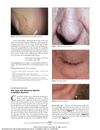
August 2021 in “Experimental dermatology” Overexpressing Merkel cell virus proteins in human hair follicles can create clusters of cells that resemble Merkel cell cancer.
 19 citations
,
December 2006 in “Archives of dermatology”
19 citations
,
December 2006 in “Archives of dermatology” Hair casts and cutaneous spicules can be signs of multiple myeloma.
7 citations
,
October 2008 in “Arthritis Care & Research” Aggressive immunosuppressive treatment improved a woman's severe heart condition linked to autoimmune disease.
 21 citations
,
October 1980 in “Gastroenterology”
21 citations
,
October 1980 in “Gastroenterology” The report described a unique case of Cronkhite-Canada syndrome with unusual polyps and an association with multiple myeloma.
 March 2025 in “OncoTargets and Therapy”
 A specific genetic trait in tumor cells is linked to longer survival without disease in certain lymphoma patients.
Normal cells stain well with fluorescent globulin, but tumor cells do not.