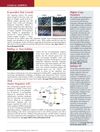
 July 2016 in “Experimental Dermatology”
 New treatments for hair growth and psoriasis may be possible, and gene differences could affect baldness and the severity of skin conditions.
 December 2015 in “Vascular Pharmacology”
 Different cells affect hair follicle blood vessels, endothelial cells react differently to inflammation and oxidized fats, and prasugrel better protects heart vessels during a procedure than clopidogrel.
 December 2015 in “Vascular Pharmacology”
 Prasugrel is better than clopidogrel at preventing heart damage and improving blood flow in small heart vessels during heart artery procedures.
 June 2020 in “Journal of Investigative Dermatology”
 Leukocyte-rich platelet-rich plasma is safe and can potentially help treat scarring hair loss.
 April 2018 in “Journal of Investigative Dermatology” April 2023 in “Journal of Investigative Dermatology”
 RNase L suppresses regeneration in mammals.
 59 citations
,
May 2017 in “Scientific reports”
59 citations
,
May 2017 in “Scientific reports” ZDHHC13 is important for normal liver function and metabolism, affecting mitochondrial activity.
 17 citations
,
August 2018 in “BMC Genomics”
17 citations
,
August 2018 in “BMC Genomics” The HOXC13 gene affects different hair proteins in cashmere goats in varied ways and is controlled by a feedback loop and other factors.
 November 2022 in “The journal of investigative dermatology/Journal of investigative dermatology”
 IL-15 promotes hair growth and protects hair follicles.
 359 citations
,
September 2017 in “European Journal of Epidemiology”
359 citations
,
September 2017 in “European Journal of Epidemiology” The Rotterdam Study updated findings on elderly health, focusing on heart disease, genetics, lifestyle effects, and disease understanding.
 252 citations
,
April 2009 in “Seminars in Cell & Developmental Biology”
252 citations
,
April 2009 in “Seminars in Cell & Developmental Biology” The immune system plays a key role in tissue repair, affecting both healing quality and regenerative ability.
 191 citations
,
May 2018 in “British journal of dermatology/British journal of dermatology, Supplement”
191 citations
,
May 2018 in “British journal of dermatology/British journal of dermatology, Supplement” Alopecia areata is likely an autoimmune disease with unclear triggers, involving various immune cells and molecules, and currently has no cure.
 159 citations
,
October 2015 in “Science Advances”
159 citations
,
October 2015 in “Science Advances” Blocking JAK-STAT signaling can lead to hair growth.
 156 citations
,
August 2016 in “Journal of controlled release”
156 citations
,
August 2016 in “Journal of controlled release” Tight junctions are key for skin protection and controlling what gets absorbed or passes through the skin.
 88 citations
,
August 2019 in “Nature communications”
88 citations
,
August 2019 in “Nature communications” Researchers found a specific immune receptor in patients that causes severe skin reactions to a drug.
 86 citations
,
April 2016 in “Nature Communications”
86 citations
,
April 2016 in “Nature Communications” Notch1 helps skin heal by attracting specific immune cells.
 70 citations
,
February 2015 in “Expert Opinion on Drug Discovery”
70 citations
,
February 2015 in “Expert Opinion on Drug Discovery” Topical drugs and near-infrared light therapy show potential for treating alopecia.
 59 citations
,
June 2023 in “Nature Aging”
59 citations
,
June 2023 in “Nature Aging” Blocking IL-17 signaling may reduce skin inflammation and delay aging.
 47 citations
,
December 2019 in “Frontiers in immunology”
47 citations
,
December 2019 in “Frontiers in immunology” A new mutation in the STING protein causes a range of symptoms and its severity may be affected by other genetic variations; treatment with a specific inhibitor showed improvement in one patient.
 29 citations
,
June 2013 in “Journal of the Saudi Society of Dermatology & Dermatologic Surgery”
29 citations
,
June 2013 in “Journal of the Saudi Society of Dermatology & Dermatologic Surgery” Alopecia areata is an autoimmune hair loss condition treated with corticosteroids, and histologic confirmation is the best diagnosis method.
 27 citations
,
March 2018 in “Allergy and asthma proceedings”
27 citations
,
March 2018 in “Allergy and asthma proceedings” People with alopecia areata often have higher rates of allergies and autoimmune diseases.
 25 citations
,
March 2012 in “Journal of Dermatological Science”
25 citations
,
March 2012 in “Journal of Dermatological Science” Genetic variants linked to ten skin diseases were found, showing both immune and non-immune factors play a role.
 24 citations
,
October 2014 in “Cold Spring Harbor Perspectives in Medicine”
24 citations
,
October 2014 in “Cold Spring Harbor Perspectives in Medicine” Genetic research has advanced our understanding of skin diseases, but complex conditions require an integrative approach for deeper insight.
 23 citations
,
January 2024 in “Nature Immunology”
23 citations
,
January 2024 in “Nature Immunology” γδ T cells adapt uniquely to different tissues in mice.
 23 citations
,
January 2010 in “Journal of Medical Primatology”
23 citations
,
January 2010 in “Journal of Medical Primatology” Hair loss in Rhesus macaques may be caused by a skin allergy-related condition.
 21 citations
,
November 2022 in “Frontiers in immunology”
21 citations
,
November 2022 in “Frontiers in immunology” Sebaceous glands play a key role in skin health, immunity, and various skin diseases.
 20 citations
,
July 2024 in “Archives of Dermatological Research”
20 citations
,
July 2024 in “Archives of Dermatological Research” Dupilumab helps children with alopecia areata regrow hair safely.
 20 citations
,
October 2021 in “PLoS ONE”
20 citations
,
October 2021 in “PLoS ONE” Newborn skin is uniquely prepared to adapt to new environments compared to adult skin.
 19 citations
,
January 2018 in “Scientific Reports”
19 citations
,
January 2018 in “Scientific Reports” Non-immune factors play a significant role in alopecia areata.
 19 citations
,
January 2018 in “Acta dermato-venereologica”
19 citations
,
January 2018 in “Acta dermato-venereologica” People with alopecia areata have higher levels of a heart disease marker than those without hair loss.