 March 2026 in “Medeniyet Medical Journal”
 EH-MSCs may help treat hair loss by boosting regeneration and reducing inflammation.
 53 citations
,
April 2021 in “Cell Host & Microbe”
53 citations
,
April 2021 in “Cell Host & Microbe” Skin bacteria, specifically Staphylococcus aureus, help in wound healing and hair growth by using IL-1β signaling. Using antibiotics on skin wounds can slow down this natural healing process.
1 citations
,
January 2025 in “Archives of Dermatological Research” Higher levels of IL-1R1 and hsa-miR-19b-3p may help diagnose and predict alopecia areata severity.
September 2020 in “Benha Journal of Applied Sciences” Higher IL-19 levels are linked to more severe Alopecia Areata.
 185 citations
,
August 2020 in “Mayo Clinic Proceedings”
185 citations
,
August 2020 in “Mayo Clinic Proceedings” Men are more likely to have severe COVID-19 cases and fatalities than women due to factors like lifestyle, aging, and biological differences.
 114 citations
,
January 2021 in “medRxiv (Cold Spring Harbor Laboratory)”
114 citations
,
January 2021 in “medRxiv (Cold Spring Harbor Laboratory)” COVID-19 can cause over 50 long-term symptoms, with fatigue and headache being the most common.
 3 citations
,
March 2022 in “Annals of Medicine”
3 citations
,
March 2022 in “Annals of Medicine” Hair shedding after COVID-19 is more linked to the disease's severity and inflammation rather than hormones, with women at higher risk.
Ajwain seed extract improved skin healing and hair growth in a mouse skin irritation model.
15 citations
,
July 2022 in “Frontiers in Pharmacology” Cepharanthine may help treat COVID-19 by targeting similar pathways as other inflammatory diseases.
 8 citations
,
January 2022 in “Infectious diseases News Opinions Training”
8 citations
,
January 2022 in “Infectious diseases News Opinions Training” Genetic differences affect COVID-19 severity and treatment effectiveness.
 January 2024 in “Future postharvest and food”
 Frankincense may help treat COVID-19, but more research is needed.
 April 2023 in “The journal of investigative dermatology/Journal of investigative dermatology”
 Psoriasis patients on biologic therapy have a weaker immune response to COVID-19 vaccination than healthy people.
 April 2022 in “International journal of respiratory and pulmonary medicine”
 People with lower levels of free testosterone tend to have worse COVID-19 outcomes.
January 2015 in “ScholarlyCommons (University of Pennsylvania)” IL-19 and IL-24 help cells respond to DNA damage and could be targeted for cancer and age-related disease treatments.

Menopause-related skin changes may increase fungal infections and inflammation.
 123 citations
,
May 2009 in “Journal of Neuroscience”
123 citations
,
May 2009 in “Journal of Neuroscience” In late pregnancy, allopregnanolone reduces stress responses in rats by affecting brain chemicals.
69 citations
,
June 2016 in “Journal of Investigative Dermatology” Sebaceous gland atrophy and inflammation may cause hair loss in psoriasis.
 32 citations
,
March 2021 in “Journal of cosmetic dermatology (Print)”
32 citations
,
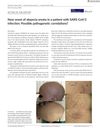
March 2021 in “Journal of cosmetic dermatology (Print)” COVID-19 infection may trigger alopecia areata in some patients.
32 citations
,
October 2023 in “Biomedicines” PCOS causes inflammation regardless of body weight.
 16 citations
,
April 2017 in “Journal of Cosmetic Dermatology”
16 citations
,
April 2017 in “Journal of Cosmetic Dermatology” Ficus carica leaf extract may help treat skin disorders by reducing inflammation and androgen effects in skin cells.
12 citations
,
November 2024 in “Journal of Ovarian Research” Certain inflammatory factors may increase or decrease the risk of developing PCOS.
 12 citations
,
March 2016 in “BBA clinical”
12 citations
,
March 2016 in “BBA clinical” Increased Toll-like receptors in blood cells may contribute to alopecia areata and could be a target for new treatments.
10 citations
,
November 2024 in “Cureus” Women with PCOS have a higher risk of heart disease due to factors like insulin resistance and obesity.
3 citations
,
November 2022 in “Molecules/Molecules online/Molecules annual” The substances improved hair regrowth and protected hair cells in humans and mice.
 1 citations
,
September 2023 in “Journal of the American Academy of Dermatology”
1 citations
,
September 2023 in “Journal of the American Academy of Dermatology” COVID-19 vaccines have been linked to an increase in hair loss conditions.
 1 citations
,
May 2012 in “Hair transplant forum international”
1 citations
,
May 2012 in “Hair transplant forum international” Hair loss in men may be caused by inflammation triggered by hormones, and treatments reducing inflammation could potentially promote hair growth.
January 2026 in “Burns & Trauma” NLRP3 helps control inflammation and repair in wound healing, making it a potential target for treatment.
November 2025 in “ACS Omega” Teak leaf extract may help hair growth and reduce inflammation safely.
February 2015 in “American journal of medical and biological research” Balding hair follicles have less growth-promoting factors and more inhibitory factors, leading to hair loss.
7 citations
,
October 2018 in “South African journal of botany” Clausena anisata may be effective in treating acne due to its ability to fight bacteria, reduce inflammation, and possibly lower sebum production.