 29 citations
,
May 2020 in “npj Regenerative Medicine”
29 citations
,
May 2020 in “npj Regenerative Medicine” Immune cells help regulate hair growth, and better understanding this can improve hair loss treatments.
9 citations
,
June 2023 in “Cells” Certain natural and synthetic compounds may help treat inflammatory skin diseases by targeting a specific signaling pathway.
114 citations
,
August 2002 in “Journal of Investigative Dermatology” Alopecia areata is caused by an immune response, and targeting immune cells might help treat it.
 April 2024 in “Frontiers in physiology”
 Immune cells are crucial for hair growth and preventing hair loss.
 61 citations
,
September 2010 in “Genomics”
61 citations
,
September 2010 in “Genomics” The study found that immune responses disrupt hair growth cycles, causing hair loss in alopecia areata.
253 citations
,
December 2007 in “Journal of Investigative Dermatology” Hair follicles prevent NK cell attacks to avoid hair loss.
 June 2023 in “Research Square (Research Square)”
 Different immune responses cause hair loss in scalp diseases, with unique patterns in scalp psoriasis possibly protecting against hair loss.
 129 citations
,
November 2005 in “Internal Medicine Journal”
129 citations
,
November 2005 in “Internal Medicine Journal” Early detection and intensive treatment of diseases caused by Staphylococcus aureus toxins are crucial for reducing severe health effects.
1 citations
,
January 2021 PRP is effective for treating patchy alopecia areata.
May 2025 in “Journal of the Egyptian Womenʼs Dermatologic Society” Hair follicles in nonsegmental vitiligo are better protected from immune attacks than in alopecia areata.
 36 citations
,
June 2009 in “Archives of Dermatology”
36 citations
,
June 2009 in “Archives of Dermatology” Marie Antoinette syndrome causes sudden hair whitening, but its exact cause is unknown.
 March 2025 in “Kerala Journal of Ayurveda”
 Ayurvedic treatments successfully regrew hair and reduced hair loss in a woman with alopecia areata.
 14 citations
,
January 1985 in “International Journal of Dermatology”
14 citations
,
January 1985 in “International Journal of Dermatology” The cause of alopecia areata was unknown, and while various treatments existed, no best treatment was agreed upon.
 11 citations
,
June 2022 in “Frontiers in immunology”
11 citations
,
June 2022 in “Frontiers in immunology” New protein changes may be involved in the immune attack on hair follicles in alopecia areata.
 April 2024 in “bioRxiv (Cold Spring Harbor Laboratory)”
 GRK2 is essential for healthy hair follicle function, and its absence can lead to hair loss and cysts.
 290 citations
,
December 2017 in “Journal of The American Academy of Dermatology”
290 citations
,
December 2017 in “Journal of The American Academy of Dermatology” Alopecia areata is an autoimmune condition causing hair loss, influenced by genetics, stress, and diet, and may be prevented by a high soy oil diet.
 23 citations
,
October 2018 in “Australasian Journal of Dermatology”
23 citations
,
October 2018 in “Australasian Journal of Dermatology” The current understanding of frontal fibrosing alopecia involves immune, genetic, hormonal factors, and possibly environmental triggers, but more research is needed for effective treatments.
8 citations
,
July 2020 in “Clinical, cosmetic and investigational dermatology” Excessive sun protection might cause frontal fibrosing alopecia by disrupting skin immune balance.
2 citations
,
November 2025 in “Pharmaceutics” Cell-mediated drug delivery systems improve skin disease treatment by using living cells for precise, prolonged, and less toxic therapy.
 April 2021 in “Journal of Investigative Dermatology”
 IL-15 helps protect hair follicles from immune attacks and encourages hair growth.
 2 citations
,
March 2015 in “Expert opinion on orphan drugs”
2 citations
,
March 2015 in “Expert opinion on orphan drugs” New treatments for hair loss show promise but need more research to confirm safety and effectiveness.
 2 citations
,
February 2014 in “Hair therapy & transplantation”
2 citations
,
February 2014 in “Hair therapy & transplantation” Alopecia Areata is an autoimmune condition causing hair loss, influenced by genetics, environment, and possibly improved by anti-MIF therapy, with many patients experiencing regrowth within a year.
245 citations
,
October 2015 in “Nature medicine” Hair follicle-derived IL-7 and IL-15 are crucial for maintaining skin-resident memory T cells and could be targeted for treating skin diseases and lymphoma.
 37 citations
,
November 2003 in “Veterinary pathology”
37 citations
,
November 2003 in “Veterinary pathology” Hair loss in mice starts with immune cells damaging hair roots before it becomes visible.
 23 citations
,
March 2001 in “Clinics in dermatology”
23 citations
,
March 2001 in “Clinics in dermatology” Alopecia areata involves immune response and gene changes affecting hair loss.
54 citations
,
December 2011 in “American Journal Of Pathology” A Gsdma3 mutation causes hair loss due to stem cell damage from skin inflammation.
 1 citations
,
October 2013 in “The Journal of Dermatology”
1 citations
,
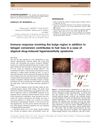
October 2013 in “The Journal of Dermatology” Hair loss in a drug reaction case involved both a common shedding phase and an immune attack on hair follicle stem cells.
May 2025 in “Nonlinear Analysis Real World Applications” Reducing CD8+ T cell growth can stabilize alopecia areata.
 1 citations
,
June 2023 in “Genes”
1 citations
,
June 2023 in “Genes” Hair loss from Alopecia Areata is caused by both genes and environment, with several treatments available but challenges in cost and relapse remain.

Different stem cells are key for hair growth and health, and understanding their regulation could help treat hair loss.