 March 2010 in “Anti-inflammatory & anti-allergy agents in medicinal chemistry”
 Biologic agents can be effective for rheumatic diseases but have risks like infections and require careful monitoring and patient information.
 September 2009 in “Pediatric Dermatology”
 UVB is good for a skin condition in Asian kids, a lotion works for head lice, a drug helps with a skin blistering disorder, a foam reduces itchiness in skin inflammation, birthmarks can be more widespread, and criteria for a neurocutaneous disorder were agreed upon.
 November 2008 in “Medical & surgical dermatology”
 A device was made in 2008 to measure hair loss severity. Other findings include: frizzy mutation in mice isn't related to Fgfr2, C/EBPx marks preadipocytes, Cyclosporin A speeds up hair growth in mice, blocking plasmin and metalloproteinases hinders healing, hyperbaric oxygen helps ischemic wound healing, amniotic membranes heal wounds better than polyurethane foam, rhVEGF165 from a fibrin matrix improves tissue flap viability and induces VEGF-R2 expression, and bFGF enhances wound healing and reduces scarring in rabbits.
 August 1994 in “Journal of dermatological science”
 Different substances affect hair and skin cell growth in various ways.
 August 1994 in “Journal of dermatological science”
 Cyclosporin A and FK506 can start new hair growth in mice, but ascomycin and rapamycin cannot.
 August 1994 in “Journal of dermatological science”
 Active oxygen scavengers can reverse the suppression of hair cell growth caused by androgens.
 August 1994 in “Journal of dermatological science”
 Mouse hair cells respond to male hormones by growing less, and this can be stopped by certain blockers.
 January 2021 in “International Journal of Dermatology”
 Possible link between COVID-19 and hair loss; more research needed.

Integrin alphavbeta6 is important for wound healing and hair growth, and blocking it may improve these processes.
November 2023 in “Journal of Investigative Dermatology” The study identified key immune cell differences between mild and severe alopecia areata.
1 citations
,
February 2023 in “Pharmaceutics” Cell proteomic footprinting enhances cancer vaccine quality by ensuring correct antigen composition.
71 citations
,
May 2019 in “Rheumatology” Tph cells are linked to the severity of systemic lupus erythematosus.
7 citations
,
March 1993 in “International Journal of Oncology” Basal cell carcinoma shows keratin patterns similar to hair follicle structures.
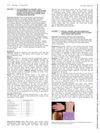
A TNFAIP3 gene mutation can cause unusual and varied symptoms of lupus and Sjogren's syndrome.
January 2016 in “mediaTUM – the media and publications repository of the Technical University Munich (Technical University Munich)” A new test using NOS2 and CCL27 genes can better diagnose and treat psoriasis and eczema.
 May 1991 in “Current problems in dermatology”
 Skin issues can indicate immune system problems.
Live imaging helps us understand skin immune responses and develop treatments.
 September 2023 in “Research Square (Research Square)”
 TNC+ fibroblasts play a key role in skin inflammation by interacting with T cells.
July 2022 in “Journal of Investigative Dermatology” 52 citations
,
February 1986 in “Journal of Histochemistry & Cytochemistry” Some hair proteins are specific to hair, while others are also found in skin cells.
73 citations
,
April 2006 in “BioTechniques” Protein microarrays are highly sensitive tools useful for disease diagnosis and studying proteins.
717 citations
,
June 2010 in “Nature” Alopecia areata involves both innate and adaptive immunity, with specific genes linked to the disease.
Alopecia areata involves immune system changes, especially in severe cases, with potential new treatment targets identified.
March 2005 in “Journal of the American Academy of Dermatology” Higher levels of IL-1a and IL-1RA were found in severe alopecia areata cases.
February 2026 in “Immunity Inflammation and Disease” Recognizing unusual skin, eye, or hair issues can help diagnose immune system disorders early, especially in children.
November 2025 in “Journal of Investigative Dermatology” Tanning ability is linked to specific DNA changes in skin genes.
2 citations
,
December 2017 in “The journal of investigative dermatology. Symposium proceedings/The Journal of investigative dermatology symposium proceedings” The conclusion is that a new method could improve the identification of autoimmune targets in alopecia areata, despite some limitations.
April 2023 in “Journal of Investigative Dermatology” Chronic graft-versus-host disease in the skin shows strong Th1 immune response and unique barrier issues.
May 2023 in “Zenodo (CERN European Organization for Nuclear Research)” Forensic DNA phenotyping can predict physical traits from DNA but faces challenges in knowledge and ethics.
353 citations
,
November 2014 in “Molecular immunology” Porcine skin is very similar to human skin, making it a useful model for research.