 43 citations
,
August 2008 in “Regenerative Medicine”
43 citations
,
August 2008 in “Regenerative Medicine” Scientists created early-stage hairs from mouse cells that grew into normal, pigmented hair when implanted into other mice.
 48 citations
,
December 2004 in “Differentiation”
48 citations
,
December 2004 in “Differentiation” Tooth papilla cells can help regenerate hair follicles and grow hair.
 68 citations
,
December 1991 in “Annals of the New York Academy of Sciences”
68 citations
,
December 1991 in “Annals of the New York Academy of Sciences” Hair growth can be induced by certain cells found at the base of hair follicles, and these cells may also influence hair development and regeneration.
 7 citations
,
November 2019 in “Animal”
7 citations
,
November 2019 in “Animal” Melatonin increases cashmere quality in goats but reduces their milk production and doesn't affect their offspring's hair growth.
January 2006 in “Chinese Journal of Medical Aesthetics and Cosmetology” Microencapsulated human hair cells can successfully grow new hair follicles in mice.
January 2006 in “Chinese Journal of Dermatology” Hair follicle-like structures can be created using hair cells on collagen/chitosan scaffolds.
May 2013 in “Zhonghua miniao waike zazhi” Hair follicle stem cells work well with bladder matrix for bladder repair.
January 2009 in “Junshi Yixue Kexueyuan yuankan” Hair follicle dermal sheath cells speed up skin wound healing.
 April 2020 in “Research Square (Research Square)”
 Melatonin treatment improved cashmere production in goats for one cycle without lasting effects on the next cycle.
Melatonin shortens the hair growth cycle by increasing PDGFA gene expression.
 19 citations
,
March 2017 in “PLoS ONE”
19 citations
,
March 2017 in “PLoS ONE” PSU are better than THF at regenerating skin layers in lab models.
 1 citations
,
June 2024 in “PLoS ONE”
1 citations
,
June 2024 in “PLoS ONE” HAP-cell-sheets improved wound healing in diabetic mice.
1 citations
,
February 2025 in “Cell Cycle” HAP stem cell sheets speed up wound healing and reduce scarring.
 87 citations
,
February 2004 in “Plastic and Reconstructive Surgery”
87 citations
,
February 2004 in “Plastic and Reconstructive Surgery” Hair follicle stem cells helped heal a severe scalp burn without needing traditional skin grafts.
 57 citations
,
November 1998 in “Wound Repair and Regeneration”
57 citations
,
November 1998 in “Wound Repair and Regeneration” Hair papilla cells can create and regenerate hair bulbs under the right conditions.
 44 citations
,
July 2016 in “Stem Cells Translational Medicine”
44 citations
,
July 2016 in “Stem Cells Translational Medicine” Scientists discovered that certain stem cells from mice and humans can be used to grow new hair follicles and skin glands when treated with a special mixture.
 26 citations
,
January 2007 in “Organogenesis”
26 citations
,
January 2007 in “Organogenesis” Bioengineering can potentially treat hair loss by regenerating hair follicles and cloning hair, but the process is complex and needs more research.
 24 citations
,
February 2006 in “Chinese Medical Journal”
24 citations
,
February 2006 in “Chinese Medical Journal” Cultured dermal papilla cells can regenerate hair follicles and sustain hair growth.
24 citations
,
January 1989 Human papilla cells from hair follicles show unique growth behaviors but don't induce hair growth in vitro.
 19 citations
,
April 2010 in “Journal of Dermatological Treatment”
19 citations
,
April 2010 in “Journal of Dermatological Treatment” Partial hair follicle extraction can effectively double the number of hair follicles for transplants, with most surviving and growing normally after a year.
 13 citations
,
October 2002 in “Journal of Investigative Dermatology”
13 citations
,
October 2002 in “Journal of Investigative Dermatology” The upper half of a human hair follicle can grow a new hair in a mouse, but success is rare.
 3 citations
,
January 2023 in “PloS one”
3 citations
,
January 2023 in “PloS one” Implanting hair-follicle stem cells in mice brains helped repair brain bleeding and reduced brain inflammation.
 2 citations
,
May 2015 in “Journal of Cosmetic and Laser Therapy”
2 citations
,
May 2015 in “Journal of Cosmetic and Laser Therapy” Hair follicles can survive for a few days before transplant but are less viable over time.
 June 2020 in “Journal of Investigative Dermatology”
 Scientists successfully grew mini hair follicles using human skin cells, which could help treat baldness.
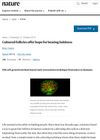
Growing hair follicles from cultured cells could potentially treat baldness, but more research is needed.
 August 2009 in “Mechanisms of Development”
 Adult hair follicle cells can create new hair follicles from corneal cells with the right support.
January 2006 in “中华医学杂志:英文版” Cultured skin cells can trigger hair growth and the amount of certain proteins they produce affects their ability to regenerate hair follicles.
January 2006 in “Chinese Journal of Dermatology” Cultured dermal papilla cells can regenerate hair follicles and sustain hair growth.
 June 2005 in “Key Engineering Materials”
 Using hydrogels to slowly release growth factors can effectively boost hair growth in mice.
August 2000 in “Chinese Journal of Dermatology” Dermal papilla cells can successfully grow and maintain hair follicles.