 10 citations
,
August 2016 in “Oxford Medical Case Reports”
10 citations
,
August 2016 in “Oxford Medical Case Reports” Tocilizumab therapy may cause skin and hair conditions like halo naevi, vitiligo, and alopecia areata.
5 citations
,
March 2019 in “Quantitative Imaging in Medicine and Surgery” Endoscopic imaging can improve tracking of stem cells in the body.
 3 citations
,
August 2023 in “Drug safety”
3 citations
,
August 2023 in “Drug safety” Proactive monitoring and management are essential to maximize the benefits of Trastuzumab Deruxtecan while minimizing serious side effects.
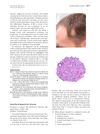
The man has Temporal Triangular Alopecia, a stable, non-scarring hair loss condition best treated with hair transplantation.
 June 2017 in “Journal of the American Academy of Dermatology”
 Tofacitinib is effective and safe for treating severe alopecia areata and related conditions.
December 2025 in “The Journal of Dermatology” Ritlecitinib effectively reduces hair loss in JAK inhibitor-naïve alopecia areata patients.
 3 citations
,
January 1989 in “Journal of Japan Oil Chemists Society”
3 citations
,
January 1989 in “Journal of Japan Oil Chemists Society” AMT is the best surfactant for hair and scalp care.
 49 citations
,
May 2018 in “Journal of the American Academy of Dermatology”
49 citations
,
May 2018 in “Journal of the American Academy of Dermatology” Applying 2% tofacitinib cream helped some children with severe hair loss grow back hair.
 November 2025 in “Mendeley Data”
 JAK inhibitors can be safely used for alopecia areata in patients with latent hepatitis B or stable tuberculosis with proper monitoring.
2 citations
,
June 2020 in “Clinical Journal of Gastroenterology” Tofacitinib effectively treated both ulcerative colitis and alopecia areata in two patients.
April 2018 in “Veterinary Pathology” Tigers had a skin condition causing hair loss and inflammation, but the cause is unknown and treatment didn't work.
23 citations
,
October 2024 in “British Journal of Dermatology” Ritlecitinib effectively treats alopecia areata and is safe for long-term use in people 12 and older.
34 citations
,
December 1984 in “Journal of Cutaneous Pathology” Monilethrix hair issues are due to problems in the hair's internodes.
 January 2016 in “The Australian Pharmacist”
 Tofacitinib might be used to treat hair loss.
January 2005 in “Chinese Journal of Aesthetic Medicine” The combined hair transplant technique was effective and had high patient satisfaction.
 1 citations
,
May 2018 in “Tropical Journal of Pharmaceutical Research”
1 citations
,
May 2018 in “Tropical Journal of Pharmaceutical Research” Intense pulsed-light therapy helps mice grow hair by activating a specific growth pathway.
 15 citations
,
October 2010 in “Archives of Toxicology”
15 citations
,
October 2010 in “Archives of Toxicology” A yeast-based test can detect the steroid methyltestosterone in urine longer than traditional methods.
4 citations
,
July 2024 in “Radiotherapy and Oncology” A standardized scoring system is needed to improve model reliability for predicting hair loss in brain tumor patients treated with proton therapy.
147 citations
,
August 2005 in “The Plant Cell” The TIP1 gene is crucial for normal plant cell growth in Arabidopsis.
January 2020 in “JAAD case reports” Systemic mastocytosis may cause a type of hair loss called cicatricial alopecia.
October 2018 in “The American journal of gastroenterology” Pembrolizumab can cause serious liver issues, requiring close monitoring and early treatment.
1 citations
,
May 2024 in “Pediatric Blood & Cancer” Trametinib can effectively treat severe kaposiform lymphangiomatosis when other treatments fail.
September 2017 in “Scientific Repository (Petra Christian University)” An SMS-based e-voting system is easy, efficient, and provides fast, accurate election results.
 January 2023 in “Indian Dermatology Online Journal”
 No single ideal JAK inhibitor for alopecia areata has been determined; JAK3 inhibitors may be promising with fewer side effects.
 October 2022 in “Journal of Armed Forces Medical College, Bangladesh”
 Tofacitinib is effective and safe for treating alopecia areata.
 April 2024 in “Cellular signalling”
 Activating TRPMLs helps human cells important for hair growth and increases hair growth in mice.
3D-ultrasound can non-invasively detect and predict alopecia areata phases and outcomes.
 39 citations
,
April 2016 in “Case Reports in Dermatology”
39 citations
,
April 2016 in “Case Reports in Dermatology” Tofacitinib temporarily regrew hair in a man with alopecia, but its effects didn't last.
 66 citations
,
December 2018 in “Dermatology”
66 citations
,
December 2018 in “Dermatology” Both ruxolitinib and tofacitinib are effective and safe for treating severe alopecia areata, but relapses are common.
8 citations
,
January 2025 in “JADA Foundational Science” Photobiomodulation therapy can reduce pain and inflammation and help heal tissues, but more research is needed to improve its effectiveness and safety.