 23 citations
,
May 2019 in “Expert Opinion on Therapeutic Patents”
23 citations
,
May 2019 in “Expert Opinion on Therapeutic Patents” New androgen receptor modulators show promise for treating diseases like prostate cancer and muscle wasting.
2 citations
,
January 2013 in “Journal of Clinical & Experimental Dermatology Research” Human hair follicles can be grown in a lab for about a week.
29 citations
,
April 2003 in “Experimental dermatology” Human hair follicles grown in vitro maintain normal keratin patterns and structure.
 25 citations
,
May 2020 in “Daehan saengsik uihak hoeji/Clinical and experimental reproductive medicine”
25 citations
,
May 2020 in “Daehan saengsik uihak hoeji/Clinical and experimental reproductive medicine” Injecting platelet-derived growth factors into ovaries may improve IVF outcomes by enhancing egg quality and embryo health.
 January 2010 in “Experimental Dermatology”
 Adiponectin may help hair grow based on lab tests.
September 2004 in “Experimental Dermatology” The model effectively studies how sensory nerves interact with skin components, aiding research on wound healing and hair growth.
 3 citations
,
February 2021 in “Experimental dermatology”
3 citations
,
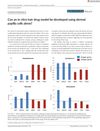
February 2021 in “Experimental dermatology” Dermal papilla microtissues could be useful for initial hair growth drug testing.
10 citations
,
May 2020 in “Clinical and Experimental Health Sciences” Tideglusib may help bone regeneration without being toxic at low doses.
 2 citations
,
July 2016 in “Clinical and Experimental Dermatology”
2 citations
,
July 2016 in “Clinical and Experimental Dermatology” Some types of extracellular matrix can change how human skin cells grow but don't affect their basic functions.
1 citations
,
January 2013 in “Journal of clinical & experimental dermatology research” Melatonin may help whisker growth in mice.
 26 citations
,
October 2007 in “Experimental Dermatology”
26 citations
,
October 2007 in “Experimental Dermatology” L-Carnitine-L-tartrate may help hair grow and prevent hair loss.
 21 citations
,
September 2001 in “Graefes Archive for Clinical and Experimental Ophthalmology”
21 citations
,
September 2001 in “Graefes Archive for Clinical and Experimental Ophthalmology” Minoxidil may help prevent capsular opacification after cataract surgery.
1 citations
,
September 2004 in “Experimental Dermatology” MC-1R is present in skin cells and may help reduce inflammation.
 15 citations
,
August 2022 in “Daehan saengsik uihak hoeji/Clinical and experimental reproductive medicine”
15 citations
,
August 2022 in “Daehan saengsik uihak hoeji/Clinical and experimental reproductive medicine” Platelet-rich plasma may improve embryo genetics in IVF.
 3 citations
,
September 1980 in “Experientia”
3 citations
,
September 1980 in “Experientia” Dobutamine does not mimic dopamine at therapeutic doses but may at very high concentrations; microfilaments, not microtubules, are important for wound healing in Xenopus embryos.
13 citations
,
April 2016 in “Journal of Visualized Experiments” The method successfully isolates hair follicle stem cells and skin cells from mice for research.
35 citations
,
August 2016 in “Experimental Dermatology” Fullerene C60 shows promise as a new treatment for various skin conditions.
 55 citations
,
April 2017 in “Experimental Dermatology”
55 citations
,
April 2017 in “Experimental Dermatology” The document describes a way to isolate and grow human hair follicle cells in 3D to help study hair growth.
 30 citations
,
April 2018 in “Experimental Dermatology”
30 citations
,
April 2018 in “Experimental Dermatology” The article concludes that developing in vitro models for human hair structures is important for research and reducing animal testing, but there are challenges like obtaining suitable samples and the models' limitations.
 7 citations
,
November 2020 in “Experimental Dermatology”
7 citations
,
November 2020 in “Experimental Dermatology” Different cell types work together to repair skin, and targeting them may improve healing and reduce scarring.
October 2022 in “Experimental Dermatology” New technologies show promise for better hair regeneration and treatments.
18 citations
,
September 2023 in “Experimental Dermatology” The skin microbiome plays a key role in treating atopic dermatitis.
 9 citations
,
November 2000 in “Proceedings of SPIE, the International Society for Optical Engineering/Proceedings of SPIE”
9 citations
,
November 2000 in “Proceedings of SPIE, the International Society for Optical Engineering/Proceedings of SPIE” Dyeing hair can help target and destroy hair follicles selectively.
 2 citations
,
January 2020 in “Methods in molecular biology”
2 citations
,
January 2020 in “Methods in molecular biology” Scientists created early-stage hair follicles from human skin cells, which could help treat baldness and study hair growth.
 84 citations
,
July 2008 in “Aaps Pharmscitech”
84 citations
,
July 2008 in “Aaps Pharmscitech” Ethosomes improve finasteride delivery through skin for hair loss treatment.
 43 citations
,
August 2008 in “Regenerative Medicine”
43 citations
,
August 2008 in “Regenerative Medicine” Scientists created early-stage hairs from mouse cells that grew into normal, pigmented hair when implanted into other mice.
 25 citations
,
August 1992 in “In vitro cellular & developmental biology”
25 citations
,
August 1992 in “In vitro cellular & developmental biology” The new system can grow hair in the lab and test hair growth treatments.
 13 citations
,
December 1991 in “Annals of the New York Academy of Sciences”
13 citations
,
December 1991 in “Annals of the New York Academy of Sciences” Researchers created a lab model to study human hair growth, showing it can grow and self-regulate outside the body.
 11 citations
,
June 2023 in “Drug Delivery and Translational Research”
11 citations
,
June 2023 in “Drug Delivery and Translational Research” The gel with apocynin-loaded nanoparticles shows promise for treating rheumatoid arthritis.
 5 citations
,
February 2010 in “Drug development and industrial pharmacy”
5 citations
,
February 2010 in “Drug development and industrial pharmacy” Vesicles made of behenyltrimethylammonium chloride and stearic acid can triple the skin absorption of hinokitiol, which may help with hair growth.