10 citations
,
June 2016 in “Cell Transplantation” Sebaceous glands can help harvest hair follicle stem cells to regenerate skin and hair.
 57 citations
,
February 2013 in “Journal of Dermatological Science”
57 citations
,
February 2013 in “Journal of Dermatological Science” Improving the environment and cell interactions is key for creating human hair in the lab.
 19 citations
,
December 2015 in “Journal of Materials Chemistry B”
19 citations
,
December 2015 in “Journal of Materials Chemistry B” Scientists have created a method to deliver specific cells that can regenerate hair follicles, potentially offering a new treatment for hair loss.
 61 citations
,
December 2016 in “The EMBO Journal”
61 citations
,
December 2016 in “The EMBO Journal” The study showed that hair follicle stem cells can maintain and organize themselves in a lab setting, keeping their ability to renew and form hair and skin.
 68 citations
,
December 2011 in “Journal of Investigative Dermatology”
68 citations
,
December 2011 in “Journal of Investigative Dermatology” Sox2-positive dermal papilla cells have unique characteristics and contribute more to skin and hair follicle formation than Sox2-negative cells.
 7 citations
,
January 2016 in “Methods in molecular biology”
7 citations
,
January 2016 in “Methods in molecular biology” Mouse hair follicle stem cells were successfully isolated and used to regenerate hair follicles with two different methods.
 8 citations
,
January 2019 in “Experimental Dermatology”
8 citations
,
January 2019 in “Experimental Dermatology” The 3D skin model is better for hair growth research and testing treatments.
 63 citations
,
October 2013 in “Dermatologic Surgery”
63 citations
,
October 2013 in “Dermatologic Surgery” Platelet-Rich Plasma (PRP) increases the number of new hair follicles and speeds up hair formation.
January 2008 in “Infoscience (Ecole Polytechnique Fédérale de Lausanne)” Thymic epithelial cells may be related to skin stem cells.
 24 citations
,
August 2011 in “Experimental Dermatology”
24 citations
,
August 2011 in “Experimental Dermatology” The flap assay grows the most natural hair but takes the longest, the chamber assay is hard work but gives dense, normal hair, and the patch assay is quick but creates poorly oriented hair with some issues.
 April 2018 in “Journal of Investigative Dermatology”
 Removing STAT5 from 3D-cultured human skin cells reduces their ability to grow hair.
 3 citations
,
April 2018 in “Therapeutic Delivery”
3 citations
,
April 2018 in “Therapeutic Delivery” Hair follicle regeneration and delivery is complex due to many molecular and cellular factors.
 8 citations
,
January 2015 in “Clinical and Experimental Dermatology”
8 citations
,
January 2015 in “Clinical and Experimental Dermatology” A new model for hair regeneration in mice was created in 2015, which is faster and less invasive than the old method, producing normal hairs in about 21 days.
 321 citations
,
December 2009 in “Journal of Dermatological Science”
321 citations
,
December 2009 in “Journal of Dermatological Science” Dermal cells are key in controlling hair growth and could potentially be used in hair loss treatments, but more research is needed to improve hair regeneration methods.
 101 citations
,
December 2010 in “The journal of investigative dermatology/Journal of investigative dermatology”
101 citations
,
December 2010 in “The journal of investigative dermatology/Journal of investigative dermatology” Scientists turned mouse stem cells into skin cells that can grow into skin layers and structures.
 55 citations
,
March 2012 in “Journal of Investigative Dermatology”
55 citations
,
March 2012 in “Journal of Investigative Dermatology” Research on epidermal stem cells has advanced significantly, showing promise for improved clinical therapies.
 4 citations
,
January 2013 in “Humana Press eBooks”
4 citations
,
January 2013 in “Humana Press eBooks” Scientists found ways to identify and collect skin stem cells, which vary by skin area and are delicate.
 66 citations
,
December 2014 in “Nature Communications”
66 citations
,
December 2014 in “Nature Communications” Fibroblasts can be turned into melanocytes for potential skin treatments.
338 citations
,
July 2009 in “Development” Sox2-positive cells determine specific hair follicle types in mammals.
 5 citations
,
November 2020 in “Frontiers in Cell and Developmental Biology”
5 citations
,
November 2020 in “Frontiers in Cell and Developmental Biology” The "Two-Cell Assemblage" assay is a new, simple method to identify substances that may promote hair growth.
 32 citations
,
April 2017 in “Scientific Reports”
32 citations
,
April 2017 in “Scientific Reports” Platelet-rich plasma can help grow more mouse hair follicles, but it doesn't work for human hair follicles yet.
 December 2022 in “Acta Biomaterialia”
 Corrections were made to a previous work on 3D printing a gel-alginate mix for creating hair follicles, but the main finding - that this method can help grow hair - remains the same.
 99 citations
,
January 2014 in “Nature communications”
99 citations
,
January 2014 in “Nature communications” Scientists created stem cells that can grow hair and skin.
 95 citations
,
July 2010 in “Genes & development”
95 citations
,
July 2010 in “Genes & development” Notch/CSL signaling controls hair follicle differentiation through Wnt5a and FoxN1.
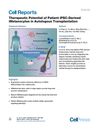 31 citations
,
April 2019 in “Cell reports”
31 citations
,
April 2019 in “Cell reports” Patient-derived melanocytes can potentially treat vitiligo by restoring skin pigmentation.
 9 citations
,
December 2002 in “Novartis Foundation Symposium”
9 citations
,
December 2002 in “Novartis Foundation Symposium” LEF1 is essential for the development of airway glands and is regulated by the Wnt/ß-catenin pathway.
5 citations
,
July 2019 in “Investigational new drugs” TLR7-based compounds may help manage chemotherapy-induced hair loss.
 11 citations
,
July 2017 in “Regenerative Medicine”
11 citations
,
July 2017 in “Regenerative Medicine” The patch assay can create mature hair follicles from human cells and may help in hair loss treatments.
 7 citations
,
September 2014 in “European Journal of Dermatology”
7 citations
,
September 2014 in “European Journal of Dermatology” Thicker hair grows faster; hair loss patients have slower growth.
 6 citations
,
July 2013 in “Molecular Imaging”
6 citations
,
July 2013 in “Molecular Imaging” The technique allowed noninvasive tracking of hair stem cell survival and growth, showing potential for hair loss research.