 192 citations
,
March 2017 in “Cell host & microbe”
192 citations
,
March 2017 in “Cell host & microbe” Hair follicle development and microbes help regulatory T cells gather in newborn skin.
 184 citations
,
February 2015 in “EBioMedicine”
184 citations
,
February 2015 in “EBioMedicine” A patient with Alopecia Areata had complete hair regrowth after using the drug baricitinib.
 182 citations
,
June 2017 in “Biomaterials”
182 citations
,
June 2017 in “Biomaterials” Special fiber materials boost the healing properties of certain stem cells.
180 citations
,
January 2011 in “EMBO Reports” A combined approach is needed to fully understand adult stem cells, with genetic lineage-tracing being crucial.
 175 citations
,
December 2014 in “PLoS Biology”
175 citations
,
December 2014 in “PLoS Biology” Macrophages help activate hair follicle stem cells, affecting hair growth and skin repair.
169 citations
,
October 2020 in “Pharmaceutics” Polysaccharide-based nanofibers are promising for better wound healing.
 162 citations
,
July 2011 in “Biomacromolecules”
162 citations
,
July 2011 in “Biomacromolecules” Chitosan nanofiber scaffolds improve skin healing and are promising for wound treatment.
 162 citations
,
August 2005 in “The journal of investigative dermatology/Journal of investigative dermatology”
162 citations
,
August 2005 in “The journal of investigative dermatology/Journal of investigative dermatology” The new "differential stripping" method effectively measures how much substance gets into hair follicles.
158 citations
,
June 2014 in “Journal of Lipid Research” Lysophospholipids can act as anti-inflammatory agents through specific receptors, but more research is needed.
 141 citations
,
August 2017 in “Developmental Dynamics”
141 citations
,
August 2017 in “Developmental Dynamics” The document concludes that a better understanding of cell changes during wound healing could improve treatments for chronic wounds and other conditions.
 140 citations
,
August 2011 in “Biomaterials”
140 citations
,
August 2011 in “Biomaterials” Keratose, derived from human hair, is a non-toxic biomaterial good for tissue regeneration and integrates well with body tissues.
139 citations
,
May 2020 in “Stem Cell Research & Therapy” Exosomes from stem cells help wounds heal faster by affecting specific cell signals.
136 citations
,
March 1998 in “Oncogene” Overexpression of E2F1 can lead to skin tumors and disrupt hair growth.
 134 citations
,
September 2008 in “Lasers in surgery and medicine”
134 citations
,
September 2008 in “Lasers in surgery and medicine” Low fluence photoepilation temporarily removes hair by targeting the hair follicle's pigmented area without severe damage.
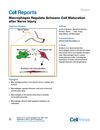 130 citations
,
September 2018 in “Cell Reports”
130 citations
,
September 2018 in “Cell Reports” Macrophages help heal nerves by aiding the maturation of Schwann cells and are important for nerve repair.
 129 citations
,
January 2007 in “Otology & Neurotology”
129 citations
,
January 2007 in “Otology & Neurotology” Gene therapy with the Math1 gene helped regenerate balance-related cells and improve balance in mice.
129 citations
,
January 2004 in “Journal of medicinal chemistry” Researchers developed new compounds that target the androgen receptor effectively with fewer side effects.
125 citations
,
March 2017 in “Micromachines” Microfluidic technology improves cell spheroid creation for better drug testing and tissue engineering.
124 citations
,
July 2017 in “eLife” Type XVII collagen helps control skin cell growth and could be a target for anti-aging treatments.
114 citations
,
June 2000 in “Endocrinology” Alopecia in VDR knockout mice is due to a defect in hair cycle initiation, not keratinocyte issues.
 113 citations
,
September 2005 in “Journal of Investigative Dermatology”
113 citations
,
September 2005 in “Journal of Investigative Dermatology” Applying a special compound can promote hair growth without harmful side effects.
 111 citations
,
June 2002 in “The EMBO Journal”
111 citations
,
June 2002 in “The EMBO Journal” Too much Smad7 can cause serious changes in skin tissues, including problems with hair growth, thymus shrinkage, and eye development issues.
110 citations
,
August 2011 in “Journal of Visualized Experiments” 3D skin models better mimic human skin and melanoma progression than older methods.
 106 citations
,
November 2014 in “Cell Stem Cell”
106 citations
,
November 2014 in “Cell Stem Cell” New single-cell analysis techniques are improving our understanding of stem cells and could help in treating diseases.
105 citations
,
December 1998 in “Archives of Dermatological Research” Dermal papilla cells mainly drive blood vessel growth in hair follicles.
99 citations
,
January 2002 in “Plastic & Reconstructive Surgery” Fetal rat wounds heal without scars at 16.5 days gestation.
98 citations
,
November 1999 in “Dermatology Online Journal” IGF-1 can boost hair growth by promoting cell growth and preventing cell death.
97 citations
,
December 2017 in “Frontiers in Cell and Developmental Biology” Human periapical cyst stem cells could be a promising source for regenerative medicine.
 97 citations
,
December 2010 in “Journal of Neuroscience”
97 citations
,
December 2010 in “Journal of Neuroscience” Midazolam impairs learning and memory by increasing neurosteroids through specific receptor activation.
 91 citations
,
December 2010 in “Stem Cells”
91 citations
,
December 2010 in “Stem Cells” Wnt signaling helps control how brain stem cells divide and is important for brain repair after injury.