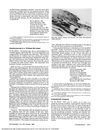
 October 1990 in “Archives of Dermatology”
 Hair loss and growth can be accurately measured using computer-assisted counting.
 January 2015 in “Springer eBooks”
 Hair health is influenced by genetics, aging, and environmental factors, with proper care needed to maintain it.
 41 citations
,
May 2001 in “PubMed”
41 citations
,
May 2001 in “PubMed” Different thicknesses of hair strands can indicate the severity of hair thinning.
 December 2010 in “Faculty Opinions – Post-Publication Peer Review of the Biomedical Literature”
 New cells join the hair's dermal papilla during the growth phase, possibly affecting hair thickness.
 16 citations
,
November 2022 in “eLife”
16 citations
,
November 2022 in “eLife” Both gene and non-gene areas of DNA evolved to make some mammals hairless.
 August 2010 in “Journal of Investigative Dermatology”
 New hair regrowth model introduced, imiquimod kills skin cancer cells, T-cadherin loss makes skin cancer more invasive, no strong link between PTCH1 gene and skin cancer after transplant, and male teens more likely to have hereditary hair loss.
 December 2019 in “Periodicals of Engineering and Natural Sciences (PEN)”
 Hair analysis can provide insights into a person's medical history and location over time.
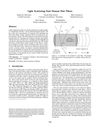
Researchers developed a new model for more realistic computer graphics of hair by considering how light scatters on hair fibers.
 1 citations
,
July 2008 in “Expert Review of Dermatology”
1 citations
,
July 2008 in “Expert Review of Dermatology” Normal hair thickness varies by scalp area and a mix of hair thicknesses is typical in healthy individuals.
 June 2021 in “Elsevier eBooks”
 The document's conclusion cannot be summarized because it is not readable or understandable.
86 citations
,
June 1998 in “Journal of Investigative Dermatology” The hairless gene mutation causes baldness by disrupting hair follicle structure.
30 citations
,
February 1977 in “Nature” The dermal papilla can still grow new hair even after heavy radiation.
 3 citations
,
January 2021 in “Plastic and Aesthetic Research”
3 citations
,
January 2021 in “Plastic and Aesthetic Research” Hair loss reduces hair thickness and coverage, but drug treatments mainly revive dormant hairs rather than reverse thinning; patients often undervalue their hair loss severity.
 51 citations
,
December 2003 in “The FASEB Journal”
51 citations
,
December 2003 in “The FASEB Journal” The substance AS101 can help hair grow by slowing down hair cell aging and boosting a hair growth protein.
 4 citations
,
February 2025 in “Clinical Cosmetic and Investigational Dermatology”
4 citations
,
February 2025 in “Clinical Cosmetic and Investigational Dermatology” Hair affects self-image and well-being, varying by gender, ethnicity, and country.
2 citations
,
January 2010  6 citations
,
August 2006 in “Journal of Cutaneous Pathology”
6 citations
,
August 2006 in “Journal of Cutaneous Pathology” Two teenage brothers had a rare, treatment-resistant form of female-pattern hair loss with unusual scalp changes.
8 citations
,
October 2011 in “Anthropologischer Anzeiger” Pubic hair is thicker than axillary and scalp hair, useful for forensic identification.
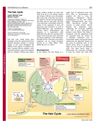 375 citations
,
February 2006 in “Journal of Cell Science”
375 citations
,
February 2006 in “Journal of Cell Science” The document concludes that the hair cycle is a complex process involving growth, regression, and rest phases, regulated by various molecular signals.
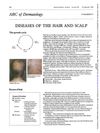 1 citations
,
February 1988 in “The BMJ”
1 citations
,
February 1988 in “The BMJ” The document explains different hair and scalp conditions, including common hair loss after pregnancy or illness, drug-induced hair loss, hereditary excessive hair growth, patterned baldness, autoimmune hair loss, and permanent loss due to skin disease, with generally limited treatment options.
 103 citations
,
January 2006 in “Journal of Cell Science”
103 citations
,
January 2006 in “Journal of Cell Science” The document concludes that the hair cycle is a complex process involving growth, regression, and rest phases, regulated by various molecular signals.
September 2024 in “The Journal of Dermatology” Nevus comedonicus can sometimes grow terminal hair, challenging previous beliefs.
 3 citations
,
January 1994 in “Journal of Society of Cosmetic Chemists of Japan”
3 citations
,
January 1994 in “Journal of Society of Cosmetic Chemists of Japan” Hair grows slower and thinner with age, but a test tonic improved growth in alopecia subjects.
 January 2009 in “Nihon Keshouhin Gijutsushakaishi/Journal of S C C./Nihon Keshouhin Gijutsushakai kaishi”
 Curved human hair has different structures on each side, which might cause its shape and is similar to wool.
 1 citations
,
June 2023 in “Journal of applied crystallography”
1 citations
,
June 2023 in “Journal of applied crystallography” The technique showed that human hair has two main parts, with 68% being rigid and the rest flexible, and water swelling affects its structure.
 April 2012 in “Informa Healthcare eBooks”
 Classifying hair diseases, like alopecia, is difficult and needs more research to understand their causes.
 July 2025 in “Dermatology Practical & Conceptual”
 A 2-year-old boy has a rare hair disorder causing brittle hair and hair loss, which may improve with age.
December 2015 in “European Journal of Pediatric Dermatology” Newborns can experience temporary hair loss in bands, unrelated to sleeping position.
 1 citations
,
September 2017 in “Journal of Investigative Dermatology”
1 citations
,
September 2017 in “Journal of Investigative Dermatology” Hair care products reduced hair roughness, a combination of Stemoxydine and Resveratrol increased hair density, fermented mackerel oil promoted hair growth, and genes TERT and Bmi-1 helped create new hair follicles.
The method effectively measures hair elasticity and could be useful in forensics.