 17 citations
,
October 2013 in “F1000Research”
17 citations
,
October 2013 in “F1000Research” A 2-year-old boy grew excessive hair after using minoxidil for hair loss, but it improved when the treatment stopped.
2 citations
,
November 2023 in “Skin Research and Technology” RCM and dermoscopy help identify different types of hair loss in children.
 June 2017 in “Çocuk Enfeksiyon Dergisi/Journal of Pediatric Infection”
 Tinea capitis can rarely cause urticarial skin reactions in children.
June 2023 in “Dermatopathology” A woman had a unique skin growth with hair follicle, oil glands, fat cells, spindle cells, and nerve fibers.
January 2006 in “International water power & dam construction” Nevus comedonicus can appear later in life and affect both eyelids.
November 2015 in “Pediatrics in review” The boy had severe facial swelling and scalp infection after using his mother's shampoo.
 October 2025 in “Pediatric Dermatology”
 A 16-year-old boy's facial condition improved with doxycycline, suggesting an immune response to hair follicle damage.
14 citations
,
June 2011 in “Australasian Journal of Dermatology” An 8-year-old boy had both alopecia areata and vitiligo on the same spot on his scalp, which is very rare.
 January 2021 in “Pediatric Oncall”
 Autoimmune hepatitis in children often affects girls and can be treated successfully with medication.
 5 citations
,
January 2015 in “Dermatology”
5 citations
,
January 2015 in “Dermatology” The report suggests that the same underlying issue in blood vessel support may cause angiokeratomas on both the scrotum and eyelids.
 July 2025 in “International Journal of Homoeopathic Sciences”
 Homeopathy helped an 8-year-old girl regrow her hair in 4 months.
2 citations
,
January 2002 in “Clinics in Dermatology” Vitiligo causes white skin patches, often starts before age 20, and is linked to other health issues.
September 2014 in “Archives of disease in childhood” A 12-year-old boy had severe shingles and skin damage after a stem-cell transplant.
5 citations
,
June 2014 in “Pediatric dermatology” A baby girl grew extra hair from contact with her grandfather's hair medicine, but it went away after stopping exposure.
13 citations
,
February 2002 in “Archives of dermatology” A 32-year-old woman's hair loss was linked to skin nodules and severe headaches.
 December 2021 in “International journal of research - granthaalayah”
 A young woman had a rare, usually non-cancerous tumor on her face that was initially mistaken for a different condition.
1 citations
,
May 2024 in “Pediatric Blood & Cancer” Trametinib can effectively treat severe kaposiform lymphangiomatosis when other treatments fail.
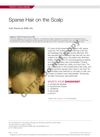
A 5-year-old girl has sparse, dry, and brittle hair but is otherwise healthy.
 April 2016 in “Journal of the American Academy of Dermatology”
 Dermoscopy helped correctly diagnose a skin condition that was previously misidentified as a different hair loss disease.
61 citations
,
April 1969 in “Archives of Dermatology” Skin biopsy is crucial for diagnosing unknown baldness causes.
 1 citations
,
March 2019 in “KnE life sciences”
1 citations
,
March 2019 in “KnE life sciences” HDPCM treatment healed a baby's congenital skin defect caused by varicella infection.
December 2015 in “European Journal of Pediatric Dermatology” Newborns can experience temporary hair loss in bands, unrelated to sleeping position.
A new genetic mutation was found causing hair and eye issues in a boy.
 3 citations
,
March 2018 in “Pediatric Dermatology”
3 citations
,
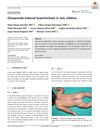
March 2018 in “Pediatric Dermatology” Two children grew extra hair from taking omeprazole, which went away after they stopped the medication.
 5 citations
,
November 2015 in “Turk Pediatri Arsivi-turkish Archives of Pediatrics”
5 citations
,
November 2015 in “Turk Pediatri Arsivi-turkish Archives of Pediatrics” A preterm baby's toes were saved from damage by quickly removing a thread that was cutting off circulation.
 1 citations
,
December 2022 in “Indian pediatrics/Indian Pediatrics”
1 citations
,
December 2022 in “Indian pediatrics/Indian Pediatrics” A toddler who accidentally swallowed hair growth medicine experienced serious heart-related side effects but recovered after hospital treatment.
6 citations
,
October 2016 in “Pediatric Dermatology” A 6-year-old girl had a rare allergic reaction to a hair regrowth treatment.
 23 citations
,
September 2014 in “JEADV. Journal of the European Academy of Dermatology and Venereology/Journal of the European Academy of Dermatology and Venereology”
23 citations
,
September 2014 in “JEADV. Journal of the European Academy of Dermatology and Venereology/Journal of the European Academy of Dermatology and Venereology” Laser treatments are the most effective for porokeratotic adnexal ostial nevus.
13 citations
,
October 2000 in “International Journal of Dermatology” A 6-year-old boy in India was diagnosed with Bloom's syndrome, showing growth and developmental issues, and skin problems worsened by sunlight.
 November 2011 in “APMIS. Acta pathologica, microbiologica et immunologica Scandinavica./APMIS”
 Polyomavirus A2 infection in newborn mice caused hair follicle tumors.