 28 citations
,
August 2018 in “Dermatologic Surgery”
28 citations
,
August 2018 in “Dermatologic Surgery” Platelet-Rich Plasma (PRP) may help improve hair density in primary cicatricial alopecias (PCAs) patients, but more trials are needed to confirm its benefits.
 25 citations
,
March 2013 in “British Journal of Dermatology”
25 citations
,
March 2013 in “British Journal of Dermatology” Woman has discoid lupus, frontal fibrosing, and androgenetic alopecia.
 25 citations
,
April 2007 in “Journal of The American Academy of Dermatology”
25 citations
,
April 2007 in “Journal of The American Academy of Dermatology” The document suggests "anisotrichosis" as a new term for hair thickness variation in common baldness.
 16 citations
,
January 2007 in “Actas dermo-sifiliográficas/Actas dermo-sifiliográficas”
16 citations
,
January 2007 in “Actas dermo-sifiliográficas/Actas dermo-sifiliográficas” The document concludes that there are no reliable treatments for frontal fibrosing alopecia, with only temporary benefits from current options.
 9 citations
,
August 2014 in “The Journal of Dermatology”
9 citations
,
August 2014 in “The Journal of Dermatology” Scalp areas that look normal in people with hair loss may still show signs of disease under a microscope.
 7 citations
,
August 2021 in “Journal of the European Academy of Dermatology and Venereology”
7 citations
,
August 2021 in “Journal of the European Academy of Dermatology and Venereology” Early treatment of fibrosing alopecia in a pattern distribution may improve outcomes.
 7 citations
,
August 2018 in “The American Journal of Dermatopathology”
7 citations
,
August 2018 in “The American Journal of Dermatopathology” Researchers found a new early sign of Frontal Fibrosing Alopecia that could help avoid misdiagnosis.
 6 citations
,
August 2006 in “Journal of Cutaneous Pathology”
6 citations
,
August 2006 in “Journal of Cutaneous Pathology” Two teenage brothers had a rare, treatment-resistant form of female-pattern hair loss with unusual scalp changes.
4 citations
,
March 2023 in “PubMed” Stress and COVID-19 can worsen hair loss conditions like alopecia areata.
 4 citations
,
May 2012 in “Journal of Investigative Dermatology”
4 citations
,
May 2012 in “Journal of Investigative Dermatology” The symposium concluded that a specific lipid might cause hair loss, inflammation is a key factor, and stem cells in bald scalps aren't working right, suggesting new treatment targets.
3 citations
,
September 2025 in “Frontiers in Immunology” JAK inhibitors are effective for treating moderate-to-severe alopecia areata.
 2 citations
,
July 2022 in “Frontiers in Medicine”
2 citations
,
July 2022 in “Frontiers in Medicine” The cause of Frontal fibrosing alopecia, a type of hair loss, is complex, likely involving immune responses and genetics, but is not fully understood.
 2 citations
,
March 2019 in “Journal of Dermatology”
2 citations
,
March 2019 in “Journal of Dermatology” Trichoscopy helped diagnose and treat a woman with two different types of hair loss.
 2 citations
,
August 2015 in “Journal of dermatology”
2 citations
,
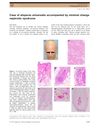
August 2015 in “Journal of dermatology” A possible link exists between minimal change nephrotic syndrome and complete hair loss.
 1 citations
,
January 2025 in “American Journal of Translational Research”
1 citations
,
January 2025 in “American Journal of Translational Research” PPARα agonists may help treat alopecia areata by reducing inflammation.
1 citations
,
January 2018 in “Skin appendage disorders” The complement system might be involved in the development of alopecia areata and could lead to new treatments.
1 citations
,
July 2017 in “Skin Appendage Disorders” A woman developed permanent hair loss after a face-lift surgery despite various treatments.

Accurate diagnosis and new therapies are crucial for effectively treating certain types of hair loss.
 April 2026 in “Brazilian Journal of Hair Health”
 Perifollicular fibrosis hinders hair regrowth in androgenetic alopecia, and new treatments targeting fibrosis are needed.
 February 2026 in “Brazilian Journal of Implantology and Health Sciences”
 Chronic stress and high cortisol levels can cause hair loss by disrupting hair growth.
 January 2026 in “International Research Journal of Modernization in Engineering Technology and Science”
 Alopecia areata causes patchy hair loss and is often treated with corticosteroids.
 November 2025 in “Health Promotion Evidence”
 Post-COVID-19 hair loss can be treated effectively with therapies like light therapy, microneedling, and scalp massage.
October 2025 in “Journal of Advanced Trends in Medical Research” Rosemary shows promise in treating alopecia, similar to minoxidil, but more research is needed.
 September 2025 in “American Journal of Dermatopathology”
 Lupus panniculitis can cause patchy hair loss and was successfully treated with medication.
 April 2025 in “Diagnostics”
 Managing inflammation and using vitamins can improve PRP therapy for better hair growth.
January 2025 in “JAAD Case Reports” PLLA dermal fillers can cause hair loss, but it can be treated with steroids.
Combining anti-androgenic, anti-inflammatory, and anti-fibrotic treatments may improve hair loss outcomes, but more testing is needed.
 December 2023 in “European Journal of Medicinal Chemistry”
 Natural products might be safe, effective, and affordable treatments for hair loss.

Accurate diagnosis and tailored treatments are crucial for managing hair loss in humans and animals.
 March 2024 in “Journal of Investigative Dermatology”
 People with Primary Cicatricial Alopecia have a higher risk of heart disease.