 11 citations
,
April 2020 in “Life sciences”
11 citations
,
April 2020 in “Life sciences” Pantothenic acid helps mink hair follicles grow by affecting certain cell signals.
28 citations
,
February 2007 in “Cancer Research” Blocking certain proteins in mouse skin can reduce and shrink skin tumors.
 23 citations
,
May 2019 in “Expert Opinion on Therapeutic Patents”
23 citations
,
May 2019 in “Expert Opinion on Therapeutic Patents” New androgen receptor modulators show promise for treating diseases like prostate cancer and muscle wasting.
66 citations
,
January 1987 in “Journal of Investigative Dermatology” Coal tar shampoo increases enzyme activity in hair follicles, enhancing carcinogen binding to DNA.
 25 citations
,
November 2014 in “British Journal of Dermatology”
25 citations
,
November 2014 in “British Journal of Dermatology” Certain transporters are found in human hair follicles and may affect hair growth and loss.
 April 2023 in “The journal of investigative dermatology/Journal of investigative dermatology”
 SETDB1 is essential for controlling DNA methylation, silencing retrotransposons, and maintaining skin cell health, with its absence leading to skin inflammation and hair loss.
60 citations
,
October 2020 in “Nature Communications” AP-1 and TGFß work together to drive resistance in basal cell carcinoma, suggesting new treatment options.
 12 citations
,
June 2021 in “Scientific Reports”
12 citations
,
June 2021 in “Scientific Reports” Curcumin may help reverse aging by targeting specific genes.
 18 citations
,
April 2011 in “International Journal of Molecular Medicine”
18 citations
,
April 2011 in “International Journal of Molecular Medicine” Dihydrotestosterone causes p27 protein breakdown in ovarian and breast cancer cells by binding with SKP2.
32 citations
,
December 2019 in “The Journal of clinical investigation/The journal of clinical investigation” A protein called IL-36γ causes skin side effects from certain cancer treatments when combined with a common skin bacteria.
 3 citations
,
January 2023 in “Science advances”
3 citations
,
January 2023 in “Science advances” The enzymes Tet2 and Tet3 are important for skin cell development and hair growth.
 April 2016 in “The journal of investigative dermatology/Journal of investigative dermatology”
 Applying the anti-cancer drug Bortezomib to skin can promote hair growth and increase hair proteins through the GATA-3 factor.
 November 2025 in “Frontiers in Pharmacology”
 Xiaozhi Yufa decoction may help treat hair loss by improving hair growth and reducing inflammation.
 37 citations
,
April 2011 in “Journal of Biological Chemistry”
37 citations
,
April 2011 in “Journal of Biological Chemistry” LEF1 interacts with Vitamin D Receptor, affecting hair follicle regeneration and this could be linked to hair loss conditions.
 3 citations
,
January 2008 in “Endocrine journal”
3 citations
,
January 2008 in “Endocrine journal” A new mutation linked to partial Androgen Insensitivity Syndrome and prostate cancer was found in a patient unhappy with their female gender assignment.
50 citations
,
September 2009 in “Molecular Genetics and Metabolism” A new gene mutation causes vitamin D resistance and rickets, treatable with calcium therapy.
![Synthesis, Biological Evaluation, and Molecular Docking of 4-Amino-2H-benzo[h]chromen-2-one Analogs Containing the Piperazine Moiety](/images/assets/2ecf4eed-7dbe-4f1a-83db-739625546cdd/small/31808.jpg) 7 citations
,
August 2019 in “Bioorganic & medicinal chemistry”
7 citations
,
August 2019 in “Bioorganic & medicinal chemistry” Analog 23 is a promising compound for prostate cancer treatment.
 6 citations
,
May 2014 in “Biomarkers and Genomic Medicine”
6 citations
,
May 2014 in “Biomarkers and Genomic Medicine” Charnoly bodies could be a marker for cell damage, and certain nutrients and proteins might prevent them, potentially helping with brain diseases and cancer.
 38 citations
,
April 2017 in “PLOS Genetics”
38 citations
,
April 2017 in “PLOS Genetics” GRHL3 is important for controlling gene activity in skin cells during different stages of their development.
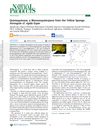 6 citations
,
February 2020 in “Journal of Natural Products”
6 citations
,
February 2020 in “Journal of Natural Products” A new compound from a sponge strongly inhibits an enzyme linked to male-pattern hair loss without being toxic at low levels.
48 citations
,
September 2020 in “Frontiers in Immunology” Loss of OGG1 increases skin inflammation and auto-antibodies in lupus.
 16 citations
,
September 2018 in “Scientific reports”
16 citations
,
September 2018 in “Scientific reports” Scientists created keratinocyte cell lines from human hair that can differentiate similarly to normal skin cells, offering a new way to study skin biology and diseases.
49 citations
,
March 2004 in “Journal of Investigative Dermatology” The hHa7 gene is regulated by androgens in certain body hair, not scalp hair.
 12 citations
,
January 2019 in “Journal of Endocrinology”
12 citations
,
January 2019 in “Journal of Endocrinology” Baicalin may help reduce excessive male hormone levels in PCOS.
 21 citations
,
August 1994 in “Clinical endocrinology”
21 citations
,
August 1994 in “Clinical endocrinology” 5α-Reductase inhibitors can help treat hair loss, acne, and prostate issues by reducing DHT levels.
 January 2020 in “bioRxiv (Cold Spring Harbor Laboratory)”
 Semecarpus anacardium leaf extracts may offer safe, effective cancer treatment alternatives.
2 citations
,
May 2020 in “The journal of investigative dermatology/Journal of investigative dermatology” A TP63 gene mutation causes significant hair loss and mild skin, nail, and tooth abnormalities.
 57 citations
,
February 1994 in “Experimental dermatology”
57 citations
,
February 1994 in “Experimental dermatology” Melatonin affects mouse skin and may regulate skin functions.
 10 citations
,
March 2014 in “Scandinavian journal of clinical and laboratory investigation”
10 citations
,
March 2014 in “Scandinavian journal of clinical and laboratory investigation” Malondialdehyde-modified DNA may trigger an immune response in alopecia areata patients.
48 citations
,
August 1998 in “Developmental Biology” Deleting part of a gene in mice causes wavy hair and high pup loss.