 1 citations
,
September 2023 in “Journal of the American Academy of Dermatology”
1 citations
,
September 2023 in “Journal of the American Academy of Dermatology” Baricitinib significantly improves hair regrowth in severe alopecia areata.
63 citations
,
July 2018 in “The journal of investigative dermatology/Journal of investigative dermatology” JAK inhibitors can effectively reverse hair loss in people with alopecia areata.
 April 2023 in “Journal of the American Academy of Dermatology”
 Switching between the medications tofacitinib and baricitinib can be effective for treating hair loss in alopecia areata.
 February 2025 in “Archives of Dermatological Research”
 Injectable platelet-rich fibrin effectively improves hair density and scalp symptoms in androgenetic alopecia.
4 citations
,
October 2024 in “Journal of the American Academy of Dermatology” Abrocitinib may help treat alopecia areata effectively with mild side effects.
18 citations
,
July 2013 in “Journal of Leukocyte Biology” Nonimmunogenic forms of keratins K71 and K31 can delay and prevent alopecia areata.
![Activity of 17β-(N-Alkyl/Arylformamido) and 17β-[(N-Alkyl/Aryl) Alkyl/Arylamido]-4-Methyl-4-Aza-5α-Androstan-3-Ones as 5α-Reductase Inhibitors in the Hamster Flank Organ and Ear](/images/assets/861159f1-7bd4-420c-a16b-4829458efe68/small/15592.jpg) 10 citations
,
August 1998 in “Journal of Investigative Dermatology”
10 citations
,
August 1998 in “Journal of Investigative Dermatology” The compounds tested could potentially treat hair loss and alopecia.
 1 citations
,
May 2017 in “Journal of the American Academy of Dermatology”
1 citations
,
May 2017 in “Journal of the American Academy of Dermatology” Tofacitinib helped a teenager with severe hair loss grow hair back, but more research is needed.
 25 citations
,
November 2022 in “British journal of dermatology/British journal of dermatology, Supplement”
25 citations
,
November 2022 in “British journal of dermatology/British journal of dermatology, Supplement” Baricitinib for severe alopecia areata is generally safe, with common side effects like infections and acne, and low rates of serious complications.
 30 citations
,
April 2013 in “Journal of Investigative Dermatology”
30 citations
,
April 2013 in “Journal of Investigative Dermatology” Radiation mainly affects keratinocyte stem cells, not melanocyte stem cells, causing hair to gray.
2 citations
,
May 2025 in “Journal of the European Academy of Dermatology and Venereology” Ritlecitinib improves hair regrowth in alopecia areata over 24 months.
10 citations
,
May 2017 in “Wound Repair and Regeneration” Overexpression of ALK2 in hair follicles disrupts skin development and slows wound healing.
1 citations
,
February 2025 in “Pediatric Dermatology” Tofacitinib helps hair regrow in some kids with severe alopecia areata, but more research is needed on long-term effects.
 November 2023 in “Journal of Cosmetic Dermatology”
 Tofacitinib is effective and has minor, reversible side effects for treating severe hair loss in Iran.
 November 2022 in “CARDIOMETRY”
 A group has developed therapies that show promise for treating cancer and various other conditions.
 1 citations
,
July 2023 in “Cancers”
1 citations
,
July 2023 in “Cancers” Skin side effects from CDK4/6 inhibitors in breast cancer patients are generally mild and treatable, allowing most patients to continue treatment.
 January 2024 in “Skin Research and Technology”
 Oral tofacitinib may be an effective future treatment for children with severe alopecia areata, but more research is needed.
 September 2017 in “Journal of Investigative Dermatology”
 Mackerel fermented fish oil protects skin cells from damage by UVB light.
 56 citations
,
December 2011 in “The Plant Journal”
56 citations
,
December 2011 in “The Plant Journal” AGD1 is important for root hair development in Arabidopsis, working with phosphoinositide signaling and the actin cytoskeleton.
January 2013 in “edoc (University of Basel)” TRF1 is crucial for creating and maintaining stem cells and marks both pluripotent and adult stem cells.
 5 citations
,
January 2021 in “Inflammatory Bowel Diseases”
5 citations
,
January 2021 in “Inflammatory Bowel Diseases” Tofacitinib improved ulcerative colitis, skin ulcers, and hair loss in a patient who didn't respond well to other treatments.
2 citations
,
June 2025 in “Journal of Investigative Dermatology” CD8+ T cells re-expressing CD45RA may predict treatment resistance in severe alopecia areata.
5 citations
,
January 2015 in “Case reports in medicine” A baby was diagnosed with IFAP syndrome due to a new genetic mutation, showing severe skin and developmental issues.
 6 citations
,
January 2022 in “Journal of Investigative Dermatology”
6 citations
,
January 2022 in “Journal of Investigative Dermatology” Male pattern baldness is linked to higher levels of a certain receptor in the scalp, which leads to the shrinking of blood vessels and hair loss. Early treatment targeting this receptor could be more effective.
August 2024 in “Skin Research and Technology” TAF can be identified by excessive skin thickening and clogged hair follicles, helping distinguish it from similar skin conditions.
22 citations
,
July 1998 in “Journal of Investigative Dermatology” The 4C32 gene may help in mouse skin development and differentiation.
 September 2017 in “Journal of Investigative Dermatology”
 Thermal imaging is a useful non-invasive method to diagnose active inflammation in frontal fibrosing alopecia.
 6 citations
,
March 2016 in “Scandinavian journal of immunology”
6 citations
,
March 2016 in “Scandinavian journal of immunology” Janus kinase inhibitors show promise in treating alopecia areata but need more safety research.
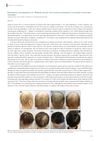 8 citations
,
May 2017 in “Singapore Medical Journal”
8 citations
,
May 2017 in “Singapore Medical Journal” A Korean woman with complete hair loss regrew her hair after taking tofacitinib, with no side effects.
 November 2022 in “Journal of Investigative Dermatology”
 Dandruff is linked to changes in the immune system of hair follicles and skin.