9 citations
,
November 2023 in “Supportive Care in Cancer” Minoxidil improves hair loss in breast cancer patients on CDK4/6-inhibitor therapy.
 15 citations
,
February 2021 in “Scientific Reports”
15 citations
,
February 2021 in “Scientific Reports” RNA aptamers can specifically block FGF5-related cell growth, potentially treating related diseases or hair disorders.
 28 citations
,
October 2004 in “Differentiation”
28 citations
,
October 2004 in “Differentiation” A gene deletion causes the "hairless" trait in Iffa Credo rats.
6 citations
,
November 2020 in “JAAD Case Reports” Tofacitinib may help treat both alopecia areata and inflammatory bowel disease.
4 citations
,
March 2024 in “Developmental Dynamics” ALX4 is crucial for normal craniofacial and hair development, with specific roles in different cell types.
 1 citations
,
February 2025 in “Scientific Reports”
1 citations
,
February 2025 in “Scientific Reports” CD4 is crucial for maintaining skin stem cell balance and aiding wound healing.
 August 2016 in “Journal of Investigative Dermatology”
 Human hair follicles have a scent receptor that can influence hair growth.
 April 2023 in “The journal of investigative dermatology/Journal of investigative dermatology”
 Blocking EGFR can lead to hair loss due to inflammation and stem cell damage.
December 2012 in “http://isrctn.org/>” November 2022 in “Journal of Investigative Dermatology” A new tool helps study hair follicle cells to develop better treatments for hair disorders.
 5 citations
,
January 2021 in “iScience”
5 citations
,
January 2021 in “iScience” Using a combination of specific cell cycle regulators is better for safely keeping hair root cells alive indefinitely compared to cancer-related methods.
 8 citations
,
February 2015 in “Cellular immunology”
8 citations
,
February 2015 in “Cellular immunology” Deleting Snai2 and Snai3 causes fatal autoimmunity.
September 2019 in “Journal of Investigative Dermatology” Innate lymphoid cells type 1 may contribute to alopecia areata.
42 citations
,
January 2005 in “Applied spectroscopy” Hair from breast cancer patients shows changes in structure and composition, and a test using these changes detected cancer but also falsely identified some healthy samples as cancerous.
April 2013 in “Cancer Research” SKH1 hairless mice have identifiable epidermal stem cells with specific markers.
April 2019 in “Journal of Investigative Dermatology” Targeting immune pathways like JAK/STAT may help treat frontal fibrosing alopecia.
sFRP4 partially inhibits hair regeneration, but the study needs clearer data analysis and better explanation of the process.
 1 citations
,
April 2018 in “Journal of Investigative Dermatology”
1 citations
,
April 2018 in “Journal of Investigative Dermatology” Tofacitinib helped most patients with alopecia areata regrow hair and changes in immune cells were linked to the treatment's effectiveness.
 76 citations
,
May 2011 in “Cell death and differentiation”
76 citations
,
May 2011 in “Cell death and differentiation” A20 protein is crucial for normal skin and hair development.
2 citations
,
May 2008 in “Journal of Clinical Oncology” AZD6244 treatment causes skin aging effects by depleting skin stem cells.
 25 citations
,
September 2014 in “Biological Research”
25 citations
,
September 2014 in “Biological Research” Arctiin helps protect hair cells from damage and death caused by oxidative stress.
 July 2022 in “The journal of investigative dermatology/Journal of investigative dermatology”
 Scientists created a detailed map of gene activity in different parts of human hair follicles.
39 citations
,
November 2005 in “The journal of investigative dermatology/Journal of investigative dermatology” Fatp4 is crucial for healthy skin development and function.
April 2021 in “Journal of Investigative Dermatology” 2 citations
,
May 2023 in “The Journal of Immunology” NXC736 significantly reduced hair loss in mice with alopecia areata.
 March 2023 in “PARIPEX INDIAN JOURNAL OF RESEARCH”
 Tofacitinib helped regrow hair in most patients with severe hair loss.
January 2026 in “Experimental Dermatology” Skin-resident memory T cells may contribute to chronic alopecia areata and baricitinib could be a potential treatment.
 April 2024 in “JEADV clinical practice”
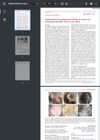
 Upadacitinib significantly improved both rheumatoid arthritis and alopecia areata in a patient.
 1 citations
,
October 2022 in “JCI insight”
1 citations
,
October 2022 in “JCI insight” Deleting the BRD4 protein in certain skin cells causes hair loss and skin inflammation.
April 2017 in “The journal of investigative dermatology/Journal of investigative dermatology” Researchers found three different ways drugs work to treat hair loss from alopecia areata and identified key factors for personalized treatment.