
The GG genotype of the KRT71 gene leads to longer wool in Gansu alpine fine-wool sheep.
 October 2024 in “BMC Genomics”
 Understanding hair follicle development can help improve cashmere quality.
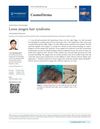 February 2023 in “Cosmoderma”
 Loose anagen hair syndrome causes easily shed hair but usually improves with time.
 January 2023 in “Karger Kompass. Dermatologie”
 Scientists are still unsure what triggers the immune system to attack hair follicles in Alopecia areata.
 November 2022 in “The journal of investigative dermatology/Journal of investigative dermatology”
 Researchers made a detailed map of gene activity for different parts of human hair follicles to help create targeted hair disorder treatments.
 July 2022 in “The journal of investigative dermatology/Journal of investigative dermatology”
 The early genes of a specific virus can cause abnormal skin cell growth and hair follicle changes.
Trichohyalin, a protein from pig tongue, was purified and found to have a filamentous structure.
Loose anagen syndrome causes easy hair shedding in children, often resolving on its own.
 January 2019 in “Journal of Entomology and Zoology Studies”
 Ruminant goats have larger and more defined hair follicles than younger goats.
 October 2018 in “bioRxiv (Cold Spring Harbor Laboratory)”
 Neuronatin is found in various cells of rat tissues and has a unique location in sperm cells.
 April 2017 in “Journal of Investigative Dermatology”
 Early and late matrix progenitors in hair follicles create different cell layers, with early ones forming the companion layer and later ones forming the inner root sheath and hair shaft.
 April 2017 in “Journal of Investigative Dermatology”
 Sweat glands and hair follicles are determined by opposing signals, with BMPs promoting sweat glands and blocking BMPs leading to hair follicles.
 September 2016 in “Journal of dermatological science”
 The OVOL1-OVOL2 axis is important for hair follicle differentiation and can help diagnose certain hair-related tumors.
January 2015 in “Chinese Veterinary Science” Recognizing ultrastructures of cashmere goat hair follicles helps identify and locate follicle layers.
 January 2014 in “Journal of the Korean Society of Design Culture”
 The study confirmed that changes in hair structure in women with hair loss conditions matched what is taught in beauty college trichology courses.
September 2012 in “대한피부과학회지” Desmocollin 1 helps maintain skin structure during fetal development.
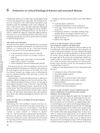 April 2012 in “Informa Healthcare eBooks”
 The document concludes that diagnosing hair loss requires evaluating multiple histological features, as no single feature is definitive on its own.
May 2010 in “Faculty Opinions – Post-Publication Peer Review of the Biomedical Literature” A mutation in the KRT74 gene causes woolly hair by affecting hair texture.
May 2010 in “Faculty Opinions – Post-Publication Peer Review of the Biomedical Literature” A mutation in the KRT74 gene causes woolly hair by affecting hair texture.
March 2010 in “Faculty Opinions – Post-Publication Peer Review of the Biomedical Literature” Beard hair medulla cells have a unique and varied keratin pattern.
January 2010 in “Actas dermo-sifiliográficas/Actas dermo-sifiliográficas” Chemical relaxers may cause scarring alopecia in black women.
January 2008 in “Bradford Scholars (University of Bradford)” Alopecia areata may be caused by antibodies targeting specific hair follicle proteins, hindering hair growth.
April 2007 in “Linchuang pifuke zazhi” TGF-β1 and 2 may play a role in hair loss in AGA.
TGF-β1 and 2 in hair follicles may be linked to hair loss in AGA.
 January 2002 in “Proceedings of The Japanese Society of Animal Models for Human Diseases”
 Keratin2-6g is crucial for hair follicle development, with mutations causing cell degeneration and vacuolation.
 January 2001 in “Biomedical Research”
 THH and PAD type III appear together early in hair growth, but deiminated THH appears later, suggesting another factor is involved.
January 2000 in “Acta Academiae Medicine Militaris Tertiae” Different keratins in hair follicles can help identify hair tumor origins.
December 1990 in “PubMed” Different glycoconjugates are present in the outer and inner root sheaths of human hair follicles.
September 1989 in “PubMed” The method allows detailed observation of hair tissue structures.
October 2024 in “International Journal of Comprehensive Veterinary Research.” Neonate rabbits have consistent skin layers and no sweat glands.