 64 citations
,
July 2016 in “Journal of Immunology”
64 citations
,
July 2016 in “Journal of Immunology” Blocking the CXCR3 receptor reduces T cell accumulation in the skin and prevents hair loss in mice.
60 citations
,
August 2005 in “Endocrinology” αMSH may help regulate immune responses in hair follicles and its disruption could lead to hair loss.
58 citations
,
July 2018 in “Journal of Allergy and Clinical Immunology” Alopecia areata severity is linked to increased TH1 and TH2 activity.
54 citations
,
May 2019 in “Multiple Sclerosis and Related Disorders” Azathioprine can help with relapses and disability in NMOSD but has more side effects and needs more research.
 53 citations
,
May 2001 in “The American journal of the medical sciences”
53 citations
,
May 2001 in “The American journal of the medical sciences” Chemotherapy can cause various skin problems, and recognizing them helps improve patient care.
 53 citations
,
September 2020 in “Stem Cell Research & Therapy”
53 citations
,
September 2020 in “Stem Cell Research & Therapy” New methods to improve the healing abilities of mesenchymal stem cells for disease treatment are promising but need more research.
50 citations
,
March 2021 in “Annals of Translational Medicine” More research is needed to understand and treat morphea effectively.
 47 citations
,
December 2019 in “Frontiers in immunology”
47 citations
,
December 2019 in “Frontiers in immunology” A new mutation in the STING protein causes a range of symptoms and its severity may be affected by other genetic variations; treatment with a specific inhibitor showed improvement in one patient.
 45 citations
,
July 2002 in “The Neurologist”
45 citations
,
July 2002 in “The Neurologist” A comprehensive approach to educating patients and managing side effects is crucial for improving adherence to multiple sclerosis treatments and patient quality of life.
 40 citations
,
August 2022 in “Frontiers in immunology”
40 citations
,
August 2022 in “Frontiers in immunology” Blocking JAK/STAT pathways can help treat hair loss from alopecia areata.
 39 citations
,
May 2004 in “Clinics in Dermatology”
39 citations
,
May 2004 in “Clinics in Dermatology” The document concludes that treatment for cutaneous T-cell lymphoma should be customized to each patient's disease stage, balancing benefits and side effects, with no cure but many patients living long lives.
37 citations
,
December 2021 in “Cells” Alopecia areata severity and treatment response are linked to specific cytokine levels.
 37 citations
,
October 2017 in “Clinical and Experimental Dermatology”
37 citations
,
October 2017 in “Clinical and Experimental Dermatology” Oral tofacitinib shows promise in treating atopic dermatitis and alopecia areata, but only slight improvement in vitiligo.
36 citations
,
June 2015 in “International journal of toxicology” Trichloroethylene causes skin inflammation in mice by increasing certain immune proteins.
34 citations
,
June 2020 in “British journal of dermatology/British journal of dermatology, Supplement” Frontal fibrosing alopecia is linked to increased immune system activity and reduced stem cells, suggesting early treatment targeting this pathway might prevent hair follicle damage.
 33 citations
,
April 2020 in “Journal of Clinical Investigation”
33 citations
,
April 2020 in “Journal of Clinical Investigation” Stress in hair follicle stem cells causes inflammation in a chronic skin condition through a specific immune response pathway.
 32 citations
,
March 2021 in “Journal of cosmetic dermatology (Print)”
32 citations
,
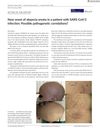
March 2021 in “Journal of cosmetic dermatology (Print)” COVID-19 infection may trigger alopecia areata in some patients.
 32 citations
,
April 2019 in “JAAD case reports”
32 citations
,
April 2019 in “JAAD case reports” JAK inhibitors helped treat hair loss in two people with Down syndrome.
29 citations
,
December 2022 in “Journal of Nanobiotechnology” Stem cell vesicles reduced eczema symptoms in mice safely.
 27 citations
,
August 2010 in “Clinics in Dermatology”
27 citations
,
August 2010 in “Clinics in Dermatology” Hepatitis C virus can cause skin diseases and dermatologists play a crucial role in identifying these conditions.
 25 citations
,
March 2019 in “Dermatologic therapy”
25 citations
,
March 2019 in “Dermatologic therapy” Intralesional therapy for keratoacanthoma is effective and has fewer side effects than systemic treatments.
 23 citations
,
November 2024 in “Scientific Reports”
23 citations
,
November 2024 in “Scientific Reports” Higher thyroid antibodies in Hashimoto's thyroiditis are linked to more inflammation and symptoms.
 23 citations
,
September 2017 in “Journal of the American Academy of Dermatology”
23 citations
,
September 2017 in “Journal of the American Academy of Dermatology” Apremilast did not work for treating severe alopecia areata.
 21 citations
,
April 2010 in “Molecular Medicine Reports”
21 citations
,
April 2010 in “Molecular Medicine Reports” Zinc supplementation may help improve treatment outcomes for chronic hepatitis C.
21 citations
,
December 2005 in “The journal of investigative dermatology/Journal of investigative dermatology” T-cells in alopecia areata scalp show abnormal regulation, leading to less inflammation.
20 citations
,
December 2020 in “Frontiers in Immunology” The immune processes causing VKH and vitiligo are similar in dogs and humans.
 20 citations
,
December 2016 in “Neurodegenerative disease management”
20 citations
,
December 2016 in “Neurodegenerative disease management” Teriflunomide effectively reduces relapses and disability in MS and has a manageable safety profile.
 20 citations
,
November 2005 in “Journal of Investigative Dermatology Symposium Proceedings”
20 citations
,
November 2005 in “Journal of Investigative Dermatology Symposium Proceedings” IFN-γ and IL-2 are important for T cell activation in hair loss in mice.
19 citations
,
August 2018 in “JAMA dermatology” Mesenchymal stem cells in people with Hidradenitis Suppurativa are more inflammatory, possibly contributing to the disease.
19 citations
,
August 2017 in “American journal of clinical dermatology” Hepatitis B virus exposure may be linked to increased risk of alopecia areata.