
A teenager had both alopecia areata and vitiligo, which are rare to occur together.
 April 2021 in “Anatolian current medical journal :”
 A patient developed hair loss after hepatitis C treatment with sofosbuvir and ribavirin.
 April 2021 in “Sohag Medical Journal”
 Alopecia areata is an autoimmune condition causing hair loss, linked to genetic factors and immune system issues, with no cure yet.
 January 2020 in “Archives of Medicine and Health Sciences”
 Certain immune molecules and stress affect hair loss, and while genes play a role, more research is needed to fully understand and treat it.
September 2019 in “The journal of investigative dermatology/Journal of investigative dermatology” A new mutation in the STING protein causes a disease with lupus-like symptoms and responds well to a specific inhibitor treatment.
September 2019 in “Journal of Investigative Dermatology” IL-17 and certain immune cells are linked to more severe alopecia areata.
September 2019 in “Journal of Investigative Dermatology” Innate lymphoid cells type 1 may contribute to alopecia areata.
April 2019 in “Journal of Investigative Dermatology” The humanized AA mouse model is better for testing new alopecia areata treatments.
November 2018 in “Journal of Investigative Dermatology” Lichen Planopilaris causes irreversible hair loss due to immune attacks on hair stem cells, but modulating PPAR-γ might help treat it.
January 2018 in “Indian Dermatology Online Journal” DM and AA may share a common cause.
September 2017 in “Korean journal of acupuncture” Crataegi Fructus water extract helps hair grow better and thicker.
 September 2016 in “Journal of Dermatological Science”
 Plasmacytoid dendritic cells, which overproduce IFN-α, may play a crucial role in starting alopecia areata, an autoimmune disease causing hair loss.
 April 2016 in “Journal of Investigative Dermatology”
 Lithocholic acid helps hair growth and regeneration in alopecia by activating vitamin D receptors.
 January 2016 in “Human & Experimental Toxicology”
 A specific DNA sequence caused hair loss in male mice by activating immune cells and increasing a certain immune signal.
 May 2015 in “Journal of The American Academy of Dermatology”
 Treatment with biologic agents can significantly improve psoriasis symptoms, and blood biomarkers could potentially predict individual patient's response to treatment.
 September 2014 in “SciBX”
 JAK inhibitors may help treat alopecia areata and promote hair regrowth.
April 2005 in “Journal of Investigative Dermatology” Vitamin D helps protect skin, PSORS1 gene's risk interval for psoriasis is expanded, hair follicles can be generated from mouse cells, and interferon-γ may cause pigmented skin lesions.
 November 2003 in “Journal of Investigative Dermatology”
 Topical Imiquimod may fight vascular tumors by affecting blood vessels or the immune system, low iron might be linked to some hair loss, removing the top skin layer helps vitamin C get in, genetic testing helps diagnose skin conditions, and too much iron could worsen skin inflammation.
January 2000 in “Alambique: Didáctica de las ciencias experimentales” Cholesterol issues in skin and hair may cause permanent hair loss by triggering inflammation.
 November 1998 in “Journal of The European Academy of Dermatology and Venereology”
 A man's skin cancer improved and some of his hair grew back after treatment with a special light therapy and a medication.
April 2024 in “International journal of molecular sciences” Combination pharmacotherapy is generally more effective for treating keloids and hypertrophic scars.
April 2023 in “Medizinische Genetik” Male-pattern hair loss is largely influenced by genetics, with key genes identified.
 March 2023 in “Research Square (Research Square)”
 Immune changes and specific genes contribute to male hair loss.
Higher levels of certain proteins in hair loss areas may help understand and treat hair loss.
 7 citations
,
January 2017 in “International Journal of Trichology”
7 citations
,
January 2017 in “International Journal of Trichology” Hair transplant can cause hard-to-treat keloids in some patients.
5 citations
,
February 2022 in “Seminars in cell & developmental biology” Recent findings suggest that genetic factors, immune system issues, and skin cell defects might contribute to the development of hidradenitis suppurativa.
 4 citations
,
May 1999 in “PubMed”
4 citations
,
May 1999 in “PubMed” Some medications can cause reversible hair loss by affecting hair growth cycles.
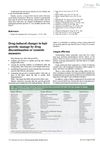 August 1994 in “Drugs & Therapy Perspectives”
 Some drugs can cause hair loss or growth, but hair usually returns to normal after stopping the drug.
 May 1994 in “Reactions Weekly”
 Many medications can cause hair loss or excessive hair growth, which is usually reversible after stopping the drug.
 62 citations
,
January 2010 in “Hormone research in paediatrics”
62 citations
,
January 2010 in “Hormone research in paediatrics” Genetic screening is crucial for accurately diagnosing APS-1 due to its varied symptoms.