July 2024 in “Journal of Investigative Dermatology” Expanding regulatory T cells may help treat alopecia areata by reducing harmful immune cells.
July 2024 in “Journal of Investigative Dermatology” Hair follicles are crucial for maintaining skin barrier function.
 June 2024 in “Journal of Allergy and Clinical Immunology”
 TSLP affects atopic dermatitis by increasing sebum and reducing fat through IL-4/IL-13 signaling.
April 2024 in “International journal of molecular sciences” Dermal factors are crucial in regulating melanin production in skin.
April 2024 in “Biosaintifika Journal of Biology & Biology Education” A gel from stem cells can reduce baldness caused by fluconazole in rats.
 April 2024 in “Bioscience trends”
 Higher levels of certain DNAs in blood may indicate hair follicle damage in alopecia areata patients.
March 2024 in “Current issues in molecular biology” Personalized medicine in dermatology uses molecular biomarkers to improve diagnosis and treatment but needs further advancements for practical use.
 February 2024 in “Journal of Education, Health and Sport”
 Different treatments for PCOS should be tailored to the individual, including lifestyle changes and various medications.
 November 2023 in “The journal of investigative dermatology/Journal of investigative dermatology”
 Blocking TYK2 might be a new way to treat hair loss from alopecia areata.
 June 2023 in “British journal of dermatology/British journal of dermatology, Supplement”
 Some multiple sclerosis treatments may trigger hair loss conditions like alopecia areata.
 April 2023 in “Journal of Investigative Dermatology”
 Booster shots of mRNA vaccines for COVID-19 increased protective antibodies without worsening autoimmune skin conditions in patients.
 April 2023 in “Journal of Investigative Dermatology”
 Type 1/17 inflammation in psoriasis increases skin cell growth due to a molecule that could be a new treatment target.
 April 2023 in “Journal of Investigative Dermatology”
 IL-24 contributes to skin aging by increasing collagen-degrading enzymes and decreasing collagen production when exposed to air pollution.
 April 2023 in “Journal of Investigative Dermatology”
 The new recombinant human collagen can help slow skin aging and repair skin, while also controlling inflammation.
 April 2023 in “The journal of investigative dermatology/Journal of investigative dermatology”
 Psoriasis patients on biologic therapy have a weaker immune response to COVID-19 vaccination than healthy people.
April 2023 in “Journal of Investigative Dermatology” IL-17 plays a key role in severe hair loss in chronic alopecia areata.
 November 2022 in “The journal of investigative dermatology/Journal of investigative dermatology”
 Skin organoids with NCSTN mutation show changes in hair follicle development and higher inflammation, key features of Hidradenitis Suppurativa.
 November 2022 in “The journal of investigative dermatology/Journal of investigative dermatology”
 IL-15 promotes hair growth and protects hair follicles.
November 2022 in “Chinese Journal of Dermatology” Allergies, especially dust mite allergy, may worsen alopecia areata, and desensitization could help reduce its severity.
 July 2022 in “Journal of Investigative Dermatology”
 IL-15 helps maintain hair growth and protects the immune status of hair follicles.
October 2021 in “Journal of Investigative Dermatology” Pink berry extract effectively treats scalp issues from frequent head covering.
December 2020 in “The journal of investigative dermatology/Journal of investigative dermatology” Papulopustular rosacea is an inflammatory skin condition treatable with lifestyle changes and medications.
March 2020 in “The Egyptian Journal of Histology” Topical olive oil protects mice skin from harmful electromagnetic radiation.
 January 2020 in “Archives of Medicine and Health Sciences”
 Certain immune molecules and stress affect hair loss, and while genes play a role, more research is needed to fully understand and treat it.
September 2019 in “Journal of Investigative Dermatology” IL-17 and certain immune cells are linked to more severe alopecia areata.
 September 2019 in “Journal of Investigative Dermatology”
 Botanical extracts from peas and chia seeds improved scalp health and protected hair from pollution.
April 2018 in “The journal of investigative dermatology/Journal of investigative dermatology” Certain immune cells, when activated by specific signals, can encourage hair growth.
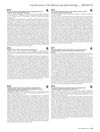 April 2018 in “Journal of Investigative Dermatology”
 IL-9 increases skin cell movement but decreases their ability to invade, and this effect is controlled by cell contractility, not by MMPs.
IL-1 and IL-7 help activate cells that boost hair follicle stem cell growth, aiding wound healing.
September 2017 in “Journal of Investigative Dermatology” Photodynamic therapy can potentially remove nonpigmented hair by damaging hair follicles.