 September 2017 in “Hair transplant forum international”
 The document's content couldn't be read or understood.

A new easy-to-use biosensor was made to detect androgen receptor mRNA, which could help diagnose related conditions quickly.
 November 2001 in “Hair transplant forum international”
 The document's conclusion cannot be provided because the document is not readable.
66 citations
,
June 2020 in “Advanced Intelligent Systems” Surgical robots have improved but still can't perform tasks or make decisions on their own.
 April 2024 in “Pharmacoepidemiology and drug safety (Print)”
 The algorithm accurately identified alopecia in women of childbearing age using claims data.
 January 2005 in “Hair transplant forum international”
 The document's conclusion cannot be provided because the document is not readable or understandable.
December 2025 in “Chinese Medical Journal” Experts recommend starting systemic treatment for alopecia areata when the condition is severe or causes significant distress.
 May 1995 in “Hair transplant forum international”
 The document's conclusion cannot be summarized because the content is not accessible or understandable.
 July 2022 in “Journal of Investigative Dermatology”
 The conclusion suggests that a new system for measuring hair loss could be created using automated analysis of photographs.
 January 2024 in “Wiadomości Lekarskie”
 pbn-STAC effectively finds strategies for cellular reprogramming using deep reinforcement learning.
10 citations
,
September 2014 in “Australasian Journal of Dermatology” Understanding alopecia areata's patterns can improve future research and treatments.
1 citations
,
September 1994 in “Hair transplant forum international” The document's content cannot be understood or processed.
 2 citations
,
April 2025 in “Frontiers in Genetics”
2 citations
,
April 2025 in “Frontiers in Genetics” The ASIP gene is crucial for determining cattle coat color.

An automated system can accurately classify hair disorders using image analysis.
May 2024 in “The Journal of Immunology” IL-27 can prevent hair loss in alopecia areata.
 19 citations
,
March 2012 in “Clinical Endocrinology”
19 citations
,
March 2012 in “Clinical Endocrinology” FAI values above 6.4 may suggest high androgen levels and increased metabolic risks in Chinese women of reproductive age.
 November 2016 in “Hair transplant forum international”
 The document's conclusion cannot be provided because the document cannot be parsed.
 July 2010 in “Hair transplant forum international”
 The document's conclusion cannot be provided because the document cannot be parsed.
 March 2010 in “Hair transplant forum international”
 The document's conclusion cannot be provided because the document cannot be parsed.
 September 2008 in “Hair transplant forum international”
 The document's conclusion cannot be provided because the document cannot be parsed.
1 citations
,
July 2025 in “Indian Dermatology Online Journal” Certain hair and scalp features indicate a worse outcome in alopecia areata.
August 2025 in “Pediatric Dermatology” Individual choice in treating alopecia areata greatly impacts quality of life.
3D-ultrasound can non-invasively detect and predict alopecia areata phases and outcomes.
New treatments for alopecia areata, like JAK inhibitors and immunomodulators, are promising.
 37 citations
,
December 2014 in “Journal of Biomedical Informatics”
37 citations
,
December 2014 in “Journal of Biomedical Informatics” Researchers created LabeledIn, a detailed list of drug uses, showing the importance of human input in making such lists.
 19 citations
,
February 2016 in “Journal of The American Academy of Dermatology”
19 citations
,
February 2016 in “Journal of The American Academy of Dermatology” CD3+ T-cell presence is a reliable marker to tell apart alopecia areata from pattern hair loss.
 1 citations
,
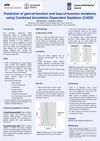
September 2017
1 citations
,
September 2017 C-scores can help predict gain-of-function and loss-of-function mutations.
 June 2024 in “Computational and Structural Biotechnology Journal”
 Multi-omics techniques help understand the molecular causes of androgenetic alopecia.
 April 2017 in “Journal of Investigative Dermatology”
 Found new possible treatments for hair loss.
March 2026 in “JID Innovations” Aire mutation reduces alopecia areata, while Notch4 mutation prevents it in mice.