75 citations
,
September 1971 in “British Journal of Dermatology” Both steroids effectively promote hair growth for at least 9 months.
50 citations
,
July 2015 in “Journal of the American Academy of Dermatology” Using 2.5 mg/mL triamcinolone acetonide is effective for hair growth in alopecia areata with fewer side effects.
39 citations
,
March 1976 in “British Journal of Dermatology” Intralesional steroid therapy is useful for treating various skin conditions.
 35 citations
,
January 2013 in “Indian Journal of Dermatology, Venereology and Leprology”
35 citations
,
January 2013 in “Indian Journal of Dermatology, Venereology and Leprology” Intralesional triamcinolone acetonide is effective for treating patchy hair loss, and dermoscopy helps detect treatment response and side effects early.
19 citations
,
December 2019 in “Journal of the American Academy of Dermatology” 5 mg/mL of triamcinolone acetonide is most effective for hair regrowth with fewer side effects.
11 citations
,
January 2020 in “Journal of Drugs in Dermatology” Intralesional triamcinolone acetonide is effective and safe for treating early to mid-stage traction alopecia.
11 citations
,
April 1997 in “International Journal of Dermatology” Using tretinoin with triamcinolone acetonide helps treat alopecia areata.
 3 citations
,
July 2017 in “International journal of medicine”
3 citations
,
July 2017 in “International journal of medicine” Intralesional triamcinolone acetonide effectively treats alopecia areata, as shown by significant improvements in hair regrowth and dermoscopic indicators.
2 citations
,
March 1964 in “Archives of Dermatology” Different doses of triamcinolone injections work equally well for skin conditions.
 September 2022 in “Journal of Ayub Medical College Abbottabad”
 Steroid injections are more effective than platelet rich plasma for treating patchy hair loss.
July 2021 in “The Egyptian Journal of Hospital Medicine” Intralesional Triamcinolone acetonide injections are safe and effective for treating alopecia areata.
March 2020 in “QJM: An International Journal of Medicine” Standard intralesional corticosteroids are the best treatment for patchy alopecia areata.
6 citations
,
December 2015 in “Journal of Dermatological Case Reports” Intradermal testing can better detect corticosteroid allergies than patch testing.
 2 citations
,
January 2019 in “Annals of dermatology/Annals of Dermatology”
2 citations
,
January 2019 in “Annals of dermatology/Annals of Dermatology” A patient experienced permanent hair loss due to an allergic reaction to a corticosteroid injection.
 7 citations
,
April 1987 in “International Journal of Dermatology”
7 citations
,
April 1987 in “International Journal of Dermatology” Stopping imipramine reduced the woman's hair loss.
The C-CAT tool helps assess and improve treatment for central centrifugal cicatricial alopecia.
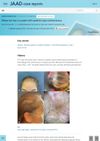 August 2023 in “JAAD Case Reports”
 A woman with lupus experienced hair regrowth after treatment, but hair transplantation is not advised for her condition.
 August 2018 in “Journal of the American Academy of Dermatology”
 Reflectance confocal microscopy helped diagnose and manage a woman's hair loss without needing a biopsy.
71 citations
,
December 2013 in “The journal of investigative dermatology. Symposium proceedings/The Journal of investigative dermatology symposium proceedings” There are no FDA-approved treatments for Alopecia Areata, and current options have varying success and relapse rates.
 48 citations
,
January 2014 in “Dermatology Online Journal”
48 citations
,
January 2014 in “Dermatology Online Journal” New treatments for Dissecting cellulitis show promise, but more research is needed to understand the disease and establish a standard treatment plan.
 26 citations
,
June 2018 in “Australasian Journal of Dermatology”
26 citations
,
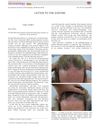
June 2018 in “Australasian Journal of Dermatology” Stopping sunscreen use on the forehead led to hair regrowth in a woman with frontal fibrosing alopecia.
14 citations
,
May 2009 in “Journal of the American Academy of Dermatology” The patient's scalp lesions stabilized with a combination of treatments after initial therapies failed.
11 citations
,
January 2017 in “Skin Appendage Disorders” Use lower concentrations of triamcinolone acetonide to reduce steroid-induced scalp atrophy.
7 citations
,
January 2017 in “Dermatology Online Journal” TNF-inhibitor induced alopecia can be treated effectively with different therapies.
1 citations
,
January 2021 in “Dermatologic Therapy” Candida antigen is an effective and promising treatment for alopecia areata.
June 2025 in “British Journal of Dermatology” Denosumab may cause alopecia areata.
 February 2024 in “Journal of cutaneous and aesthetic surgery”
 The combined treatment helps improve severe hair loss and reduces the need for other medications.
 April 2019 in “The journal of investigative dermatology/Journal of investigative dermatology”
 Machine learning can predict how well patients with alopecia areata will respond to certain treatments.
 October 2017 in “Journal of Investigative Dermatology Symposium Proceedings”
 Using lidocaine before keloid injections makes the treatment more comfortable for patients.
 May 2010 in “Journal of the Dermatology Nurses' Association”
 Cicatricial alopecia causes permanent hair loss and is treated to relieve symptoms and stop progression.