 June 2008 in “British Journal of Dermatology”
 UK medical students lack dermatology education, liver biopsy patients with risk factors show more fibrosis, and certain fungi resist drugs due to melanin; genetics may influence female hair loss.
 September 2004 in “Experimental dermatology”
 Melatonin directly affects mouse hair follicles and may influence hair growth.
 July 2003 in “Journal of Cutaneous Medicine and Surgery”
 Certain drugs can cause lupus, stopping these drugs is the main treatment. NB-UVB phototherapy clears psoriasis faster when applied three times a week. Monoclonal antibodies and oral pimecrolimus are effective in treating psoriasis. Smoking and drinking are linked to psoriasis in men. No direct link between low iron and hair loss was found. Vaccines are effective against genital herpes and human papillomavirus type 16.
 July 2003 in “Journal of Cutaneous Medicine and Surgery”
 Various skin conditions can be treated effectively with different methods, such as discontinuing certain drugs, using specific vaccines, applying creams, and changing lifestyle habits like smoking and drinking.
 July 2003 in “British Journal of Dermatology”
 Some skin conditions are associated with other serious diseases, and office microscopy may miss many fungal infections.
 July 2003 in “Journal of Cutaneous Medicine and Surgery”
 The document concludes that various treatments for skin conditions are effective, but some require further research, and certain factors like gender and lifestyle can influence disease outcomes.
 July 2003 in “Journal of Cutaneous Medicine and Surgery”
 Stopping certain drugs can improve skin conditions, arsenicosis affects over half of a Bangladeshi village, males are more vulnerable, and certain treatments are effective for warts, acne, and psoriasis. Smoking and drinking are linked to psoriasis in men, a cream helps with a type of skin cancer, and low iron levels don't directly cause chronic hair loss in women.
 July 2003 in “Journal of Cutaneous Medicine and Surgery”
 Treating psoriasis with UVB light three times a week is faster than twice a week, and certain medications and lifestyle factors affect psoriasis treatment outcomes.
 July 2003 in “Journal of Cutaneous Medicine and Surgery”
 Skin problems are common in Bangladesh due to arsenic, prompt treatment of diabetic foot ulcers is crucial, maternal transmission causes most neonatal herpes, treatments for pediatric vasculitis are effective, the chickenpox vaccine works, more frequent UVB therapy helps psoriasis, certain jobs increase hand dermatitis risk, monoclonal antibodies treat psoriasis well, lifestyle affects psoriasis, alefacept improves psoriasis, imiquimod cream partially clears basal cell carcinoma, and iron may not help chronic hair loss.
 July 2003 in “Journal of Cutaneous Medicine and Surgery”
 Some medications can improve skin conditions, while lifestyle factors like smoking and drinking may worsen them; treatments like monoclonal antibodies and imiquimod cream show promise for certain skin diseases.
 June 2003 in “Obstetrical & Gynecological Survey”
 After chemotherapy for a gestational trophoblastic tumor, normal pregnancy rates are possible, but there's a slightly higher risk of the tumor reoccurring in future pregnancies.
 June 2003 in “Obstetrical & Gynecological Survey”
 Postmenopausal ovary stromal cells have a unique makeup and limited steroid production, suggesting androgens come from the adrenal gland.
 June 1995 in “Archives of Dermatology”
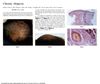
 A woman's hair loss was due to trichotillomania, which is often misdiagnosed and can require different treatments based on age and underlying conditions.
 August 1994 in “Molecular Endocrinology”
 Changing protein kinase levels in pituitary cells affects calcium flow and beta-endorphin release.
 January 1993 in “Journal of Dermatological Treatment”
 Most people who volunteered for a health study had medical issues, showing the need for careful screening before trials.
 May 1991 in “Current problems in dermatology”
 Skin issues can indicate immune system problems.
 December 1989 in “The Journal of Dermatologic Surgery and Oncology”
 New techniques and findings in dermatologic surgery show improved pain management, safer liposuction, better hair transplantation, and effective treatments for skin conditions.
 October 1961 in “Archives of Dermatology”
 Reassurance is important for postpartum hair shedding as it likely won't cause complete baldness.
 January 2021 in “International Journal of Dermatology”
 Possible link between COVID-19 and hair loss; more research needed.
 March 2018 in “John Wiley & Sons, Ltd eBooks”
 Surgical therapies for vitiligo vary in effectiveness, with combination therapy and medical tattooing recommended for better results.
 September 2015 in “Dermatologic Surgery”
 Computer-aided imaging system accurately measures baldness in Chinese women with hair loss.
14 citations
,
May 1979 in “International Journal of Dermatology” Trichostasis spinulosa mainly affects the nose, with many tiny hairs in one follicle, possibly influenced by hormones and sunlight.
10 citations
,
January 1925 in “Archives of Dermatology” Trichostasis spinulosa is a rare skin condition with hair-filled plugs in hair follicles.
13 citations
,
January 1985 in “International Journal of Dermatology” The document found differences in lesion distribution and microscopic features among trichostasis spinulosa and similar skin conditions.
June 2017 in “Journal of the American Academy of Dermatology” Plucked hair can help diagnose pemphigus vulgaris early.
3 citations
,
September 2018 in “Journal of Structural Biology” Oxidized trichocyte keratin has a helical dislocation in its structure.
15 citations
,
May 2009 in “Chemical Physics Letters” A new method accurately measures molecular movement without complex modeling.
 13 citations
,
December 2010 in “Archives of Dermatology”
13 citations
,
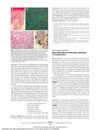
December 2010 in “Archives of Dermatology” Minoxidil use can cause trichostasis spinulosa in long-term hair loss patients.
8 citations
,
January 2014 in “Indian Dermatology Online Journal” Trichostasis spinulosa is a common but often unnoticed skin condition involving bundled vellus hairs, especially in people with darker skin or UV exposure.