 4 citations
,
October 2012 in “Expert Review of Dermatology”
4 citations
,
October 2012 in “Expert Review of Dermatology” Dermoscopy greatly improves melanoma diagnosis and reduces unneeded surgeries.
 December 2025 in “Progress in Biomedical Engineering”
 New techniques like electrical stimulation and microneedling may improve hair growth and offer alternatives to current treatments.
 October 2024 in “Consilium Medicum”
 Understanding fibroblasts helps improve cosmetic treatments for aging skin.
 15 citations
,
December 2007 in “Dermatologic Therapy”
15 citations
,
December 2007 in “Dermatologic Therapy” Hair transplantation has improved with techniques that increase graft survival and patient satisfaction for more natural results.
December 2024 in “Likarska sprava” Both FUE and DHI techniques are effective for eyebrow transplantation, with high patient satisfaction.
 January 2024 in “Revue médicale suisse”
 Few treatments for common hair loss are approved, but options like light therapy, micro-needling, and hair transplants are available.
 December 2018 in “Lasers in Surgery and Medicine”
 Science improves peace by advancing medical treatments, like laser therapies and non-invasive imaging.
 February 2023 in “Journal of Advanced Research”
 A new method using Platelet-rich Plasma (PRP) in a microneedle can promote hair regrowth more efficiently and is painless, minimally invasive, and affordable.
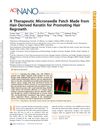 192 citations
,
April 2019 in “ACS nano”
192 citations
,
April 2019 in “ACS nano” A new microneedle patch made from hair proteins helps regrow hair faster and better than current treatments.
December 2025 in “The American Journal of Interdisciplinary Innovations and Research” The InvisiCaps Method ensures natural-looking hair extensions by carefully matching donor hair characteristics.
 March 2026 in “Preprints.org”
 Robotic systems in cosmetic surgery are promising but need more development and research.
March 2024 in “Journal of pharmacy & pharmaceutical sciences” Polymeric microneedles offer a less invasive, long-lasting drug delivery method that improves patient compliance and reduces side effects.
14 citations
,
December 2024 in “Pharmaceutics” Hydrogel microneedles offer a promising, minimally invasive way to treat diseases like cancer and hair loss, but need improvements in strength and standardization.
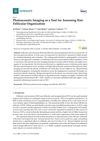 11 citations
,
October 2020 in “Sensors”
11 citations
,
October 2020 in “Sensors” Photoacoustic imaging can accurately assess hair follicle density and orientation for hair transplant planning.
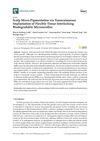 3 citations
,
October 2019 in “Pharmaceutics”
3 citations
,
October 2019 in “Pharmaceutics” New technique implants pigment in scalp with less pain and damage.
 23 citations
,
July 2021 in “International Journal of Pharmaceutics”
23 citations
,
July 2021 in “International Journal of Pharmaceutics” New dissolving and implantable microneedle patches have been created for a long-lasting, non-invasive delivery of the drug finasteride.
 3 citations
,
May 2011 in “Medical Hypotheses”
3 citations
,
May 2011 in “Medical Hypotheses” Transnasal cooling could reveal new insights into various physiological conditions and may be a natural way to transfer heat from the brain.
 December 2022 in “Физиотерапия, бальнеология и реабилитация”
 Radiofrequency micro needling is effective for rejuvenating skin and reducing wrinkles.
 74 citations
,
July 2008 in “Journal of Dermatological Case Reports”
74 citations
,
July 2008 in “Journal of Dermatological Case Reports” Trichoscopy is a quick and easy way to diagnose most genetic hair problems without invasive methods.
 67 citations
,
January 2022 in “Theranostics”
67 citations
,
January 2022 in “Theranostics” Advanced nanocarrier and microneedle drug delivery methods are more effective, safer, and less invasive for treating skin diseases.
 16 citations
,
January 2014 in “Dermatology online journal”
16 citations
,
January 2014 in “Dermatology online journal” The document concludes that Follicular Unit Extraction is an advanced, less invasive hair transplant method with fewer side effects than traditional methods.
 November 2023 in “Facial Plastic Surgery”
 Follicular Unit Excision (FUE) is a popular, less invasive hair restoration method with high patient satisfaction when done correctly, despite some complications from untrained practitioners.

The FUE technique is a popular, less invasive option for hair transplant with quicker recovery and fewer scars compared to other methods.
 April 2018 in “Deleted Journal”
 Skin grafts are a common, minimally invasive way to close wounds in dogs, but better methods are still being sought.
 May 2021 in “Pakistan Journal of Medical and Health Sciences”
 Trichogram is useful for diagnosing hair disorders, but newer, non-invasive methods like trichoscopy are becoming more popular due to their sensitivity and ability to monitor treatment responses.
 3 citations
,
December 2013 in “Journal of Dermatology”
3 citations
,
December 2013 in “Journal of Dermatology” Scanning electron microscopy revealed four distinct hair root shapes in alopecia areata, suggesting a less invasive diagnostic method.
 8 citations
,
September 2015 in “Clinics in Dermatology”
8 citations
,
September 2015 in “Clinics in Dermatology” Hair loss in children is diagnosed and treated differently than in adults, with different common causes and a focus on less invasive methods.
 November 2019 in “Journal of Aesthetic Nursing”
 The article concludes that a thorough diagnosis and treatment plan, including medications, non-invasive methods, or surgery, is important for managing hair loss, with a combination of minoxidil and finasteride being particularly effective.
 8 citations
,
January 2015 in “Clinical and Experimental Dermatology”
8 citations
,
January 2015 in “Clinical and Experimental Dermatology” A new model for hair regeneration in mice was created in 2015, which is faster and less invasive than the old method, producing normal hairs in about 21 days.
May 2013 in “Optometry and vision science” The document discusses challenges in eye care, including treating melanoma before macular hole repair, bloody tears resolved by blood pressure control, eyelash regrowth in hair-pulling disorder with medication, a non-invasive method to detect eyelash mites, and the psychological factors affecting contact lens comfort.