 January 2026 in “International Journal of All Research Education & Scientific Methods”
 Alopecia is caused by various factors, and new treatments like gene editing and regenerative medicine offer hope for personalized hair regrowth solutions.
 January 2025 in “bioRxiv (Cold Spring Harbor Laboratory)”
 Rhamnose may help hair growth and pigmentation, making it a potential treatment for hair loss.
 January 2025 in “Journal of Medical Biochemistry”
 Superoxide dismutases help balance cell stress and may aid cancer treatment.
 September 2024 in “Meditsinskiy sovet = Medical Council”
 As women age, hair follicles decrease in number and hair width tends to reduce.
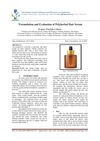 June 2024 in “International Journal of Pharmaceutical Research and Applications”
 Polyherbal hair serum can hydrate the scalp and promote hair growth safely.
 December 2023 in “Journal of the Endocrine Society”
 Blocking glucocorticoid receptors improves glucose metabolism in a PCOS mouse model.
 November 2023 in “bioRxiv (Cold Spring Harbor Laboratory)”
 Disrupted cholesterol production impairs hair follicle stem cells, leading to hair loss.
 September 2023 in “Asian journal of beauty & cosmetology”
 Lipids are important for healthy hair, but their exact role is not fully understood and needs more research.
 August 2023 in “Research Square (Research Square)”
 Two microRNAs affect hair follicle development in sheep by targeting specific genes.
 June 2023 in “Historical records of Australian science/Historical Records of Australian Science”
 George Ernest Rogers was a notable scientist who made important discoveries about hair and wool proteins.
 September 2022 in “Institutional Repositories DataBase (IRDB)”
 3D-oxy exosomes may significantly boost hair growth, offering new treatment options for hair loss.
 September 2021 in “Research Square (Research Square)”
 Not having enough or having too much of the protein Grainyhead-like 3 leads to various developmental problems.
 April 2018 in “bioRxiv (Cold Spring Harbor Laboratory)”
 A gene variant causes patched hair loss in mice, similar to alopecia areata in humans.
 April 2018 in “Journal of Investigative Dermatology”
 Hair follicle stem cells can change their role to ensure proper hair development.
 April 2018 in “Journal of Investigative Dermatology”
 Stabilizing HIF1A in hair follicles increases glycolysis, which may help reduce oxidative stress and support hair growth.
 April 2018 in “Journal of Investigative Dermatology”
 Glycogen metabolism is important for energy and processes in human hair follicles, and hair follicles may produce glucose from lactate.
 January 2018 in “The journal of the convergence on culture technology”
 Astringent persimmon fruit extract can promote hair growth.

Modern hair restoration techniques can effectively treat hair loss and provide natural-looking results.

The document discusses how traditional Chinese medicine extracts may affect hair growth in animals but lacks detailed results.
 January 2016 in “Research Explorer (The University of Manchester)”
 Activating the Eda/Edar pathway improves wound healing by enhancing hair follicle growth.

Chrysanthemum zawadskii extract may help treat hair loss by promoting hair growth and affecting growth factors.
 December 2013 in “Research Portal (King's College London)”
 Hair loss in Lichen Planopilaris is caused by immune system issues damaging hair follicles and stem cells.
 November 2013 in “Elsevier eBooks”
 Skin and hair renewal is maintained by both fast and slow cycling stem cells, with hair regrowth primarily driven by specific stem cells in the hair follicle bulge. These cells can also help heal wounds and potentially treat hair loss.

Older age, obesity, hirsutism, and having children increase metabolic risk in women with PCOS.
 January 2012 in “Elsevier eBooks”
 New treatments for skin and hair repair show promise, but further improvements are needed.
 January 1998 in “KAGAKU TO SEIBUTSU”
 The document suggests that male hormones likely affect hair growth and baldness, and future treatments might involve stem cells and androgen-independent cells.

Hair loss in African American women, caused by hair care, genetics, and environment, needs more research for better treatment.
 195 citations
,
November 2019 in “Clinica Chimica Acta”
195 citations
,
November 2019 in “Clinica Chimica Acta” High levels of male hormones, insulin resistance, and obesity are closely linked and worsen polycystic ovary syndrome, but more research is needed to improve treatments.
 25 citations
,
July 2019 in “Experimental Dermatology”
25 citations
,
July 2019 in “Experimental Dermatology” Cholesterol balance is important for hair health, and problems with it can lead to hair loss conditions.
 October 2023 in “Frontiers in endocrinology”
 Effective PCOS treatments require targeting specific signaling pathways.