November 2025 in “Journal of Cutaneous Medicine and Surgery” JAK inhibitors are effective and safe for treating severe alopecia areata.
 November 2025 in “Mendeley Data”
 JAK inhibitors can be safely used for alopecia areata in patients with latent hepatitis B or stable tuberculosis with proper monitoring.
 November 2025 in “Mendeley Data”
 JAK inhibitors can be safely used in alopecia areata patients with latent hepatitis B or tuberculosis, with proper monitoring.
November 2025 in “Biomedicines” JAK1 inhibitors can help reduce itchiness in atopic dermatitis.
October 2025 in “International Journal of Dermatology” JAK inhibitors may help treat certain types of hair loss, but more research is needed.
September 2025 in “Acta Dermato Venereologica” Baricitinib can help improve hair loss and skin color issues in people with Down syndrome.
September 2025 in “Journal of the American Academy of Dermatology” Some JAK inhibitors are effective for significant hair regrowth in alopecia areata.
September 2025 in “Journal of the American Academy of Dermatology” Ritlecitinib may help treat alopecia areata by protecting hair follicles.
 August 2025 in “Dermatology and Therapy”
 JAK inhibitors show promise for treating alopecia areata but have serious side effects.
July 2025 in “Journal of Investigative Dermatology” Baricitinib stops hair loss and promotes regrowth in alopecia areata.
June 2025 in “British Journal of Dermatology” JAK inhibitors help regrow hair in alopecia areata, but their long-term safety is still unclear.
 June 2025 in “Journal of Education Health and Sport”
 Oral JAK inhibitors show promise for treating alopecia areata but have challenges like relapse and side effects.
April 2025 in “International Journal of Dermatology” JAK inhibitors effectively reduce alopecia areata symptoms in Black patients.

Interest in JAK inhibitors for hair loss increased significantly after media coverage and FDA approval.
March 2025 in “European Journal of Medical Genetics” Tofacitinib helped improve symptoms and hair growth in a patient with Aicardi-Goutières syndrome.
January 2025 in “Dermatologic Therapy” Baricitinib works better for alopecia areata in patients not previously treated with tofacitinib.
 January 2025 in “The Egyptian Journal of Hospital Medicine”
 Baricitinib is effective and safe for treating localized vitiligo, alone or with topical tacrolimus.
 January 2025 in “Acta Dermatovenerologica Alpina Pannonica et Adriatica”
 JAK inhibitors can help regrow hair in alopecia areata but have potential long-term risks and require careful monitoring.

JAK inhibitors effectively regrow hair in children with alopecia areata and are safe to use.
 December 2024 in “Drug Discoveries & Therapeutics”
 Baricitinib-loaded EVs help hair regrowth in alopecia areata by reducing inflammation and promoting hair follicle regeneration.
October 2024 in “Clinical Cosmetic and Investigational Dermatology” Brevilin-A is a safe and effective treatment for mild to moderate alopecia areata in children.
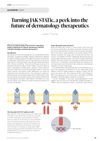 August 2024 in “New Zealand Medical Student Journal”
 JAK inhibitors show promise for treating skin diseases effectively and safely.
 July 2024 in “Medical alphabet”
 JAK inhibitors like tofacitinib may effectively treat alopecia in children without major side effects.
July 2024 in “Journal of Investigative Dermatology” JAK inhibitors improve hair growth in alopecia areata, especially in patchy types.
 June 2024 in “Military medicine”
 JAK inhibitors like baricitinib and ritlecitinib are effective new treatments for severe alopecia areata.
June 2024 in “Military Medicine” Access to JAK inhibitors for alopecia areata should be improved in the Military Healthcare System.
 May 2024 in “Archives of dermatological research”
 Enz_MoriL from mulberry leaves helps hair growth by affecting specific cell pathways.
Baricitinib shows promise for treating alopecia areata with mild side effects.
 April 2024 in “Frontiers in pharmacology”
 Brepocitinib 30mg is most effective for moderate-to-severe alopecia areata, but ritlecitinib 50mg may offer a better balance of safety and effectiveness.
Baricitinib may effectively treat oral lichen planus.