 March 2026 in “Mendeley Data”
 Janus kinase inhibitors can help children with alopecia areata regrow hair but may have some risks.
638 citations
,
October 1997 in “Nature”  3 citations
,
August 2025 in “Frontiers in Pharmacology”
3 citations
,
August 2025 in “Frontiers in Pharmacology” Oral JAK inhibitors are safe for alopecia areata, but baricitinib may cause more acne and infections.
1 citations
,
October 2017 JAK inhibitors are effective for hair regrowth in severe alopecia areata.
 12 citations
,
September 2007 in “Wound repair and regeneration”
12 citations
,
September 2007 in “Wound repair and regeneration” Smad2/3-dependent TGF-β signaling increases during wound healing.
11 citations
,
July 2022 in “Frontiers in Immunology” Four specific genes are linked to keloid formation and could be potential treatment targets.
 February 2016 in “The journal of investigative dermatology/Journal of investigative dermatology”
 JAK inhibitors may help treat alopecia areata by reversing hair loss.
Baricitinib shows promise for treating alopecia areata with mild side effects.
January 2026 in “Clinical and Experimental Dermatology” Ruxolitinib helped a patient with alopecia areata regrow hair.
April 2026 in “Development” Hemidesmosomes and Notch signaling help skin cells mature by moving them to the outer layer.
 November 2020 in “Journal of The American Academy of Dermatology”
 Oral JAK inhibitors help regrow hair in alopecia patients.
July 2024 in “Journal of Investigative Dermatology” OR101 may effectively treat atopic dermatitis and similar skin conditions.
16 citations
,
January 2020 in “Annals of the rheumatic diseases” Baricitinib might help treat hair loss in lupus patients, but more research is needed.
January 2022 in “Skin Pharmacology and Physiology” Higher STAT3 levels are found in hair loss areas, but not linked to hair loss severity.
 2 citations
,
June 2024 in “Frontiers in Plant Science”
2 citations
,
June 2024 in “Frontiers in Plant Science” LLPS is crucial for RALF signaling, aiding plant growth and stress resilience.
Erk signaling helps zebrafish fins regrow to the right size by using memory of the original size.
 7 citations
,
April 2023 in “Frontiers in immunology”
7 citations
,
April 2023 in “Frontiers in immunology” Oral baricitinib and ruxolitinib are effective and safe for treating alopecia areata.
 August 2021 in “Revista Colombiana de Reumatología/Revista Colombiana de Reumatologia”
 Janus kinase inhibitors may effectively treat severe alopecia areata unresponsive to other treatments.
January 2018 in “Figshare” Ruxolitinib and tofacitinib are effective and safe for treating severe alopecia areata.
July 2025 in “Journal of Investigative Dermatology” Ritlecitinib reduces alopecia areata symptoms by blocking JAK3/TEC signaling and T-cell activity.
 66 citations
,
December 2018 in “Dermatology”
66 citations
,
December 2018 in “Dermatology” Both ruxolitinib and tofacitinib are effective and safe for treating severe alopecia areata, but relapses are common.
62 citations
,
December 2007 in “Journal of Cellular and Molecular Medicine” Kremen is crucial for proper development and preventing tumors by regulating Wnt signaling.
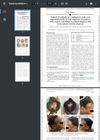 April 2025 in “JAAD Case Reports”
 Topical ruxolitinib and oral minoxidil together can regrow hair in certain types of hair loss.
22 citations
,
April 2023 in “The Journal of Cell Biology” Calcium signaling in skin cells is crucial for communication and regeneration.
1 citations
,
May 2026 in “Journal of Dermatological Treatment” JAK1 inhibitor may effectively treat alopecia areata when TNF-α inhibitors and corticosteroids fail.
5 citations
,
November 2021 in “The journal of investigative dermatology/Journal of investigative dermatology” Wnt/β-catenin signaling is important for keeping skin cell attachment structures stable.
19 citations
,
November 2017 in “General and comparative endocrinology” BMP2 and BMPR-IA may stop hair growth while Noggin may encourage it in yak skin.
 May 2025 in “Science Advances”
 PIEZO1 helps keep hair follicle stem cells inactive, affecting hair growth.
 2 citations
,
January 2025 in “动物学研究”
2 citations
,
January 2025 in “动物学研究” YAP1 helps fat cell formation by influencing the Hippo pathway.
3 citations
,
September 2022 in “European Journal of Dermatology” Gene sequencing is crucial for diagnosing Junctional epidermolysis bullosa.