 June 2023 in “Benha Journal of Applied Sciences”
 Targeting IL-17 could help treat pattern hair loss.
 July 2021 in “British Journal of Dermatology”
 The pandemic likely caused delays in skin cancer assessments, leading to fewer early diagnoses and thicker melanomas.
 June 2021 in “Psychiatria Danubina”
 The antidepressant escitalopram likely caused hair loss in a patient.
 April 2020 in “Journal of the Endocrine Society”
 Non-classic congenital adrenal hyperplasia (NCCAH) can mimic PCOS and requires genetic testing for proper diagnosis and treatment.
 December 2019 in “Mehmet Akif Ersoy Üniversitesi Sağlık Bilimleri Enstitüsü dergisi”
 One cat with low thyroid hormone had growth issues, and another with high thyroid hormone had skin problems; both got better with treatment.

Fractional CO2 laser is more effective and safer than steroid injections for treating alopecia areata.
 August 2018 in “Journal of the American Academy of Dermatology”
 Reflectance confocal microscopy helped diagnose and manage a woman's hair loss without needing a biopsy.
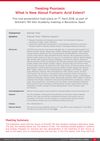 July 2018 in “European Medical Journal”
 Fumaric acid esters, especially dimethylfumarate, improve psoriasis treatment.
 January 2018 in “Springer eBooks”
 Cancer treatments targeting specific cells often cause skin, hair, and nail problems, affecting patients' lives and requiring careful management.
 January 2018 in “Springer eBooks”
 Terbinafine is the most effective medicine for fungal nail infections, especially for diabetics and those with weak immune systems.
 July 2017 in “JAMA Dermatology”
 The document corrects a missing conflict of interest and acknowledges a pioneer in hair transplantation and his other contributions.
 November 2016 in “Therapeutic Delivery”
 New drugs for Alzheimer's and rheumatoid arthritis advanced, a Zika vaccine is in development, and there were business deals in anesthesia and oncology.
 July 2016 in “British Journal of Dermatology”
 The book provides an overview of new trends and techniques in cosmetic dermatology.
 April 2016 in “Journal of the American Academy of Dermatology”
 Tofacitinib helped a person with total body hair loss grow hair again without bad side effects.
 April 2016 in “Journal of The American Academy of Dermatology”
 Daylight photodynamic therapy is effective and well-tolerated for treating actinic keratoses with minimal side effects.
 January 2015 in “Springer eBooks”
 The document concludes that managing PCOS involves lifestyle changes, medication, and monitoring for associated health risks.

Any medication can cause skin reactions, some due to allergies and others due to dosage or genetic factors.

Chemotherapy can cause skin issues and hair loss, and this guide explains how to manage them.
 February 2013 in “Journal of the American Academy of Dermatology”
 A woman's hair loss looked like a different condition due to her hairstyle, and treatment stopped further hair loss but didn't regrow hair.

Men with both baldness and scalp psoriasis often don't have psoriasis on bald spots.
 January 2011 in “International Journal of Trichology”
 The conference highlighted new diagnostic tools, the role of genetics in hair loss, and emerging treatments.
 January 2011 in “Yearbook of Dermatology and Dermatologic Surgery”
 Finding a positive nonsentinel lymph node in melanoma patients indicates a worse prognosis.
 July 2008 in “Journal of Intellectual Property Law & Practice”
 The UK Court of Appeal ruled that new dosing regimens for drugs can be patented, aligning with the European Patent Office's approach.
 May 2007 in “Dermatologic Therapy”
 Hair care practices like using relaxers and tight braiding can lead to permanent hair loss in black women.

The document listed various medical job opportunities with competitive benefits and living conditions.
 October 1982 in “American Journal of Nursing”
 Wound healing is a complex process involving different cells and stages, leading to scar tissue formation and strength increase over time.
 July 1976 in “Archives of Dermatology”
 Some people may naturally have beaded lines on their skin that are more visible with certain treatments, and hair loss similar to post-pregnancy can occur after specific diet and therapy.
 July 2014 in “Journal of Dermatology”
 Educating patients on phototrichogram increased satisfaction in androgenetic alopecia treatment.
 September 1998 in “Journal of The European Academy of Dermatology and Venereology”
 Phototrichogram helps assess hair loss severity.
 March 2026 in “Mendeley Data”
 Janus kinase inhibitors can help children with alopecia areata regrow hair but may have some risks.