132 citations
,
September 2009 in “Experimental Dermatology” A reliable system was developed to distinguish hair growth stages, aiding in identifying hair growth promoters or inhibitors.
July 2026 in “Journal of Investigative Dermatology”  1 citations
,
December 2018 in “Journal of cutaneous pathology”
1 citations
,
December 2018 in “Journal of cutaneous pathology” Some skin growths with mucin can form hair follicles and resemble skin cancer, but a special stain can help tell them apart.
7 citations
,
January 1992 in “Acta Histochemica” Porcine and human pilosebaceous units are very similar.
12 citations
,
July 2019 in “Veterinary Dermatology” Nestin-expressing progenitor cells become outer root sheath keratinocytes.
January 2001 in “대한피부과학회지” Horizontal sectioning helps diagnose hair loss, but Korean follicle differences matter.
 1 citations
,
January 1995 in “Skin Cancer”
1 citations
,
January 1995 in “Skin Cancer” Immunohistochemistry helps accurately identify and differentiate malignant trichilemmoma.
 8 citations
,
April 2009 in “International journal of oncology”
8 citations
,
April 2009 in “International journal of oncology” Hair follicle cells resist turning into skin cells.
 September 2022 in “bioRxiv (Cold Spring Harbor Laboratory)”
 The Kras mutation changes normal cell signals, leading to disrupted tissue structure and potential cancer.
16 citations
,
June 1992 in “Journal of Investigative Dermatology” 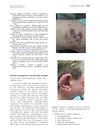
A 72-year-old man was diagnosed with a rare skin form of Rosai-Dorfman disease after years of misdiagnosis.

The human scalp has different types of pigment cells in hair follicles with varying abilities to produce pigment.
8 citations
,
June 1981 in “Clinica Chimica Acta” 10 citations
,
January 2004 in “Journal of Investigative Dermatology” Krt6a-Cre transgenic mice help study gene effects on hair follicle development and tumor suppression.
 2 citations
,
November 2022 in “IP Indian journal of clinical and experimental dermatology”
2 citations
,
November 2022 in “IP Indian journal of clinical and experimental dermatology” Dermoscopic and histopathological features combined can help diagnose Pityriasis versicolor.
119 citations
,
September 2000 in “Journal of Biological Chemistry” GKLF/KLF4 and Sp1 control Keratin 19 gene activity, influencing cancer-related changes.
1 citations
,
January 1989 Four antibodies were developed to help study hair follicle cell differentiation.
1 citations
,
May 2023 in “bioRxiv (Cold Spring Harbor Laboratory)” A new tool allows easier long-term imaging of live skin cells, helping study diseases like skin cancer.
25 citations
,
November 2010 in “Journal of Molecular Structure” Raman micro-spectroscopy can help distinguish basal cell carcinoma from hair follicles in skin tissue.
 1 citations
,
October 2022 in “Veterinary pathology”
1 citations
,
October 2022 in “Veterinary pathology” Some canine hair follicle tumors contain amyloid deposits, with a protein called CK5 involved in their formation.
Chromatin changes and gene activity timing are linked during stem cell differentiation.
51 citations
,
April 2013 in “Journal of Investigative Dermatology” Hair follicle stem cells rely on nearby blood vessels for their maintenance and function.
Human hair follicle stem cells can be enriched by sticking to type IV collagen.
September 2017 in “Journal of Investigative Dermatology” Loss of COL17A1 causes hair follicle stem cells to age and leads to hair loss.
21 citations
,
June 2004 in “Experimental Dermatology” Ber‐EP4 marks cells related to the secondary hair germ in hair follicles.
14 citations
,
November 1979 in “Pediatric Research” 2 citations
,
September 2024 in “Diagnostics” A new method accurately measures cell changes in breast cancer.
September 2025 in “OPAL (Open@LaTrobe) (La Trobe University)” The treatments stopped hair regrowth in mice.
 10 citations
,
July 2013 in “British Journal of Dermatology”
10 citations
,
July 2013 in “British Journal of Dermatology” High MUC-18/MCAM levels in blood indicate a worse outlook for melanoma patients.
2 citations
,
January 2018 in “Open journal of stomatology” Tongue cancer cells show more plectin-1 than non-cancer cells, but both have similar levels of trichohyalin.