
Fraser's Dolphin can heal skin wounds with minimal scarring, unlike humans.

Steatocystomas are harmless skin cysts that can vary in size and may sometimes cause itching or pain.
 October 2024 in “Frontiers in Oncology”
 Keratin 18 helps diagnose and predict cancer progression and affects cancer growth and spread.
 December 2023 in “Communications biology”
 Targeting the HEDGEHOG-GLI1 pathway could help treat keloids.
 July 2023 in “Indian Journal of Animal Health”
 FGF-5 promotes Cashmere goat hair growth by increasing keratin genes and reducing certain LncRNA and target genes.
 July 2023 in “bioRxiv (Cold Spring Harbor Laboratory)”
 The mesenchyme can start hair growth, but the exact signal that causes this is still unknown.
The treatment was ineffective in humans.
 January 2023 in “International journal of biological sciences”
 COX2 and ATP synthase control the size of hedgehog spines.

The document concludes that the development of certain tumors is influenced by genetic background and that a specific gene modification can lead to tumor regression and reduced growth.

L-PGDS has specific binding sites for its functions and could help in drug delivery system design.
 August 2019 in “Research Square (Research Square)”
 Certain long non-coding RNAs in cashmere goats affect hair growth when treated with a specific growth factor.
 December 2018 in “IntechOpen eBooks”
 Neurohormones help control skin health and could treat skin disorders.
 April 2018 in “D-Scholarship@Pitt (University of Pittsburgh)”
 Keratin-75 is secreted by ameloblasts in a unique way without a signal peptide.
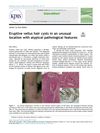 January 2018 in “The Kaohsiung journal of medical sciences”
 A young man had a rare case of hair cysts on his elbows, which was hard to diagnose and treat.
 January 2014 in “Journal of Investigative Dermatology”
 Proteins like aPKC and PDGF-AA, substances like adenosine and ATP, and adipose-derived stem cells all play important roles in hair growth and health, and could potentially be used to treat hair loss and skin conditions.
 January 2012 in “Durham e-Theses (Durham University)”
 Keratin 15 affects cell behavior and characteristics in skin cells.
 July 2011 in “British Journal of Dermatology”
 Dermatologists give better information on pathology forms, hypersensitivity vasculitis is a common skin issue, misdiagnoses can occur, and various skin conditions are linked to loss of elastin or genetic factors.
 January 2006 in “Advances in developmental biology”
 The Hairless gene is crucial for healthy skin and hair growth.

Ovol2 is crucial for hair growth and skin healing by controlling cell movement and growth.
 September 1998 in “Journal of The European Academy of Dermatology and Venereology”
 Topical 5α-reductase inhibitor helps counteract hair loss and stabilize it.
 February 2020 in “Definitions”
 Mutations in the KRT16 gene can cause skin and nail disorders.
 156 citations
,
October 1996 in “Science of The Total Environment”
156 citations
,
October 1996 in “Science of The Total Environment” Tributyltin exposure causes sex changes, sterilization, and decline in the snail Ocinebrina aciculata, risking its extinction.
 20 citations
,
January 2017 in “Scientific reports”
20 citations
,
January 2017 in “Scientific reports” Whale genes show changes that help them live in water, like less hair and better flippers.
 December 2025 in “Babcock University Medical Journal”
 CD27 and IL-35 can help diagnose alopecia areata linked to bacterial infections.
 98 citations
,
June 2001 in “Journal of biological chemistry/The Journal of biological chemistry”
98 citations
,
June 2001 in “Journal of biological chemistry/The Journal of biological chemistry” A cluster of sulfur-rich hair protein genes was found on chromosome 17.
57 citations
,
February 2006 in “Journal of Investigative Dermatology” Cylindromas likely originate from hair follicle stem cells, not sweat glands.
37 citations
,
August 2024 in “Current Issues in Molecular Biology” Keratins 6, 16, and 17 increase in damaged or diseased skin and may help diagnose skin issues.
31 citations
,
March 1995 in “Journal of Investigative Dermatology” 2 citations
,
May 2022 in “International journal of molecular sciences” Changes in KRT17 gene activity linked to wool production in Angora rabbits.
60 citations
,
December 2003 in “Journal of Investigative Dermatology” K6hf is found in specific parts of hair follicles, nails, and tongue, and is linked to hair growth and structure.