30 citations
,
October 2014 in “Experimental Dermatology” Leptin from skin fat can slow hair growth during certain phases.
30 citations
,
January 2009 in “The scientific world journal/TheScientificWorldjournal” Hair is hard to dissolve because of its complex proteins, but certain solvents that break specific bonds and hydrate can do it.
30 citations
,
August 2008 in “The journal of investigative dermatology/Journal of investigative dermatology” TGase 3 helps build hair structure by forming strong bonds between proteins.
30 citations
,
October 1999 in “Differentiation” Mutant MK6a transgenes in mice cause blistering, hair loss, and potential human alopecia.
30 citations
,
November 1992 in “The Journal of Dermatology” Keratohyalin and trichohyalin proteins help form and organize skin and hair structures.
29 citations
,
October 2017 in “Journal of proteomics” The research found specific proteins that affect fiber characteristics and hair growth in sheep and goats.
29 citations
,
January 2016 in “Experimental Dermatology” Mechanical stress may cause lesions in Hidradenitis suppurativa.
29 citations
,
August 2011 in “PubMed” Hair and nail proteins, mainly keratins, are crucial for structure and can indicate health issues.
29 citations
,
February 1989 in “Journal of Cutaneous Pathology” A unique hair tumor with a rippled pattern was identified, showing incomplete differentiation and unusual cell arrangements.
29 citations
,
May 1986 in “Journal of Steroid Biochemistry” Androgens don't directly affect hair cell growth or protein production.
 28 citations
,
February 2012 in “PLoS ONE”
28 citations
,
February 2012 in “PLoS ONE” A PKP1 gene mutation causes skin fragility and hair loss in Chesapeake Bay retriever puppies.
 28 citations
,
December 2011 in “Biocatalysis and biotransformation”
28 citations
,
December 2011 in “Biocatalysis and biotransformation” PDI helps restore over-bleached hair's strength and structure by attaching special peptides.
28 citations
,
January 2009 in “Journal of Investigative Dermatology” Stem cells in eccrine glands could be used for regenerative medicine.
 28 citations
,
April 1996 in “Cell biology international”
28 citations
,
April 1996 in “Cell biology international” Changes in keratin affect skin health and can lead to skin disorders like blistering diseases and psoriasis.
28 citations
,
March 1993 in “Journal of Cell Science” Keratins K4 and K13 form stable dimers in mature esophageal cells, aiding cell stability.
28 citations
,
October 1985 in “The Journal of Cell Biology” Researchers isolated and identified structural components of human hair follicles, providing a model for studying hair formation.
 27 citations
,
March 2019 in “PLoS ONE”
27 citations
,
March 2019 in “PLoS ONE” Thyroxine (T4) may help heal skin wounds by promoting new skin and blood vessel growth.
27 citations
,
November 2000 in “Journal of Veterinary Medicine Series B” Iodine deficiency in lambs causes poor growth, less wool, and delayed sexual maturity.
27 citations
,
July 1997 in “PubMed” The harlequin ichthyosis mouse mutation causes thick skin and early death, resembling a human skin disorder.
26 citations
,
March 2018 in “Experimental Dermatology” Prolactin may influence skin glands and could be a target for treating acne and skin aging.
26 citations
,
August 2014 in “Veterinary Dermatology” Sphynx cats have abnormal hair follicles and keratinization affecting their skin.
 26 citations
,
July 2012 in “Biochimica et Biophysica Acta (BBA) - General Subjects”
26 citations
,
July 2012 in “Biochimica et Biophysica Acta (BBA) - General Subjects” The review found that different stem cell types in the skin are crucial for repair and could help treat skin diseases and cancer.
26 citations
,
June 2010 in “Electrophoresis” New techniques helped identify rare wool proteins by reducing dominant ones.
26 citations
,
August 2007 in “Annals of Anatomy - Anatomischer Anzeiger” Feathers become harder as they develop due to a change in keratin type.
25 citations
,
August 2017 in “Frontiers in Zoology” Marine mammals lost many α-keratin genes, aiding their adaptation to aquatic life by becoming hairless.
25 citations
,
September 2014 in “SpringerPlus” Sheep have a unique gene, KAP8-2, that humans don't have, which may affect wool properties.
 25 citations
,
March 2013 in “British Journal of Dermatology”
25 citations
,
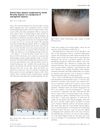
March 2013 in “British Journal of Dermatology” Woman has discoid lupus, frontal fibrosing, and androgenetic alopecia.
25 citations
,
November 2012 in “Thermochimica Acta” Internal lipids in keratin fibers, like wool and hair, reduce water absorption and release.
25 citations
,
January 2004 in “The International Journal of Developmental Biology” Research on skin disorders in humans and mice has improved understanding of hair and skin development.
 25 citations
,
May 1994 in “Journal of Investigative Dermatology”
25 citations
,
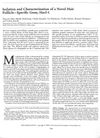
May 1994 in “Journal of Investigative Dermatology” Researchers found a new gene, hacl-1, that is active in mouse hair follicles during hair growth and may be important for hair biology.