 2 citations
,
August 2013 in “British Journal of Dermatology”
2 citations
,
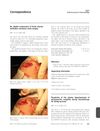
August 2013 in “British Journal of Dermatology” Chemotherapy improved a girl's painful foot condition linked to pachyonychia congenita.
 2 citations
,
August 2020 in “Scientific reports”
2 citations
,
August 2020 in “Scientific reports” Genes related to keratin, skin cell differentiation, and immune functions are key in hedgehog skin and spine development.
 January 2023 in “Frontiers in bioscience”
 Artemis protein may help control hair growth and health by influencing cell processes.
 January 2023 in “Open Life Sciences”
 VEGFR-2 activation is likely involved in hair follicle growth, survival, and development.
 July 2022 in “The journal of investigative dermatology/Journal of investigative dermatology”
 Targeting impaired Nrf2 signaling might help treat hidradenitis suppurativa early on.
 April 2017 in “Journal of Investigative Dermatology”
 Cholecystokinin may help reduce skin inflammation in psoriasis.
 April 2016 in “Journal of Investigative Dermatology”
 Lymphoid-specific helicase (Lsh) is crucial for skin growth, change, and healing after injury.
February 2010 in “Journal of the American Academy of Dermatology” Activating cAMP and ATP improves hair growth and strength.
January 2008 in “Bradford Scholars (University of Bradford)” Alopecia areata may be caused by antibodies targeting specific hair follicle proteins, hindering hair growth.
90 citations
,
August 2004 in “Physiological Genomics” Dermal papilla cells help skin stem cells grow into hair.
 34 citations
,
June 2008 in “In vitro cellular & developmental biology. Animal”
34 citations
,
June 2008 in “In vitro cellular & developmental biology. Animal” Scientists created a long-lasting stem cell line from human hair that can turn into different skin and hair cell types.
9 citations
,
August 2024 in “International Journal of Molecular Sciences” Promising treatments for EBS include anti-inflammatory drugs, antibiotics, creams, mTOR inhibitors, and gene editing, but more trials are needed.
 8 citations
,
April 2009 in “International journal of oncology”
8 citations
,
April 2009 in “International journal of oncology” Hair follicle cells resist turning into skin cells.
 September 2022 in “JAAD case reports”
 The man has a genetic skin condition called pachyonychia congenita.
January 2021 in “대한미용학회지” Boswellia may improve skin inflammation symptoms and positively influence hair growth in mice.
 May 2020 in “bioRxiv (Cold Spring Harbor Laboratory)”
 The study found that certain genes are important for hedgehog skin appendage development and immunity, with spines possibly evolving for protection and infection resistance.
12 citations
,
December 2003 in “Gene” The ovine Hoxc-13 gene is crucial for hair formation and may have other skin functions.
March 2006 in “The FASEB Journal” Vitamin D receptor is essential for adult hair growth.
 33 citations
,
March 2013 in “Journal of Investigative Dermatology”
33 citations
,
March 2013 in “Journal of Investigative Dermatology” Human hair follicle stem cells show signs of low oxygen levels, which may be important for hair growth and preventing baldness.
 11 citations
,
January 2013 in “Methods in molecular biology”
11 citations
,
January 2013 in “Methods in molecular biology” The method allows for 3D tracking of hair follicle stem cells and shows they can regenerate hair for up to 180 days.
6 citations
,
December 1990 in “PubMed” Keratinocytes in hair follicles differentiate similarly to skin cells, with specific patterns in different regions.
 3 citations
,
October 2022 in “Frontiers in Surgery”
3 citations
,
October 2022 in “Frontiers in Surgery” Proteomics combined with other technologies can lead to a better understanding of skin diseases.
20 citations
,
April 2009 in “Cell Biology International” Hair follicle stem cells can become corneal-like cells with the help of pax6.
 November 2022 in “The journal of investigative dermatology/Journal of investigative dermatology”
 Deleting the CD271 gene in mouse skin cells leads to disorganized skin and increased hair growth, suggesting CD271 is important for skin health.
 April 2018 in “The journal of investigative dermatology/Journal of investigative dermatology”
 Removing Lrig1-positive stem cells in mice causes temporary loss of sebaceous glands.
 21 citations
,
November 2011 in “The journal of investigative dermatology/Journal of investigative dermatology”
21 citations
,
November 2011 in “The journal of investigative dermatology/Journal of investigative dermatology” Telogen is an active phase with important biological processes, not a resting phase.
 February 2020 in “Definitions”
 Mutations in the KRT16 gene can cause skin and nail disorders.
25 citations
,
August 2017 in “Frontiers in Zoology” Marine mammals lost many α-keratin genes, aiding their adaptation to aquatic life by becoming hairless.
 12 citations
,
August 2011 in “Asian-Australasian Journal of Animal Sciences”
12 citations
,
August 2011 in “Asian-Australasian Journal of Animal Sciences” KAP8.1 gene variations affect cashmere weight in Inner Mongolian goats.
22 citations
,
July 1998 in “Journal of Investigative Dermatology” The 4C32 gene may help in mouse skin development and differentiation.