97 citations
,
March 2010 in “The American Journal of Human Genetics” A mutation in the KRT74 gene causes tightly curled hair.
 96 citations
,
June 2017 in “Nature Communications”
96 citations
,
June 2017 in “Nature Communications” A WNT10A gene mutation leads to ectodermal dysplasia by disrupting cell growth and differentiation.
 96 citations
,
October 2000 in “The FASEB Journal”
96 citations
,
October 2000 in “The FASEB Journal” The p75 neurotrophin receptor is important for hair follicle regression by controlling cell death.
 92 citations
,
September 2019 in “ACS nano”
92 citations
,
September 2019 in “ACS nano” A wearable device using electric stimulation can significantly improve hair growth.
92 citations
,
April 1999 in “The journal of investigative dermatology/Journal of investigative dermatology” Nonpalmoplantar skin cells can be made to express keratin 9 by interacting with palmoplantar fibroblasts.
91 citations
,
December 2000 in “The journal of cell biology/The Journal of cell biology” Scientists successfully created mouse hair proteins in the lab, which are stable and similar to natural hair.
90 citations
,
February 2001 in “The journal of investigative dermatology/Journal of investigative dermatology” Interleukin-1 increases keratin K6 production in skin cells.
88 citations
,
June 2000 in “Journal of Investigative Dermatology” Keratin 17 is important for hair and nail structure and affects pachyonychia congenita symptoms.
86 citations
,
May 2002 in “Journal of Investigative Dermatology” A new keratin, hK6irs1, is found in all layers of the hair follicle's inner root sheath.
80 citations
,
June 2002 in “Molecular Biology of the Cell” Type II keratins are uniquely phosphorylated during stress and mitosis, affecting their structure and function.
79 citations
,
August 1998 in “The Journal of Cell Biology” Keratin 16 delays skin maturation and affects skin and hair development in mice.
78 citations
,
May 2012 in “Journal of Investigative Dermatology” A specific gene mutation causes woolly hair and hair loss.
77 citations
,
March 2000 in “Journal of Investigative Dermatology” The research identified six functional hair keratin genes and four pseudogenes, providing insights into hair formation and gene organization.
72 citations
,
August 2014 in “Genome Biology and Evolution” Feather diversity is due to different keratin gene combinations, and chickens can help study human keratin diseases.
 70 citations
,
April 2017 in “Lasers in surgery and medicine”
70 citations
,
April 2017 in “Lasers in surgery and medicine” Blue light promotes hair growth by interacting with specific receptors in hair follicles.
 68 citations
,
November 2015 in “The Journal of Allergy and Clinical Immunology”
68 citations
,
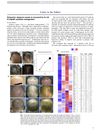
November 2015 in “The Journal of Allergy and Clinical Immunology” Blocking IL-12/IL-23p40 helped reverse severe hair loss in patients.
66 citations
,
February 2013 in “PeerJ” Activating cannabinoid receptor 1 reduces certain keratin levels, potentially aiding psoriasis treatment.
62 citations
,
October 1999 in “Journal of Investigative Dermatology” New mutations in hair keratin genes can change hair structure and cause monilethrix, with nail issues more common in certain gene mutations.
 61 citations
,
November 2004 in “Annals of the Academy of Medicine Singapore”
61 citations
,
November 2004 in “Annals of the Academy of Medicine Singapore” Hair follicle stem cells are mainly in the bulge region and can help repair skin and form hair and glands, but more research is needed to fully understand them.
60 citations
,
December 2003 in “Journal of Investigative Dermatology” K6hf is found in specific parts of hair follicles, nails, and tongue, and is linked to hair growth and structure.
 57 citations
,
April 2002 in “The journal of investigative dermatology/Journal of investigative dermatology”
57 citations
,
April 2002 in “The journal of investigative dermatology/Journal of investigative dermatology” Vitamin D receptor is crucial for starting hair growth after birth.
 52 citations
,
May 2015 in “PLOS Genetics”
52 citations
,
May 2015 in “PLOS Genetics” miR-22, a type of microRNA, controls hair growth and its overproduction can cause hair loss, while its absence can speed up hair growth.
51 citations
,
September 2012 in “Biomacromolecules” Disulfide bonds make keratin in hair stronger and tougher.
 51 citations
,
July 2010 in “Trends in Endocrinology and Metabolism”
51 citations
,
July 2010 in “Trends in Endocrinology and Metabolism” Prolactin may play a significant role in skin and hair health and could be a target for treating skin and hair disorders.
51 citations
,
January 2007 in “The journal of investigative dermatology/Journal of investigative dermatology” Scientists discovered a unique hair protein, KAP24.1, with a special structure, found only in the upper part of hair cuticles.
50 citations
,
February 2016 in “Journal of Investigative Dermatology” A mutation in the KRT25 gene causes a rare hair disorder with thin, woolly hair.
 48 citations
,
July 2019 in “International Journal of Biological Macromolecules”
48 citations
,
July 2019 in “International Journal of Biological Macromolecules” A new hydrogel with stem cells from human umbilical cords improves skin wound healing and reduces inflammation.
 48 citations
,
July 1993 in “The journal of investigative dermatology/Journal of investigative dermatology”
48 citations
,
July 1993 in “The journal of investigative dermatology/Journal of investigative dermatology” Hair growth is controlled by specific gene clusters and proteins, and cysteine affects hair gene expression in sheep.
48 citations
,
November 2002 in “Journal of biological chemistry/The Journal of biological chemistry” Genetic variations in hair keratin proteins exist but don't significantly affect hair structure.
47 citations
,
January 2024 in “iScience” Stress keratins are expressed less in diseased skin and are linked to differentiation, inflammation, and immunity.