 1 citations
,
April 2018 in “Journal of Investigative Dermatology”
1 citations
,
April 2018 in “Journal of Investigative Dermatology” People respond differently to hair loss treatment with PRP because of individual differences in growth factors from platelets.
 February 2010 in “Journal of The American Academy of Dermatology”
 Mimicking growth factors in a topical solution can prolong hair growth phase and reduce hair loss without side effects.
 February 2021 in “Dermatologic Therapy”
 Injections improve hair growth, density, and thickness in women safely.
 20 citations
,
July 2013 in “PLoS ONE”
20 citations
,
July 2013 in “PLoS ONE” Targeting EGFR may help reduce hair loss from chemotherapy.
 June 2026 in “Indian Journal of Postgraduate Dermatology”
 Rash from EGFRI treatment can indicate both side effects and treatment effectiveness.
 119 citations
,
November 2014 in “Trends in Cell Biology”
119 citations
,
November 2014 in “Trends in Cell Biology” Fibroblast growth factor receptor signaling controls cell development and repair, and its malfunction can cause disorders and cancer, but it also offers potential for targeted therapies.
 108 citations
,
July 2004 in “American Journal of Pathology”
108 citations
,
July 2004 in “American Journal of Pathology” Stress increases a factor in mice that leads to hair loss, and blocking this factor may prevent it.
 64 citations
,
January 2015 in “BioMed Research International”
64 citations
,
January 2015 in “BioMed Research International” Certain growth factors can promote hair growth in mice by activating hair growth-related proteins.
 28 citations
,
October 2011 in “International Journal of Molecular Medicine”
28 citations
,
October 2011 in “International Journal of Molecular Medicine” Adenosine helps hair grow longer and stronger by boosting certain growth factors and signaling pathways.
 24 citations
,
October 2017 in “Biomolecules”
24 citations
,
October 2017 in “Biomolecules” Some growth factors, while important for normal body functions, can cause diseases when not regulated properly.
 18 citations
,
July 2016 in “Medicine”
18 citations
,
July 2016 in “Medicine” Wnt/β-catenin and TGF-β pathways affect hair loss, and activating Wnt/β-catenin could be a potential treatment.
 13 citations
,
July 2016 in “BMC Complementary and Alternative Medicine”
13 citations
,
July 2016 in “BMC Complementary and Alternative Medicine” Hominis Placenta helps hair grow back by increasing cell growth and a specific growth factor.
 4 citations
,
August 2020 in “Journal of Cosmetic Dermatology”
4 citations
,
August 2020 in “Journal of Cosmetic Dermatology” QR 678 and QR678 Neo treatments are effective for hair loss in women with PCOS.
 2 citations
,
November 2017 in “PloS one”
2 citations
,
November 2017 in “PloS one” Some vitamin D analogs can thicken skin and reduce pore size like a common acne treatment, with one analog also affecting skin growth factors.
 2 citations
,
January 2015 in “BioMed Research International”
2 citations
,
January 2015 in “BioMed Research International” Growth factor treatments are increasingly used in medicine but require more research to fully understand their mechanisms.
 1 citations
,
January 2023 in “Burns and trauma”
1 citations
,
January 2023 in “Burns and trauma” Tiny particles from 3D-grown skin cells speed up wound healing by promoting blood vessel growth.
 1 citations
,
July 2016 in “Livestock science”
1 citations
,
July 2016 in “Livestock science” Nerve growth factor helps cashmere goat hair cells grow and is more active during the hair growth phase.
 June 2015 in “Vestnik dermatologii i venerologii”
 Growth factors influence hair growth and hair loss.
 10 citations
,
October 2015 in “Medicina Clínica (english Edition)”
10 citations
,
October 2015 in “Medicina Clínica (english Edition)” Recombinant human epidermal growth factor is versatile, effective, and safe for long-term skin and mucosal treatments.
 245 citations
,
January 2018 in “Bone Research”
245 citations
,
January 2018 in “Bone Research” TGF-β is crucial for tissue repair and can cause diseases if not properly regulated.
 109 citations
,
December 2003 in “American Journal of Pathology”
109 citations
,
December 2003 in “American Journal of Pathology” Fetal wound healing changes with development, affecting inflammation and collagen, which may influence scarring.
 38 citations
,
February 2012 in “Supportive Care in Cancer”
38 citations
,
February 2012 in “Supportive Care in Cancer” Skin problems like acne, dry skin, and nail and hair changes are common in patients taking EGFR inhibitors.
 32 citations
,
March 2014 in “PLOS ONE”
32 citations
,
March 2014 in “PLOS ONE” Mice lacking fibromodulin have disrupted healing patterns, leading to abnormal skin repair and scarring.
 32 citations
,
June 2012 in “PLoS ONE”
32 citations
,
June 2012 in “PLoS ONE” Blocking IL-8 can reduce skin rashes from cancer treatment.
 22 citations
,
February 2017 in “Clinical and Experimental Dermatology”
22 citations
,
February 2017 in “Clinical and Experimental Dermatology” Icariin helps mouse hair grow by boosting a growth factor in skin cells.
 22 citations
,
January 2014 in “Biological & Pharmaceutical Bulletin”
22 citations
,
January 2014 in “Biological & Pharmaceutical Bulletin” Ginsenoside F2 may help prevent hair loss and promote hair growth better than finasteride.
 17 citations
,
January 2010 in “Acta Dermato Venereologica”
17 citations
,
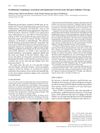
January 2010 in “Acta Dermato Venereologica” EGFR inhibitors can cause yellowish skin eruptions.
 11 citations
,
May 2016 in “Naunyn-Schmiedeberg's Archives of Pharmacology”
11 citations
,
May 2016 in “Naunyn-Schmiedeberg's Archives of Pharmacology” A substance called 15-deoxy prostaglandin J2 can cause hair follicle cells to die, which might explain how prostaglandin D2 can lead to hair loss.
 1 citations
,
January 2023 in “Cutis”
1 citations
,
January 2023 in “Cutis” You might not need to stop cancer treatment if you get a rare skin reaction from EGFR inhibitors, as skin treatments can help manage it.
 April 2016 in “The journal of investigative dermatology/Journal of investigative dermatology”
 M2 macrophages help hair regrowth in wounds by making growth factors.