1 citations
,
April 2022 in “Journal of cosmetic dermatology” Krox20 overexpression in fibroblasts may play a role in abnormal scar formation and could be a target for new treatments.
22 citations
,
September 2014 in “JAMA dermatology” Ichthyosis with confetti is a genetic skin disorder with consistent ectodermal malformations and various KRT10 gene mutations.
505 citations
,
October 2011 in “Journal of clinical oncology” MK-2206 was safe and effectively blocked AKT signaling in cancer patients, warranting more trials.
The new sensor can detect a toxic chemical in water with high sensitivity and accuracy.
 1 citations
,
July 2012 in “EFSA journal”
1 citations
,
July 2012 in “EFSA journal” KF2BL20 does not have proven benefits for maintaining normal hair.
December 2016 in “Indonesian Journal of Tropical and Infectious Disease/Indonesian Journal of Tropical an Infectious Disease” Double pulse dose terbinafine effectively treats kerion type of tinea capitis.
 3 citations
,
January 2015 in “Sen i Gakkaishi”
3 citations
,
January 2015 in “Sen i Gakkaishi” The new keratin film without KAPs stains better and could help study keratin functions.
April 2025 in “The Journal of Dermatology” Janus kinase inhibitors may help treat cutaneous T-cell lymphoma, but more research is needed.
 14 citations
,
November 1987 in “Journal of The American Academy of Dermatology”
14 citations
,
November 1987 in “Journal of The American Academy of Dermatology” A woman developed a severe skin reaction called toxic epidermal necrolysis after taking the antibiotic cephalexin.
15 citations
,
June 2020 in “The journal of investigative dermatology/Journal of investigative dermatology” Mice with extra human KLK14 had hair and skin problems, including weaker cell bonds and inflammation, linked to Netherton syndrome.
October 2025 in “Journal of Neurophysiology” BK and Kv4.2 channels help Merkel cells in rat whiskers sense touch.
33 citations
,
May 2017 in “Journal of Clinical Oncology” ETC-159 was safe up to 30 mg, but no tumor shrinkage was seen.
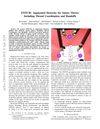 April 2024 in “arXiv (Cornell University)”
 STITCH improves suture accuracy and efficiency, especially with human help.
September 2002 in “Oncology Times” Promising cancer treatments were found, but the manufacturer closed.
6 citations
,
January 2022 in “Gene” Scientists found 53 keratin genes in yaks that are important for hair growth and share similarities with those in other animals.
March 2026 in “International Journal of Cosmetic Science” Pal-KCV peptide strengthens hair and reduces breakage by up to 52%.
26 citations
,
February 1998 in “DNA and Cell Biology” K6 gene expression can be controlled and manipulated in mice for studying skin disorders.
1 citations
,
February 2012 in “InTech eBooks” CK7 and CK20 help identify and classify tumors for accurate cancer diagnosis.
 July 2022 in “The journal of investigative dermatology/Journal of investigative dermatology”
 Krox20 is important for maintaining stem cells in the skin and affects hair growth and color.
6 citations
,
March 2017 in “Journal of the European Academy of Dermatology and Venereology” Identical twins with a rare KRT 86 gene mutation both have the hair disorder monilethrix.
 September 2001 in “PubMed”
 The new X-ray technique allows for precise and non-destructive measurement of elements in hair, creating the first database of its kind for a specific ethnic group.
March 2009 in “European Urology Supplements”  12 citations
,
January 2014 in “Cell structure and function”
12 citations
,
January 2014 in “Cell structure and function” Different combinations of human hair keratins affect how hair fibers form.
September 2025 in “Animals” The KRTAP22-2 gene in sheep does not significantly affect wool traits.
 November 2019 in “Hair transplant forum international”
 The SketchAndCalc app is a faster and more precise method for measuring hair transplant areas than traditional grid counting.
January 2024 in “SSRN Electronic Journal”  2 citations
,
July 1996 in “Hair transplant forum international”
2 citations
,
July 1996 in “Hair transplant forum international” The document's conclusion cannot be provided because the document is not accessible or understandable.
 December 2010 in “Médecine des Maladies Métaboliques”
 The Accu-Chek FlexLink Plus and Accu-Chek LinkAssist Plus make insulin pump use safer, simpler, and more comfortable.
January 2011 in “Nuclear Techniques” Lead levels in hair increased due to environmental exposure, while iron, copper, and zinc levels stayed stable.