 March 2026 in “Journal of Pakistan Association of Dermatologists”
 Low-dose oral minoxidil is more effective and convenient for treating male pattern baldness than topical minoxidil.
April 2021 in “International Journal of Research in Dermatology” The combination of minoxidil and finasteride is more effective for hair growth than minoxidil alone.

Sublingual minoxidil increases hair thickness in men with hair loss.
73 citations
,
November 1979 in “British Journal of Dermatology” Minoxidil can cause excessive hair growth.
 November 2024 in “Skin Health and Disease”
 Minoxidil is effective for promoting hair growth and has various dermatological uses.

Both 5% minoxidil solution and milky lotion effectively and safely treat male hair loss, with the lotion being a good alternative for those sensitive to certain ingredients.
 20 citations
,
February 1985 in “Archives of Dermatology”
20 citations
,
February 1985 in “Archives of Dermatology” Minoxidil helps hair regrowth, especially with more indeterminate hairs.
Minoxidil can help with hair loss, but its effectiveness depends on the patient and formulation.
 17 citations
,
May 1998 in “Contact Dermatitis”
17 citations
,
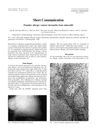
May 1998 in “Contact Dermatitis” Minoxidil can cause pustular allergic reactions on skin.
October 2021 in “QJM: An International Journal of Medicine” Both sildenafil and minoxidil effectively treat male hair loss, but impact hair differently.
 4 citations
,
January 2017 in “Indian Dermatology Online Journal”
4 citations
,
January 2017 in “Indian Dermatology Online Journal” A child used a hair growth lotion for hair loss, but it caused excessive hair growth on his face and neck instead.
 2 citations
,
October 2020 in “Más dermatología”
2 citations
,
October 2020 in “Más dermatología” Choose between topical and oral minoxidil for hair growth based on personal tolerance and side effects.
 5 citations
,
January 2021 in “Journal of The American Academy of Dermatology”
5 citations
,
January 2021 in “Journal of The American Academy of Dermatology” Low-dose oral minoxidil is an effective and safe treatment for hair loss.
September 2022 in “Journal of Cosmetic Dermatology” Oral minoxidil effectively treats different types of hair loss with fewer side effects.
 5 citations
,
April 1999 in “PubMed”
5 citations
,
April 1999 in “PubMed” Two drugs, Minoxidil and Finasteride, can modestly maintain or regrow hair on the scalp's vertex with minimal side effects.
October 2022 in “Our Dermatology Online” The Trust tonic is more effective than minoxidil for treating hair loss.
 May 2015 in “Journal of The American Academy of Dermatology”
 5% minoxidil foam helps women with thinning hair.
 March 2005 in “Journal of The American Academy of Dermatology”
 Two lotions used day and night may be a good alternative to minoxidil for hair loss, with better cosmetic effects and tolerance.
 5 citations
,
August 2021 in “Journal of The European Academy of Dermatology and Venereology”
5 citations
,
August 2021 in “Journal of The European Academy of Dermatology and Venereology” Sublingual minoxidil safely promotes hair growth.
 June 2026 in “International Journal of Innovative Technologies in Social Science”
 Low-dose oral minoxidil is effective and safe for treating male pattern baldness.
October 2024 in “Actas Dermo-Sifiliográficas” Sublingual minoxidil is safe and well-tolerated for hair loss treatment.
January 2025 in “Journal of Carcinogenesis” Stromal vascular fraction and topical minoxidil both improve hair growth similarly, but SVF offers a better treatment experience.
January 2008 in “Journal of Clinical Dermatology” Scalp medⓇ effectively and safely improves hair growth in men with androgenetic alopecia.
 14 citations
,
May 2005 in “Farmaco”
14 citations
,
May 2005 in “Farmaco” A method was created in 2005 to identify minoxidil, a hair growth ingredient, in products using two types of capillary zone electrophoresis, and it found that most products had about 2% minoxidil.
March 1996 in “Hair transplant forum international”  October 2025 in “International Journal of Advanced Research in Science Communication and Technology”
 Minoxidil effectively promotes hair growth, especially in a 5% solution, but requires continuous use.
 October 2024 in “Clinical and Experimental Dermatology”
 The combination treatment didn't work better than minoxidil alone and caused more menstrual issues.
 February 2025 in “Expert Opinion on Drug Safety”
 Topical minoxidil may cause more side effects than currently listed, needing updated safety information.
 10 citations
,
April 2015 in “PubMed”
10 citations
,
April 2015 in “PubMed” Rosemary oil and minoxidil 2% both effectively increase hair count in people with androgenetic alopecia, but rosemary oil causes less scalp itching.
 February 2024 in “Archives of Dermatological Research”
 Most patients know about minoxidil for hair loss, but concerns about its use and effectiveness affect their decision to use it.