 3 citations
,
January 2023 in “Journal of Korean Medical Science”
3 citations
,
January 2023 in “Journal of Korean Medical Science” Korean psoriasis patients still use alternative medicine despite effective biologics.
 2 citations
,
January 2025 in “Pharmaceutical Research”
2 citations
,
January 2025 in “Pharmaceutical Research” Angelica gigas Nakai root extracts may help with cancer, pain, memory loss, and metabolic issues.
2 citations
,
December 2021 in “Korean Journal of Clinical Pharmacy”  2 citations
,
January 2011 in “The Korea Journal of Herbology”
2 citations
,
January 2011 in “The Korea Journal of Herbology” Korean medicinal herbs in hair tonic and food increased hair growth in mice.
 2 citations
,
January 2009 in “The Journal of Korean Medicine Ophthalmology and Otolaryngology and Dermatology”
2 citations
,
January 2009 in “The Journal of Korean Medicine Ophthalmology and Otolaryngology and Dermatology” Korean clinic alopecia patients were mostly 20-30 years old, had rapid onset, and showed different symptoms in men and women, with androgenic alopecia being the most common type.
 1 citations
,
January 2017 in “The Journal of Korean Medicine Ophthalmology and Otolaryngology and Dermatology”
1 citations
,
January 2017 in “The Journal of Korean Medicine Ophthalmology and Otolaryngology and Dermatology” Combining finasteride with a Korean herbal medicine called Gagamcheongyoung-tang can improve hair loss symptoms.
1 citations
,
October 2015 in “추계총회 및 학술대회” The extract promotes hair growth and may help treat hair loss.
 1 citations
,
January 2014 in “Annals of Dermatology”
1 citations
,
January 2014 in “Annals of Dermatology” Korean people prefer M-shaped hairlines and lower foreheads, with no major differences across various demographics.
 October 2024 in “Annals of Dermatology”
 Korean Red Ginseng may help protect hair from damage and promote growth.
June 2018 in “Korean Journal of Family Practice” November 2016 in “Hanbang an'i'bi'in'hu pibu'gwa haghoeji” Korean and Western medicine have different effects on hair health.
January 2015 in “프로그램북(구 초록집)” Korean Red Ginseng may help prevent hair loss from chemotherapy.
 May 2011 in “Archives of Plastic Surgery”
 Korean men in their 20s and 30s most commonly have an inverted U-shaped hairline.
 April 2010 in “The FASEB Journal”
 Korean ginseng berry may help with hair regrowth.
Korean patients with androgenetic alopecia may have a higher risk of heart-related health issues and could benefit from early heart screening and healthier lifestyles.
 September 2015 in “Korean Journal of Clinical Pharmacy”
 Dutasteride is highly effective for hair loss treatment in Korea, with more side effects than finasteride.
January 2009 in “Frontiers in Bioengineering and Biotechnology” Current wound healing treatments are imperfect, and better therapies are needed.
 41 citations
,
December 2008 in “International Journal of Dermatology”
41 citations
,
December 2008 in “International Journal of Dermatology” South Korean women with hair loss have lower hair density and thickness compared to healthy women.
 34 citations
,
June 2007 in “The Journal of Dermatology”
34 citations
,
June 2007 in “The Journal of Dermatology” Most Korean systemic lupus erythematosus patients experienced hair loss, often as non-scarring diffuse hair loss, with non-scarring patch alopecia also common.
 25 citations
,
May 2012 in “Journal of The European Academy of Dermatology and Venereology”
25 citations
,
May 2012 in “Journal of The European Academy of Dermatology and Venereology” Many Korean patients with hair loss, skin allergies, and psoriasis use alternative medicine, but satisfaction is low.
 21 citations
,
January 2013 in “Clinical Endoscopy”
21 citations
,
January 2013 in “Clinical Endoscopy” First Korean case of Cronkhite-Canada syndrome with colon cancer and serrated adenoma.
 8 citations
,
May 2017 in “Singapore Medical Journal”
8 citations
,
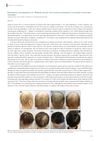
May 2017 in “Singapore Medical Journal” A Korean woman with complete hair loss regrew her hair after taking tofacitinib, with no side effects.
 7 citations
,
September 2011 in “International Journal of Dermatology”
7 citations
,
September 2011 in “International Journal of Dermatology” The Korean study found that twenty-nail dystrophy mainly affects adults, more often women, and has five distinct types with different clinical progressions.
3 citations
,
December 2014 in “Annals of Laboratory Medicine” A Korean baby with nevus sebaceus syndrome was found to have a KRAS gene mutation.
 2 citations
,
February 2023 in “Journal of the American Academy of Dermatology”
2 citations
,
February 2023 in “Journal of the American Academy of Dermatology” People with autism are more likely to develop alopecia areata than those without autism.
 1 citations
,
October 2012 in “The Journal of Dermatology”
1 citations
,
October 2012 in “The Journal of Dermatology” A Korean girl developed kinky hair without known cause or effective treatment.
 January 2025 in “Annals of Dermatology”
 COVID-19 vaccination may slightly increase the risk of hair loss, but benefits outweigh this risk.
 January 2012 in “Hair transplant forum international”
 The Korean Society of Hair Restoration Surgery had a successful first annual meeting.
July 2004 in “Journal of the American Dietetic Association” Many Korean preschool children have low zinc levels, which may affect their growth, and zinc supplements could help.
January 2015 in “프로그램북(구 초록집)” Many Korean women with female-pattern hair loss have reduced hair density at the temples.