 April 2019 in “Journal of Investigative Dermatology”
 The created skin model with melanoblasts improves the study of skin color and offers an alternative to animal testing.
 April 2018 in “Journal of Investigative Dermatology”
 Kaempferol helps skin stem cells grow and may improve skin thickness due to its 3-OH group.
 April 2018 in “Journal of Investigative Dermatology”
 Removing STAT5 from 3D-cultured human skin cells reduces their ability to grow hair.
 April 2018 in “Journal of Investigative Dermatology”
 Ginsenoside Rd may help improve skin aging by increasing collagen in the skin.
 April 2018 in “Journal of Investigative Dermatology”
 Aging reduces skin cell renewal and defense against germs due to TGFbeta, but blocking TGFbeta could help restore these functions.
 January 2016 in “Journal of Investigative Dermatology”
 Some cells may slow melanoma growth, a protein could affect skin pigmentation, a gene-silencing method might treat hair defects, skin bacteria changes likely result from eczema, and a defensin protein could help treat multiple sclerosis.
 April 2021 in “Journal of Investigative Dermatology”
 Cyclooxygenase-2 overexpression in mice skin causes hair loss like human androgenetic alopecia.
 April 2019 in “Journal of Investigative Dermatology”
 Low-level laser therapy helps hair growth and reduces hair loss with few side effects.
 April 2018 in “Journal of Investigative Dermatology”
  211 citations
,
April 2018 in “Cold Spring Harbor Perspectives in Biology”
211 citations
,
April 2018 in “Cold Spring Harbor Perspectives in Biology” Keratins are crucial for cell structure, growth, and disease risk.
 87 citations
,
July 2009 in “The journal of investigative dermatology/Journal of investigative dermatology”
87 citations
,
July 2009 in “The journal of investigative dermatology/Journal of investigative dermatology” Human beard hair medulla contains a unique and complex mix of keratins not found in other human tissues.
 54 citations
,
November 2015 in “Methods in enzymology on CD-ROM/Methods in enzymology”
54 citations
,
November 2015 in “Methods in enzymology on CD-ROM/Methods in enzymology” Keratins are important for skin cell health and their problems can cause diseases.
 48 citations
,
May 2015 in “NPJ microgravity”
48 citations
,
May 2015 in “NPJ microgravity” A 3-month stay in space causes skin thinning, disrupts hair growth, and changes muscle-related genes in mice.
 41 citations
,
October 2024 in “Nature Communications”
41 citations
,
October 2024 in “Nature Communications” A new wearable LED device helps heal chronic infected wounds at home.
 36 citations
,
November 2019 in “Molecular biology and evolution”
36 citations
,
November 2019 in “Molecular biology and evolution” Cysteine-rich keratins evolved independently in mammals, reptiles, and birds for hard skin structures like hair, claws, and feathers.
 32 citations
,
April 2014 in “The journal of investigative dermatology/Journal of investigative dermatology”
32 citations
,
April 2014 in “The journal of investigative dermatology/Journal of investigative dermatology” Loss of keratin K2 causes skin problems and inflammation.
 22 citations
,
April 2020 in “Scientific reports”
22 citations
,
April 2020 in “Scientific reports” Changthangi goats have specific genes that help produce Pashmina wool.
 17 citations
,
August 2018 in “BMC Genomics”
17 citations
,
August 2018 in “BMC Genomics” The HOXC13 gene affects different hair proteins in cashmere goats in varied ways and is controlled by a feedback loop and other factors.
 17 citations
,
February 2015 in “Cell Death and Disease”
17 citations
,
February 2015 in “Cell Death and Disease” Inhibiting AP1 in mice skin causes structural changes and weakens the skin barrier.
 9 citations
,
February 2022 in “Nature communications”
9 citations
,
February 2022 in “Nature communications” Rare changes in the KRT82 gene are linked to a higher risk of Alopecia Areata.
 6 citations
,
October 2022 in “Journal of cell science”
6 citations
,
October 2022 in “Journal of cell science” Keratin genes change gradually during skin cell development and should be used carefully as biomarkers.
 6 citations
,
November 2021 in “Frontiers in immunology”
6 citations
,
November 2021 in “Frontiers in immunology” STAT3 signaling is important for healthy skin and hair follicles, and its disruption can lead to skin conditions like atopic dermatitis.
 3 citations
,
October 2024 in “Frontiers in Medicine”
3 citations
,
October 2024 in “Frontiers in Medicine” Sun-exposed skin shows different cell activity and gene expression, suggesting targets to prevent skin aging and cancer.
 1 citations
,
July 2022 in “bioRxiv (Cold Spring Harbor Laboratory)”
1 citations
,
July 2022 in “bioRxiv (Cold Spring Harbor Laboratory)” Keratin gene expression helps understand different types of skin cells and their development, and should be used carefully as biological markers.

Menopause-related skin changes may increase fungal infections and inflammation.
 December 2023 in “bioRxiv (Cold Spring Harbor Laboratory)”
 AP-2α and AP-2β proteins are essential for healthy adult skin and hair.
 January 2023 in “Czech Journal of Animal Science”
 Proteins influence the quality and traits of cashmere goat fleece, affecting hair strength and diameter.
 1398 citations
,
May 2008 in “Histochemistry and Cell Biology”
1398 citations
,
May 2008 in “Histochemistry and Cell Biology” Keratins are crucial for cell stability, wound healing, and cancer diagnosis.
 418 citations
,
September 2012 in “Nature”
418 citations
,
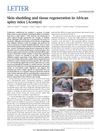
September 2012 in “Nature” African spiny mice can regenerate skin, hair, and cartilage, but not muscle, and their unique abilities could be useful for regenerative medicine.
 383 citations
,
February 2011 in “Nature Reviews Genetics”
383 citations
,
February 2011 in “Nature Reviews Genetics” DNA profiling in forensics has improved, but predicting physical traits and ancestry from DNA has limitations and requires ethical consideration.