 June 2024 in “Bőrgyógyászati és Venerológiai Szemle”
 New treatments for hair loss, like JAK inhibitors, PRP, anti-androgens, and minoxidil, offer better options.
 April 2021 in “Advances in Cosmetic Surgery”
 Hair restoration can be achieved through non-surgical treatments like minoxidil, antiandrogens, phototherapy, and PRP procedures, or through surgical methods like hair transplantation. Continued treatment is needed to maintain results, and full results are visible after 12-18 months.
October 2019 in “bioRxiv (Cold Spring Harbor Laboratory)” L-PRP and P-PRP reduced endometriosis in rats, but not significantly more than saline.
 1 citations
,
December 2019 in “Archives of the Balkan Medical Union”
1 citations
,
December 2019 in “Archives of the Balkan Medical Union” Injecting platelet-rich plasma into the muscle layer improves intestinal healing and reduces adhesions.
115 citations
,
August 2020 in “International Journal of Molecular Sciences” A PRP concentration of 1.0 × 10^6 plt/μL is best for tissue repair.
71 citations
,
December 2018 in “Journal of Pain Research” Standardizing PRP preparation and application could improve its effectiveness for chronic pain relief.
 55 citations
,
July 2016 in “Dermatologic Therapy”
55 citations
,
July 2016 in “Dermatologic Therapy” Multiple treatments work best for hair loss.
 29 citations
,
September 2020 in “International Journal of Molecular Sciences”
29 citations
,
September 2020 in “International Journal of Molecular Sciences” The document concludes that freeze-dried platelet-rich plasma shows promise for medical use but requires standardization and further research.
 22 citations
,
January 2015 in “Actas dermo-sifiliográficas/Actas dermo-sifiliográficas”
22 citations
,
January 2015 in “Actas dermo-sifiliográficas/Actas dermo-sifiliográficas” Platelet-rich plasma might help with skin aging, ulcers, and hair loss, but more research is needed to prove its effectiveness and safety.
21 citations
,
February 2023 in “Bioengineering” Standardizing PRP therapy practices and regulations in Europe is crucial for safe and effective treatment.
 15 citations
,
August 2019 in “Dermatologic Therapy”
15 citations
,
August 2019 in “Dermatologic Therapy” Platelet-rich plasma (PRP) may help treat hair loss in patients with frontal fibrosing alopecia who don't respond to other treatments.
14 citations
,
March 2023 in “Bioengineering” Standardized PRP is effective for tendinopathies, with most patients improving after one injection.
 12 citations
,
June 2020 in “Dermatology and therapy”
12 citations
,
June 2020 in “Dermatology and therapy” Platelet-Rich Plasma (PRP) can promote new hair growth and increase hair density, but its effectiveness varies depending on the type of hair loss.
 10 citations
,
April 2018 in “Actas Dermo-Sifiliográficas”
10 citations
,
April 2018 in “Actas Dermo-Sifiliográficas” In 2017, Spanish dermatologists most often prescribed minoxidil and finasteride for male hair loss, and minoxidil and oral contraceptives for premenopausal female hair loss.
 10 citations
,
October 2015 in “Journal of the International Association of Providers of AIDS Care”
10 citations
,
October 2015 in “Journal of the International Association of Providers of AIDS Care” A woman with HIV had a severe skin condition that improved with antiretroviral therapy.
 8 citations
,
May 2017 in “Singapore Medical Journal”
8 citations
,
May 2017 in “Singapore Medical Journal” A Korean woman with complete hair loss regrew her hair after taking tofacitinib, with no side effects.
 8 citations
,
January 2015 in “Journal of Cutaneous Medicine and Surgery”
8 citations
,
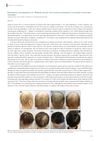
January 2015 in “Journal of Cutaneous Medicine and Surgery” Hair restoration techniques have improved but still rely on limited donor hair, with new methods like cloning and gene therapy being explored.
 6 citations
,
September 2021 in “AESTHETIC OROFACIAL SCIENCE”
6 citations
,
September 2021 in “AESTHETIC OROFACIAL SCIENCE” Platelet-rich plasma (PRP) is a cost-effective way to improve skin rejuvenation and repair in facial aesthetics.
5 citations
,
January 2020 in “Acta dermatovenerologica Alpina, Pannonica et Adriatica (Tiskana izd.)” Injecting platelet-rich plasma or applying it with a laser or microneedling can treat hair loss effectively. The laser and microneedling methods cause less pain.
 4 citations
,
November 2020 in “Journal of The American Academy of Dermatology”
4 citations
,
November 2020 in “Journal of The American Academy of Dermatology” No strong proof that platelet-rich plasma effectively treats hair loss.
 2 citations
,
July 2019 in “Journal of The American Academy of Dermatology”
2 citations
,
July 2019 in “Journal of The American Academy of Dermatology” The comment questions the study's methods for diagnosing hair loss, the type of injections used, the reliability of hair count as a measure, the lack of detail about the procedure, and disagrees with the conclusion about the effect of needling.
 2 citations
,
February 2013 in “Journal of The American Academy of Dermatology”
2 citations
,
February 2013 in “Journal of The American Academy of Dermatology” Platelet-rich plasma may improve hair density in androgenetic alopecia patients.
 1 citations
,
March 2021 in “Current Dermatology Reports”
1 citations
,
March 2021 in “Current Dermatology Reports” Various treatments help hair growth, but more research needed for safety and effectiveness.
 1 citations
,
November 2020 in “Journal of The American Academy of Dermatology”
1 citations
,
November 2020 in “Journal of The American Academy of Dermatology” PRP helps treat hair loss effectively with natural methods.
 1 citations
,
September 2019 in “Practica medicală”
1 citations
,
September 2019 in “Practica medicală” Hair loss is linked to heart disease and metabolic syndrome, and while current treatments vary in effectiveness, more research is needed for better solutions.
November 2025 in “International Journal of Molecular Sciences” PRP shows promise in healing and regeneration but needs standardized protocols for consistent results.
 September 2025 in “Dermatology and Therapy”
 Activated PRP effectively increases hair density and reduces hair loss in alopecia.
 January 2025 in “The World Journal of Men s Health”
 Intratesticular PRP injections are safe but not proven to improve sperm retrieval in certain infertile men.
 March 2024 in “International journal of pharmaceutical sciences and drug research”
 Androgenetic alopecia is influenced by various factors and can be treated with medications, procedures, and non-drug methods.
 February 2023 in “Military Medical Science Letters”
 Platelet-rich plasma treatments reduce knee osteoarthritis inflammation, with pure PRP being more effective.