 February 2024 in “Biomedical materials”
 Scientists created a lab-grown hair follicle model that behaves like real hair and could improve hair loss treatment research.
 January 2021 in “Figshare”
 Metformin helps regenerate hair follicles in lab conditions.
169 citations
,
January 2018 in “Cell Reports” Scientists grew hair follicles from mouse stem cells in a lab setting.
40 citations
,
July 1989 in “Journal of Cell Science” Rat hair follicles can be kept alive in a lab for 7 days but then stop growing.
 29 citations
,
April 2020 in “Journal of Tissue Engineering and Regenerative Medicine”
29 citations
,
April 2020 in “Journal of Tissue Engineering and Regenerative Medicine” The experiment showed that human skin grown in the lab started to form early hair structures when special cell clusters were added.
13 citations
,
November 2003 in “Humana Press eBooks” ES cells can be turned into hair follicle cells in a lab setting.
 5 citations
,
November 2017 in “Elsevier eBooks”
5 citations
,
November 2017 in “Elsevier eBooks” Scientists can now grow hair-like structures in a lab using special 3D culture systems, which could potentially help people with hair loss or severe burns.
4 citations
,
February 2023 in “Stem Cell Research & Therapy” Mouse skin cells can become sperm-like cells in the lab.
 April 2016 in “Journal of Investigative Dermatology”
 Boosting HGF signaling could improve the creation of hair follicles in lab-made skin.
34 citations
,
July 2018 in “Veterinary Dermatology” A new method to study dog skin diseases using lab-grown skin cells was developed.
3 citations
,
August 2020 in “Animals” Researchers found a way to grow cashmere goat hair cells in a lab and discovered that certain conditions improve these cells' growth and characteristics.
3 citations
,
December 2007 in “Journal of Otology” Guinea pig fat stem cells can become hair cell-like cells in a lab.
 September 2017 in “Journal of Investigative Dermatology”
 Hair follicle cells change their DNA packaging during growth cycles and when grown in the lab.
 September 2016 in “Journal of dermatological science”
 Adult skin cells can be used to create new hair in a lab.
134 citations
,
October 2020 in “Preprints.org” Platelet-rich plasma shows promise in healing and treating musculoskeletal issues, but translating lab results to human treatments is challenging.
 57 citations
,
February 2013 in “Journal of Dermatological Science”
57 citations
,
February 2013 in “Journal of Dermatological Science” Improving the environment and cell interactions is key for creating human hair in the lab.
 1 citations
,
October 2014 in “Molecular Biology of the Cell”
1 citations
,
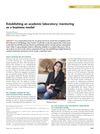
October 2014 in “Molecular Biology of the Cell” Valentina Greco emphasizes the importance of combining business management with mentoring to run a successful academic lab.
 June 2023 in “Frontiers in Bioengineering and Biotechnology”
 The conclusion is that accurately replicating the complexity of the extracellular matrix in the lab is crucial for creating realistic human tissue models.
 33 citations
,
January 2017 in “Conservation physiology”
33 citations
,
January 2017 in “Conservation physiology” Measuring reproductive hormones in brown bear hair could help identify their sex and reproductive state, but better collection methods or lab techniques are needed.
1 citations
,
October 2016 in “Molecular biology of the cell” The author felt excited and honored to receive the 2016 Early Career Life Scientist Award.
 2 citations
,
March 2013 in “Phytotherapy Research”
2 citations
,
March 2013 in “Phytotherapy Research” Ascorbigen increases hair cell growth in a lab setting but does not prevent hair loss from chemotherapy in mice.
 November 2023 in “Hair transplant forum international”
 Caffeine can stimulate hair growth, but the best dose and frequency for hair loss treatment are still unknown.
28 citations
,
February 2021 in “Stem Cell Research & Therapy” Placental cell medium boosts blood vessel growth in lab tests.
5 citations
,
May 2016 in “Jahangirnagar University Journal of Biological Sciences” Eclipta alba was successfully grown in the lab with normal growth and flowering.

Placental cell medium boosts blood vessel growth in lab tests.
114 citations
,
October 1996 in “Dermatologic clinics” Hair loss is mainly caused by hormones, autoimmune issues, and chemotherapy, and needs more research for treatments.
 5 citations
,
February 2022 in “East African Journal of Science Technology and Innovation”
5 citations
,
February 2022 in “East African Journal of Science Technology and Innovation” The herbal shampoo effectively treats scalp infections in children.
 101 citations
,
December 2010 in “The journal of investigative dermatology/Journal of investigative dermatology”
101 citations
,
December 2010 in “The journal of investigative dermatology/Journal of investigative dermatology” Scientists turned mouse stem cells into skin cells that can grow into skin layers and structures.
35 citations
,
August 2016 in “Experimental Dermatology” Fullerene C60 shows promise as a new treatment for various skin conditions.
 3 citations
,
February 2020 in “International journal of women’s dermatology”
3 citations
,
February 2020 in “International journal of women’s dermatology” Most women with hair loss take more supplements than average, but these often don't help and can be risky and costly.